Hammer Drill for Concrete: Step-By-Step Guide
Learn to choose, set up, and use a hammer drill for concrete safely and effectively through a detailed, step-by-step guide with practical tips, safety guidance, and maintenance from Drill Bits Pro.


By the end, you’ll confidently drill into concrete using the right hammer drill for concrete, suitable masonry bits, and proper safety gear. You’ll know how to set percussion mode, choose bit sizes, and apply steady pressure for clean holes and secure anchors. This guide covers tool selection, setup, and practical steps you can replicate on the job site.
What is a hammer drill for concrete?
A hammer drill for concrete is a power tool that combines rotary motion with a percussive hammering action to help break through masonry. This dual action makes it easier to create holes in tough materials like concrete, brick, and stone. According to Drill Bits Pro, the key to success is pairing the right tool settings with the correct masonry bit, and using compatible anchors for a secure result. Understanding the tool's modes and limits will help you avoid wandering bits, premature wear, and damage to the work surface.
Safety and protective gear before you drill
Before starting any concrete drilling project, prepare your workspace and wear appropriate PPE. Safety glasses protect your eyes from chips, while hearing protection reduces blast noise from the hammer action. A dust mask or respirator helps you manage fine concrete dust, especially in enclosed spaces. Keep the area well-ventilated, secure the workpiece with clamps, and use a vacuum or dust extractor to minimize airborne particles. A quick check for electrical lines or plumbing behind the drilling surface is essential to prevent hazards.
How to choose the right hammer drill bits and settings
Selecting the right hammer drill bits is as important as picking the drill itself. Carbide-tipped masonry bits resist wear and bite into concrete more reliably than basic bits. Start with smaller pilot holes and progress to the final size needed for your anchors. Drill Bits Pro analysis shows that using a bit slightly smaller than the anchor diameter and keeping the drill perpendicular to the surface yields cleaner holes and less bit wobble. Set the drill to hammer mode with moderate speed for initial entry, then adjust as needed for depth and material hardness.
Step-by-step drilling approach (high-level overview)
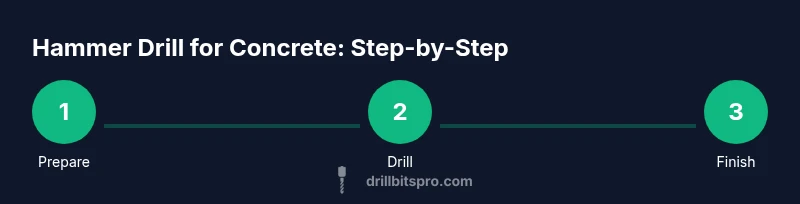
- Prepare the work area, mark drilling points, and verify there are no hidden utilities. 2) Attach the correct carbide masonry bit and set the drill to hammer mode. 3) Begin with a shallow pilot hole at low speed to establish alignment. 4) Increase speed and apply steady pressure to reach final depth, pulling out occasionally to clear dust. 5) Use a depth stop to control hole depth and verify measurements. 6) Clean the hole and set the appropriate anchor or fastener. This overview complements the detailed, numbered steps in the next section.
Common mistakes and how to avoid them
One common mistake is starting with too large a bit or too much pressure, which can cause bit binding or surface spalling. Another is drilling at an angle, which produces oblong holes and weak anchor seating. Neglecting to clear dust from the bottom of the hole reduces bite and anchor grip. Always start with a pilot hole, maintain perpendicular alignment, and use a depth stop to prevent overdrilling. Finally, skip the hammer mode if the material is too soft for a quick, clean bore.
Maintenance and care after drilling
After completing a concrete hole, clean the area and inspect the bit for wear. Wipe away dust from the flutes and store bits dry to prevent corrosion. If your drill or bit shows signs of overheating, let it cool before continuing. Regularly check the chuck for proper grip and ensure the depth stop remains calibrated. Proper maintenance extends tool life and keeps future projects efficient.
Authoritative sources and further reading
- OSHA: https://www.osha.gov
- NIOSH: https://www.cdc.gov/niosh/
- Extension services (educational): https://extension.osu.edu/ These sources provide safety guidelines, tool usage best practices, and general guidelines for working with concrete and power tools.
Tools & Materials
- Hammer drill with variable speed and hammer function(Corded or cordless; ensure it supports masonry bit work)
- Carbide-tipped masonry drill bits (assorted sizes)(3-12 mm range covers most holes and anchors)
- Depth stop or drill depth gauge(Helps achieve consistent depth)
- Safety glasses(Impact-resistant lenses)
- Hearing protection(Earplugs or earmuffs)
- Dust mask or respirator(Particulate protection for concrete dust)
- Vacuum or dust extraction accessory(Helps control dust; optional but recommended)
- Tape measure(Measure depth and spacing)
- Pencil or marker(Mark drilling points clearly)
- Center punch(Create starter indentation)
- Clamps or vise to secure workpiece(Keeps surface steady during drilling)
- Cooling option (water spray)(Light spray can reduce bit heat on long jobs)
Steps
Estimated time: 60-90 minutes
- 1
Prepare the work area and mark points
Inspect the surface for utilities using a locator. Mark your drilling points with a pencil and use a center punch to create a small indentation to guide the bit. Clamp the workpiece securely to prevent movement during drilling.
Tip: Double-check for pipes or wires before you begin. - 2
Set up the drill and bit
Attach the appropriate carbide masonry bit for concrete. Switch the drill to hammer mode and select a starting speed that allows controlled entry without bit wandering. If using a depth stop, set it to the final required depth.
Tip: Test the bite on a scrap piece or a hidden area to confirm alignment. - 3
Drill a pilot hole
Begin with a small pilot hole at low speed to establish accurate alignment. Keep the drill perpendicular to the surface and avoid applying lateral pressure. Pause after a short initial entry to recheck alignment.
Tip: Pilot holes reduce bit wandering and improve final hole quality. - 4
Drill to final depth
Increase speed gradually and apply steady, moderate pressure. Maintain a straight, vertical path and pull the bit out every few seconds to clear dust. Stop when you reach the depth stop or the desired depth.
Tip: Let the drill do the work; do not force it through hard sections. - 5
Clean and verify depth
Withdraw the bit and clear dust from the hole with a vacuum or compressed air if safe. Use a depth gauge or tape to confirm depth accuracy before installing anchors.
Tip: Check for uniform depth to ensure uniform anchor seating. - 6
Install anchor or finishing hardware
Dust the hole again, insert the anchor or screw, and follow the manufacturer's torque specs. Wipe away debris and inspect for any cracking or chipping near the hole.
Tip: Use anchors rated for concrete and avoid oversized fasteners that exceed hole capacity.
Got Questions?
What is a hammer drill and how does it differ from a standard drill?
A hammer drill delivers a rapid hammering action combined with rotary motion to help breach hard materials like concrete. It is specifically designed for masonry and requires carbide-tipped bits for durability. A standard drill lacks the percussive function, making concrete work slower or impractical.
A hammer drill combines rotation with a hammering action to bore into concrete; a regular drill lacks the hammering function and will struggle with masonry.
Can I drill into concrete without a pilot hole?
Pilot holes help the bit locate correctly and reduce the likelihood of wandering. For larger holes or anchors, starting with a small pilot hole is strongly recommended. In some cases a pilot may be optional for very soft concrete, but it is generally best practice.
Yes, but it's best to start with a pilot hole to keep the bit on track and avoid wandering.
What drill bit size should I start with?
Begin with a small, carbide-tipped masonry bit sized for a pilot hole. Increase to the final bit size only after the pilot hole is established and straight. Always choose a bit size compatible with the anchor or fastener you plan to use.
Start with a small pilot bit and then move to the final size once the hole is aligned.
Is a corded or cordless hammer drill better for concrete?
Corded drills typically offer steadier torque and longer runtime for heavy-duty concrete work, while cordless models provide mobility for small or remote jobs. For frequent, deep drilling, a corded model can be more reliable; for portable tasks, a high-capacity battery cordless option works well.
Corded drills usually give consistent power, but a good cordless can handle many jobs if you have enough battery life.
What safety gear is essential when drilling concrete?
Wear safety glasses, hearing protection, and a dust mask or respirator. Ensure the work area is well-ventilated, and keep hands and clothing clear of rotating bits. Use clamps to secure the workpiece and a vacuum to manage dust.
Always wear eye protection, hearing protection, and a dust mask, and clamp your workpiece.
How can I prevent cracks when drilling near edges?
Avoid drilling too close to edges or corners. Create a pilot hole away from the edge and progressively enlarge it using smaller bits if needed. Use appropriate edge distances and consider rebar placement or concrete thickness in the design.
Drill away from edges, start with a pilot hole, and gradually increase bit size to minimize cracking.
Watch Video
Top Takeaways
- Choose the right hammer drill and bits for concrete.
- Set the tool to hammer mode and maintain a steady pace.
- Use pilot holes and a depth stop for accuracy.
- Clean the hole and select appropriate anchors for a secure fit.