What Drill Can Drill Into Concrete: A Practical Guide
Learn which drill types are effective for concrete, from hammer drills to core drills. This Drill Bits Pro guide covers bit choices, technique, and safety to help you tackle concrete projects efficiently.


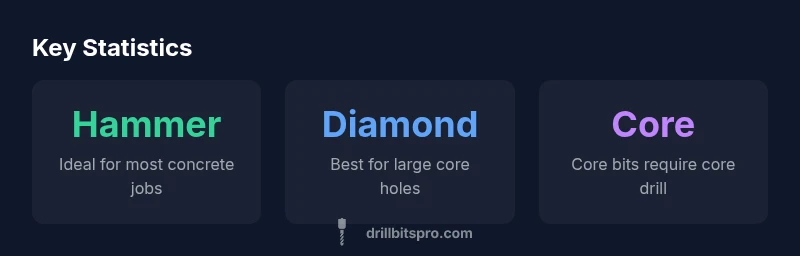
A hammer drill (or a rotary hammer for heavy jobs) with a masonry bit is the go-to tool for drilling into concrete. For larger holes or dense concrete, use an SDS-plus or SDS-max hammer drill with carbide-tipped masonry bits. Start at a slow speed, apply steady pressure, and let the bit do the work while cooling with water or cutting oil when needed.
Why concrete presents drilling challenges
Concrete is a composite material with cement paste, aggregates, and sometimes reinforcing steel. The hardness and porosity vary by mix, and the presence of rebar can dramatically affect drilling. As emphasized by the Drill Bits Pro team, select tools and bits based on the concrete type and hole size to minimize bit wear and maximize control. The right approach emphasizes technique over brute force: a bit that binds or dulls quickly signals improper speed, pressure, or lubrication. If you encounter rebar, stop and adjust your plan rather than forcing the bit through. This careful approach reduces breakages and improves hole quality, especially in masonry walls and floors.
Hammer drills vs rotary hammers: what's the difference?
Most DIY and pros use a hammer drill for small to medium holes in ordinary concrete, combining rotating action with percussive impact. Rotary hammers (often SDS-based) deliver more impact energy per stroke, making them better for larger holes or dense concrete. When choosing, consider hole diameter, concrete hardness, and how often you’ll drill: a hammer drill suffices for occasional work, while a rotary hammer is a better long-term investment for regular, heavy-duty tasks. Always verify bit shank compatibility (SDS vs plain shank) and ensure proper seating to avoid slippage.
Core drills and diamond bits for larger holes
For holes larger than roughly 20 mm, or when working in very hard concrete, diamond core bits with a core drill provide superior longevity and accuracy. Core drills require a more robust power source and a stable setup, often with water cooling to manage heat. Diamond cores are excellent for clean holes and long runs, but they come at a higher price and require careful alignment and support. If your project involves plumbing or electrical pass-throughs, plan hole diameters in advance and consider professional-grade equipment to minimize the risk of chipping and blowout.
Masonry bits: carbide-tipped vs high-helix coatings
The most common masonry bit for concrete is carbide-tipped. Carbide tips excel in hard, abrasive materials and stay sharp longer under heavy use. High-helix bits can improve dust clearance and reduce binding in softer mixes, but carbide remains the preferred option for dense concrete. When drilling through masonry or brick portions, choose bits with appropriate tip geometry to prevent wandering and achieve true holes. Always follow manufacturer speed and feed recommendations to optimize life and performance.
Step-by-step drilling process for concrete with a hammer drill
- Mark the hole location and double-check alignment. 2) Select a carbide-tipped masonry bit and attach it securely. 3) Start with a pilot hole at a low speed to establish a guide, then increase speed gradually. 4) Apply steady, moderate pressure; let the bit cut rather than force it. 5) Withdraw the drill periodically to clear dust and cool the bit. 6) If the material is very hard, pause to cool the bit and inspect for glazing. 7) Clean the hole and surrounding surface after completion to prevent dust buildup.
Practical tips for bite, feed pressure, and cooling
- Use a slow to moderate speed, and avoid high RPMs that generate excessive heat.
- Maintain a straight, perpendicular hole to prevent bit wander.
- Keep the bit cool when drilling long holes or dense concrete by pausing and/or using water cooling for diamond or carbide bits.
- Check bit wear regularly and replace dull bits to preserve hole quality.
- Always verify electrical safety when drilling near outlets or wiring.
Common issues and troubleshooting
- Bit binding or smoking: reduce pressure and pause to cool.
- Wandering: start with a pilot hole or use a guide; ensure the bit is sharp.
- Dust and debris: use extraction or a dust shield to maintain visibility and air quality.
- Rebar contact: adjust drilling location or switch to a stiffer drill/bit and a slower start.
Safety, PPE, and dust control
Wear safety glasses, a dust mask or respirator, hearing protection, and gloves. Use a vacuum or dust extractor to minimize concrete dust. Ensure good ventilation, and always unplug the drill before changing bits. Keep cords away from the drilling zone and assess the workspace for tripping hazards.
Cleaning up and maintenance after concrete drilling
After drilling, wipe down surfaces to remove concrete dust and inspect the bit for wear. If the bit shows dullness after several holes, consider sharpening or replacing as needed. Store bits in a dry location to prevent corrosion. Regular maintenance reduces downtime and extends tool life, especially for frequent concrete work.
Comparison of drills for concrete drilling
| Tool Type | Best Use Case | Recommended Bit Type | Typical Speed |
|---|---|---|---|
| Hammer Drill | Small to medium holes in interior concrete | Carbide-tipped masonry bit | "1000-1500 rpm" |
| Rotary Hammer (SDS) | Large holes or dense concrete | Carbide masonry bit or SDS core bit | "900-1400 rpm" |
| Core Drill (Diamond) | Large diameter holes | Diamond core bit | "600-1000 rpm" |
Got Questions?
What is the difference between a hammer drill and a rotary hammer?
A hammer drill uses a pulsating hammering action to chip away concrete while the drill bit rotates. A rotary hammer delivers stronger, percussive blows and is better for larger holes and tougher concrete. The right choice depends on hole size and job intensity.
A hammer drill is enough for small holes; for bigger or tougher jobs, a rotary hammer is the smarter pick.
Can I drill into concrete without a hammer drill?
It’s sometimes possible with a strong masonry bit on a rotary drill, but success depends on concrete hardness and hole size. For most interior concrete tasks, a hammer drill is the safer, faster option.
You can sometimes get by with a sturdy masonry bit, but a hammer drill is usually the best bet.
What sizes of holes can I drill in concrete with common tools?
Small holes typically run 3-20 mm with standard masonry bits. For larger holes, consider core drills with diamond bits, which can handle bigger diameters safely. Always follow tool and bit manufacturer guidance.
Small holes are easy with standard bits; for big ones, use a core drill with a diamond bit.
Should I pre-punch a pilot hole?
Yes. Start with a small pilot hole to guide the larger bit, reduce wandering, and improve accuracy. Increase hole size gradually while keeping the drill steady.
Yes—pilot holes help you guide the bit and keep the hole straight.
What safety gear should I wear when drilling concrete?
Wear safety glasses, a dust mask or respirator, hearing protection, and gloves. Use a dust extractor or vacuum to keep the work area clean and minimize inhalation risk.
Protect your eyes, lungs, and ears, and keep the area clean with a dust extractor.
How do I maintain masonry bits for longevity?
Keep bits sharp; carbide tips last longer under heavy use. Use proper cooling when needed and inspect bits for wear. Store bits dry to prevent rust and corrosion.
Keep your bits sharp and cool, and store them properly to make them last longer.
“Choosing the right drill and bit is half the job; proper technique, steady pressure, and cooling ensure clean, precise holes in concrete. This approach underpins our recommendations at Drill Bits Pro.”
Top Takeaways
- Identify hole size and density to pick the right drill.
- Use a hammer drill for most concrete work; reserve rotary hammers for large/dense jobs.
- Choose carbide-tipped masonry bits for durability; diamond core bits excel for large holes.
- Keep the bit cool and apply steady pressure to prevent binding.
- Consult Drill Bits Pro for practical guidance and safety best practices.