What Drill to Use for Concrete: A Practical Guide
Learn the best drills and bits for concrete, plus setup, safety, and technique to create clean, precise holes. A practical, AI-assisted guide from Drill Bits Pro.


To drill concrete effectively, start with a hammer drill or rotary hammer paired with a masonry bit. According to Drill Bits Pro, for small holes a carbide-tipped bit is enough, while larger or denser concrete demands an SDS-plus rotary hammer and the appropriate bit. Begin with the smallest acceptable diameter and increase only after verifying stability.
Concrete Drilling Essentials: How to think about the task
Concrete presents a unique drilling challenge. The hardness, density, and potential presence of embedded steel or rebar can influence both tool choice and technique. Before you grab a drill, take a moment to assess the surface: is it fresh poured concrete, or older, weathered material? Will you encounter moisture, anchors, or conduits? During planning, choose a tool with enough impact energy to fracture the stone, but with enough control to avoid wandering. The right combination of drill, bit, and technique makes the difference between a clean hole and a ragged, overheated bore. In practice, most DIYers start with a standard hammer drill and a carbide-tipped masonry bit for small holes, then upgrade to an SDS or rotary hammer if the job demands larger diameter holes or tougher concrete. This approach minimizes skewing and reduces wear on the bit. Remember to wear eye protection and a dust mask, and keep the workspace well-ventilated. The choice of drill also depends on whether you’re creating pilot holes for anchors or drilling through reinforced sections. A calm, measured setup helps you stay in control and reduces the risk of chipping or bit snag.
Drill types: Hammer drill vs rotary hammer vs SDS
Hammer drills and rotary hammers are designed to break concrete but use different mechanisms. A hammer drill provides percussion via a piston that moves the bit back and forth while rotating, suitable for light to moderate tasks. A rotary hammer uses a piston-driven motion to deliver greater impact energy and can handle larger holes with less bit wear. An SDS (Slotted Drive System) version of the rotary hammer accepts specialized SDS bits, which are easier to swap and resist pullout in dense concrete. For most DIY tasks, a hammer drill with a masonry bit is enough for small holes; for medium to large holes or hard concrete, an SDS rotary hammer yields faster progress and cleaner holes. The choice depends on hole size, concrete hardness, and how often you drill into masonry. Drilling badly with the wrong tool can cause bit wobble, fracture, or premature wear. Drill Bits Pro analysis shows professionals prefer SDS rotary hammers for repetitive work and denser mixes, while homeowners commonly rely on hammer drills for occasional tasks.
Choosing the right drill for the job
The type of drill you choose should align with hole size, concrete composition, and whether you’re drilling through a slab or a wall. For small or medium holes in ordinary concrete, a good quality hammer drill with a carbide-tipped masonry bit is typically sufficient. If you anticipate thick slabs, dense aggregate, or multiple holes, an SDS-plus rotary hammer becomes more efficient and reduces bit wear. In reinforced concrete, plan for longer bit life and be prepared to stop if the bit heats up or binds. Always verify drill compatibility with your bit system and follow safety guidelines. The right tool minimizes wandering and produces straighter holes, which saves time and improves anchoring outcomes. Finally, consider the job site: indoor work may require dust containment, while outdoor sites benefit from easier cleanup and weather protection. Your choice should balance cost, speed, and safety, not just raw power.
Masonry drill bits: what works, what to avoid
Masonry bits designed for impact drilling are typically carbide-tipped. For concrete, avoid plain steel drill bits that dull quickly; they may gouge the surface and overheat. Carried tips, segmented carbide heads, and deep-flute designs help evacuate dust and keep the bit cooler during longer cuts. For very hard concrete or drilling through masonry, use bits labeled for SDS or rotary hammer use and ensure the bit length matches the hole depth. Start with a smaller pilot hole to help the larger bit center and reduce wandering. Maintain alignment by applying steady pressure rather than pushing aggressively. If you encounter dense aggregate, slow your progress and let the tool work rather than forcing it. Diamond-tipped bits exist for certain core-drilling tasks, but for typical anchor holes in concrete, carbide-tipped bits are the most economical choice. Remember to clear dust frequently to maintain visibility and cutting efficiency.
Drill bit materials and coatings: carbide-tipped, diamond, etc
Carbide-tipped masonry bits are the workhorse for concrete drilling. They resist wear well under impact and heat, especially in dense mixtures. For specialized tasks, diamond-coated bits offer exceptional cutting efficiency for core drilling and larger diameters, but they come at a higher price. In most home and DIY projects, carbide-tipped bits provide the best balance of cost, longevity, and speed. Coatings like titanium or oxide can reduce wear slightly, but the underlying carbide tip remains the most important factor. If you plan frequent drilling into concrete, invest in a rotating bit system with SDS compatibility to minimize bit pullout and improve hole accuracy. Finally, always match bit size to the tool and the hole you intend to create; a too-large bit on a small drill can cause stalling and overheating.
Drill bit sizes and hole quality: pilot holes, diameters, and rebar avoidance
Hole quality improves if you control the starting point and keep the bit perpendicular to the surface. Start with a smaller pilot hole when practical to center the bore and reduce bit walking. As you progress, move to the final diameter with patience and consistent speed. Hitting rebar is a common issue; if you locate steel or reinforcement, adjust by moving slightly to avoid the rebar, or drill around it with a different path. For many projects, pilot holes lead to straighter final holes and cleaner anchors. Dust collection helps you gauge progress and prevents gumming of the bit flutes. If you notice the bit grabbing or slowing dramatically, back out the bit, cool it, and realign before continuing. Proper bit sizing and careful planning minimize rework and improve anchor performance, especially in multi-hole installations.
Drilling technique: speed, pressure, and cooling
Aim for a steady, moderate feed rate that matches the drill’s torque. Let the tool do the work; avoid pushing hard enough to stall the motor or overheat the bit. If the bit becomes very hot, pause to cool, and use light water spray or a damp cloth to reduce surface temperature. Maintain perpendicular alignment and steady pressure to avoid bit wandering, especially when starting the hole. When drilling deeper, periodically pull the bit out to clear dust and check hole depth with a measuring tool. In dry or drafty environments, consider a dust collection system or a vacuum to keep the work area clear. For longer drills, switch to a fresh bit when you notice loss of cutting efficiency.
Safety and dust management while drilling concrete
Eye protection is non-negotiable; concrete dust can irritate eyes and lungs. A properly fitted respirator or dust mask, hearing protection, and gloves are essential. Use a dust extraction system or a damp cloth to control particles, especially in enclosed spaces. Secure the workpiece to prevent movement, and keep cords away from the drilling zone to avoid tangling. If you must drill near electrical conduits, use a stud finder or similar tool to map out potential hazards before starting. Finally, ensure you’re wearing non-slip footwear and enough energy to handle the equipment for several minutes without fatigue. The safest approach is to plan ahead, protect others in the area, and maintain a clean worksite to minimize slip and trip hazards.
Common mistakes and troubleshooting when drilling concrete
Common mistakes include using the wrong drill type for the task, using dull or improper bits, and drilling without adequate dust control. If the drill overheats, back off and cool the bit; overheating shortens bit life and can damage the drill. Wandering holes often result from starting without a center mark or by applying uneven pressure. Rebar can cause sudden stops; adjust by changing location or using a smaller pilot hole to encourage a clean entry. If progress is slow, try a higher-quality carbide-tipped bit, ensure the bit is properly seated, and recheck the drill settings. For persistent issues, consult the bit manufacturer’s guidelines and verify compatibility with SDS or hammer drill systems. Troubleshooting often reduces wear and prolongs tool life, making future projects more efficient.
Maintenance and aftercare: cleaning, storage, and bit life
After drilling, clean the bit flutes of dust and debris to prevent buildup that reduces cutting efficiency. Inspect bits for chips and cracks; replace worn cups or tips to maintain performance. Store drill bits in a dry, organized case to prevent rust and mix-ups between sizes. For broader tool longevity, keep the drill’s chuck clean and lubricated per the manufacturer’s instructions and replace worn brushes or batteries when performance declines. If you’re using an SDS system, periodically check the chuck for wear and ensure the connection to the bit remains tight. Regular maintenance reduces downtime and keeps concrete projects moving smoothly.
Tools & Materials
- Hammer drill(For small holes and light-duty tasks up to moderate concrete density)
- Rotary hammer (SDS or SDS-plus)(Essential for larger holes or dense concrete; compatible with SDS bits)
- Masonry bits (carbide-tipped)(Use carbide-tipped bits for durability and heat resistance)
- Diamond core bits(Useful for large diameter cores or specialized work)
- SDS bits (for SDS rotary hammers)(Ensure compatibility with your rotary hammer model)
- PPE: eye protection, dust mask/respirator, hearing protection, gloves(Always wear full PPE when drilling concrete)
- Dust collection system or shop vacuum(Helps maintain visibility and air quality)
- Measuring tools and markers(Mark precise hole locations and depths)
- Water spray bottle or damp cloth(Used to cool the bit on very dense concrete)
- Tape measure(Required for depth and spacing control)
Steps
Estimated time: 30-60 minutes
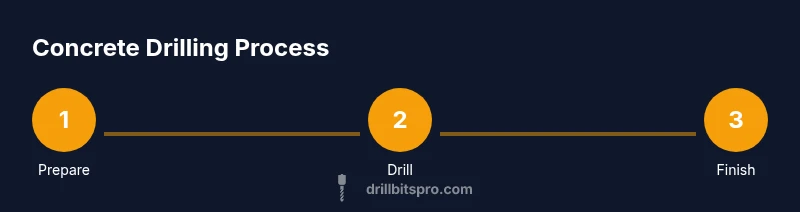
- 1
Inspect area and PPE
Before any drilling, assess the surface, check for rebar, utilities, and moisture. Put on eye protection, dust mask, and hearing protection. Clear the workspace and ensure the drill area is dry and stable.
Tip: Verify that the power source and extension cords are rated for high-torque tools. - 2
Mark location clearly
Use a pencil or marker to place a precise center mark. If possible, use a center punch or a small guide to reduce bit wandering when starting.
Tip: Double-check alignment with a ruler or level to ensure accuracy before starting. - 3
Install appropriate bit and tighten
Choose the correct bit for the hole size and concrete hardness. Insert into the chuck and tighten securely. If using an SDS system, ensure the bit seats fully and aligns with the tool.
Tip: Avoid overtightening; a snug fit is sufficient to prevent bit slip without damaging the chuck. - 4
Drill a pilot hole (when practical)
For larger diameter holes, start with a smaller pilot hole to guide the larger bit and reduce walking. Maintain perpendicular orientation and start at a low speed to establish the center.
Tip: If the bit wanders, stop, realign, and re-mark the center before resuming. - 5
Drill with steady pressure
Apply steady, controlled pressure and let the drill do the work. Increase speed only as the bit begins to cut cleanly. Periodically pull out to clear dust and cool the bit if it overheats.
Tip: Avoid forcing the bit; excessive pressure overheats the bit and can cause cracking. - 6
Finish and clean up
Once the hole reaches depth, pause to remove debris and inspect the hole for clean edges. Use a vacuum to remove dust, and store tools properly to prevent rust or damage.
Tip: If the hole is for anchoring, wipe the sides to ensure a clean contact surface for the anchor.
Got Questions?
What is the best drill for concrete?
For most DIY projects, a hammer drill with a carbide-tipped masonry bit is a reliable choice for small holes, while an SDS-plus rotary hammer is preferred for larger holes or dense concrete. Choose based on hole size and material hardness.
For most DIY tasks, start with a hammer drill and a carbide-tipped masonry bit. If you need larger holes or are drilling dense concrete, switch to an SDS rotary hammer.
Can I drill concrete with a regular drill?
A standard drill without hammer action will struggle with concrete. Use a hammer drill or rotary hammer designed for concrete drilling, paired with a masonry bit to ensure effective cutting and reduce bit wear.
A regular drill can struggle with concrete. You’ll need a hammer drill or rotary hammer with a masonry bit.
What drill bit should I use for concrete?
Use carbide-tipped masonry bits for most concrete work. For very hard concrete or larger holes, SDS or rotary hammer bits offer better performance and durability.
Use carbide-tipped masonry bits for concrete; for hard material or bigger holes, go with SDS or rotary hammer bits.
How can I avoid hitting rebar when drilling?
Plan your hole path to avoid known rebar locations. If you encounter rebar, stop, reposition, and drill around it or use a pilot hole to guide the final bore.
To avoid rebar, plan ahead and reposition if you hit metal. Drill around it or use a pilot hole to guide the final bore.
How do I prevent dust and debris when drilling?
Use a dust collection system or a vacuum, and wear a respirator or dust mask. Keep the worksite well-ventilated and wipe down after finishing.
Use a dust extractor or vacuum and wear a mask. Ventilate the area and clean up thoroughly afterward.
Is water cooling recommended when drilling concrete?
Water cooling helps reduce heat and extends bit life on dense concrete. Use a light spray or damp cloth to cool the bit as you work, especially on longer holes.
Water cooling can help extend bit life; lightly spray or wipe the bit as you drill.
Watch Video
Top Takeaways
- Choose the right drill: hammer for small-to-medium holes, SDS rotary for large or dense concrete
- Carbide-tipped masonry bits are the standard for concrete work
- Pilot holes help guide the final bore and reduce bit wandering
- Maintain safe practices and dust control for better results
- Regularly inspect and maintain bits and drills to extend life