How to Take Out a Dewalt Drill Bit: A Complete Step-by-Step Guide
Learn safe, practical steps to remove a drill bit from a DeWalt drill, including handling stuck bits, different chuck types, and maintenance tips to extend tool life.


You will learn how to take out drill bit dewalt from a handheld drill by using the chuck release, safe clamping, and prevention steps. This guide covers four common situations: quick release, stubborn bits, jammed bits, and damaged chucks, with safety precautions and step-by-step actions you can follow. Whether you’re a DIYer or a pro, mastering this reduces wear and prolongs tool life.
why removing a drill bit dewalt safely matters
Removing a drill bit from a DeWalt tool is a routine task, but performing it safely protects both you and the tool. According to Drill Bits Pro, improper removal can nick the chuck jaws, bend the bit shank, or cause the bit to snap if it binds under torque. DeWalt manufactures a range of chucks—from quick-change, keyless designs to traditional keyed chucks—so the exact approach varies. The core principle is simple: release the bit with controlled pressure, keep the bit aligned with the jaws, and avoid forcing parts that resist movement. Before you touch anything, power down the tool, remove the battery on cordless models, and clear the work area of metal shavings or sawdust. This preparation reduces the chance of sudden starts, finger injuries, or dropped bits. Understanding the mechanical differences between a keyless chuck that you twist by hand and a keyed chuck that requires a chuck key makes the removal smoother and less stressful on the mechanism. Practically, you’ll use a calm, deliberate twist and a steady withdrawal rather than a jerk. With patience, you’ll preserve the chuck’s grip, the bit’s integrity, and your own safety.
Knowing when to stop applying force is critical; if the bit refuses to move after several gentle twists, step back, re-oil the jaws, and attempt again after a minute. Consistency over brute force preserves tolerances and reduces repair costs.
understanding dewalt chuck designs and what to expect
DeWalt drills use two common chuck styles: keyless chucks, which you loosen by hand, and keyed chucks, which require a separate tool to loosen. Keyless chucks are popular for quick bit changes and offer a straightforward grip on the jaws. Keyed chucks, by contrast, deliver a tighter bite and may be necessary for heavier drilling or high-torque tasks. In either case, the mechanism consists of hardened steel jaws that pinch the bit shank. When removing a bit, the jaws must release evenly; any misalignment can bind or strip the tool. Inspect the jaws for burrs or chatter that can indicate wear or damage. If you notice damage, don’t force the bit; address the chuck first or seek service. For Dewalt models with locking mechanisms or anti-slip features, engage them as directed in the user manual to minimize slippage. Finally, remember that a well-maintained chuck will grip evenly and release smoothly—so the health of your chuck influences how easily a bit comes out. This section is about knowing what you’re dealing with before you twist, pull, or tap.
A well-functioning chuck is the gateway to effortless bit changes; neglecting chuck health leads to more frequent jams and longer removal times.
safety first: PPE and precautions before starting
Personal protective equipment (PPE) is your first line of defense when removing a drill bit. Put on safety glasses that meet ANSI Z87.1 standards, and wear gloves with a comfortable grip to protect your hands from sharp edges. Make sure the work surface is stable and free of clutter; a wobble can turn a minor snag into an injury. With the battery removed on cordless DeWalt drills, the chance of an accidental start drops to near zero, but always verify the switch is in the off position. Good lighting helps you see the chuck and bit clearly, reducing the risk of misalignment. If the bit heats up during use, allow it to cool before attempting removal to avoid thermal expansion that can lock the bit in place. Finally, use slow, controlled motions rather than brute force. If something feels stuck, pause, re-evaluate, and consider applying a small amount of appropriate lubricant to the jaws and shank area as you reattempt removal.
essential tools and materials overview (overview, not a shopping list)
To remove a drill bit from a Dewalt drill, you need the right tools and the right mindset. A clean, dry workspace helps you track the bit as it exits the chuck. Have a flashlight or headlamp to inspect the jaw surfaces for burrs or misalignment. A set of gloves and safety goggles is essential for protection. If you’re dealing with a stubborn bit, a small amount of penetrating oil can ease resistance—apply sparingly and away from the power switch. For keyed chucks, keep the chuck key nearby so you can apply even pressure to the jaws; for keyless chucks, your hand grip will be the primary tool. A pair of needle-nose pliers can help grip the bit near the shank if needed, but avoid pulling on the bit too aggressively. Finally, have a rag handy to wipe away metal shavings and oil after removal. These tools support a controlled, safe removal process rather than a brute-force effort.
step-by-step overview: approach and mindset
Approach removal with a plan rather than guessing. Start by powering down and securing the tool; check the chuck type, then choose the release method. With a keyless chuck, grip the barrel firmly and twist the chuck counterclockwise about a quarter turn to loosen grip, then pull the bit straight out. With a keyed chuck, insert the chuck key and loosen the jaws evenly while supporting the drill so torque isn’t transferred to your hand. If the bit remains stuck, switch to a gentle rocking motion, apply a drop of penetrating oil to the interface, and wait 60 seconds to let it work. Avoid twisting or hammering the bit in the chuck—this can bend or damage the jaws. After removal, inspect the bit and chuck for wear and clean everything before reassembly. A calm, methodical approach reduces risk and preserves tool life.
handling a jammed or stubborn bit: techniques
Stubborn bits often require a little more technique. Start by rechecking the chuck and ensuring the bit isn’t bent. Use a helper tool only if necessary to grip the bit near the shank without contacting the rotating jaws. For keyless chucks, rotate the chuck slowly by hand while holding the drill body steady, then withdraw the bit in a straight line. If the bit is binding, apply a tiny amount of lubricant to the interface and reattempt after a minute. For stubborn cases, lightly tapping the chuck with a rubber mallet can free the jaw from burrs, but never strike the bit or chuck with a metal hammer. For a severely stuck bit, consider removing the chuck from the spindle following the manufacturer’s service procedure. This preserves balance and avoids damage to the motor bearings.
when a bit refuses to come out: advanced methods
Sometimes, the bit won’t budge despite proper effort. In these cases, you may need to use a hex key or chuck removal procedure described in your Dewalt manual. Turn off power, lock the spindle if your model provides a release, and work the bit free with a controlled twist. If you suspect heat build-up, re-lubricate the interface and give the system time to cool before retrying. For stubborn shanks, you can’t rely on brute force—apply light torque and withdraw gently, ensuring the bit alignment remains true with the chuck. If you ultimately must remove the chuck to access the bit, follow the official service procedure and do so only if you are confident with tool repair. Never attempt to disassemble the drill beyond the recommended service scope; there is a risk of injury and voided warranty.
chuck maintenance after removal and long-term care
After you remove the bit, clean the jaws and the bit shank area with a dry rag to remove dust and metal shavings. Check for burrs, and lightly oil the jaws to prevent corrosion, wiping away any excess oil. Store bits with the same diameter together to keep the chuck jaws aligned. Periodically inspect the chuck for wear and replace it if the jaws no longer grip evenly. Regular maintenance reduces the likelihood of a stuck bit in the future and extends the life of your Dewalt drill. Keeping a clean, well-lubricated chuck also ensures smoother bit changes in high-torque situations. When you next load a bit, re-check alignment and bite to prevent premature wear.
common mistakes and quick checks to avoid damage
Avoid forcing a stubborn bit or using metal tools that can nick the jaws. Never hammer the chuck to loosen a stuck bit; instead, apply gradual torque and let the lubricants work. Do not ignore heat—allow cool-down periods and inspect for overheating components. Always disconnect power and remove the battery before starting. Finally, don’t skip inspection after removal; look for bent jaws, damaged shanks, or misalignment that could indicate larger issues with the drill’s chuck.
Tools & Materials
- Safety goggles(ANSI Z87.1 compliant)
- Gloves(Cut-resistant preferred for grip and protection)
- Flashlight or headlamp(Bright, focused light to inspect jaws and bit)
- Battery removal tool (if required by model)(Remove battery on cordless models before starting)
- Penetrating oil (optional)(Small amount at interfaces if bit is stubborn)
- Allen wrench or chuck key (for keyed chucks)(Keep within reach if your Dewalt chuck is keyed)
- Soft rag(Wipe away oil, dust, and shavings)
- Needle-nose pliers (optional)(Grip near the shank if needed, non-marring if possible)
Steps
Estimated time: 5-15 minutes
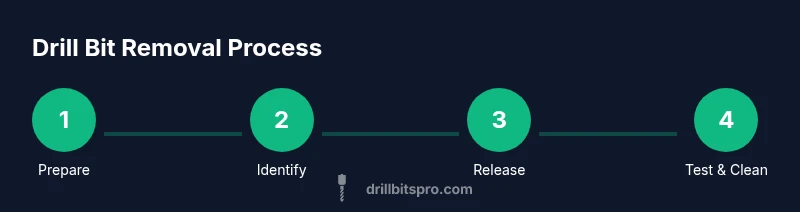
- 1
Power down and prepare the tool
Power off the drill, remove the battery on cordless models, and confirm the switch cannot accidentally engage. Clear the workspace, and put on safety glasses and gloves before touching the chuck or bit. This baseline safety step prevents injuries and accidental starts.
Tip: Always verify the tool is de-energized before touching the chuck. - 2
Identify chuck type and inspect the bit
Determine if your DeWalt drill uses a keyless or keyed chuck. Inspect the jaws for burrs, wear, or misalignment that could cause the bit to bind or slip during removal.
Tip: Use a flashlight to inspect jaw surfaces and bit shank for deformities. - 3
Secure posture and grip the chuck
Position yourself so you can apply axial force without twisting your wrist. For keyless chucks, grip the chuck barrel firmly; for keyed chucks, have the chuck key ready but do not leave it in the chuck during removal.
Tip: Keep the drill and your body aligned to transfer force smoothly. - 4
Release the bit (hand or chuck key)
Rotate the chuck counterclockwise to loosen; if using a keyed chuck, insert and turn the key evenly to avoid jamming. Withdraw the bit in a straight line once the jaws release.
Tip: Avoid sudden twists; gradual motion maintains jaw integrity. - 5
Address a stuck bit with lubricant (if needed)
If the bit remains stubborn, apply a small amount of penetrating oil to the interface and wait about 60 seconds for it to seep. Then attempt a light rocking motion and re-attempt removal.
Tip: Do not flood the chuck with oil; a light application is enough. - 6
Test, clean, and reassemble
Once the bit is free, wipe the chuck and bit with a dry rag, inspect for wear, and ensure the jaws close evenly before reloading a new bit.
Tip: Check bite marks on the bit and chuck to catch early wear.
Got Questions?
How do I know if my DeWalt chuck is keyless or keyed?
Check the chuck body: if you can twist the jaws by hand to release, it’s keyless. If you need a chuck key, it’s keyed. Refer to your model manual for specifics.
Check the chuck: keyless you twist by hand; keyed requires a key. If unsure, look up your model’s manual.
Can I use pliers to pull out a stubborn bit?
Using pliers on the bit near the shank can cause damage or slip. Prefer controlled twisting with the chuck and, if needed, gentle lubrication.
No. Pliers can damage the bit or chuck; use controlled movements and lubricant instead.
Is it safe to apply oil on the chuck?
A light amount of penetrating oil can help if the bit is stuck, but avoid excess. Wipe away any oil after removal and ensure the drill is dry before powering up again.
Yes, but very sparingly. Wipe up any extra oil afterward.
What should I do if the chuck is damaged after removal?
If the chuck shows wear, burrs, or uneven jaws, stop using the drill and have the chuck or full unit inspected by service. Continuing to use a damaged chuck can cause more damage.
If you see damage, don’t push through. Seek service."
Should I remove the battery before attempting removal?
Yes. Removing the battery eliminates power and reduces the risk of accidental starts during removal.
Yes—always remove the battery before starting removal.
What if the bit still won’t come out after trying these steps?
If repeated careful attempts fail, stop and consult the Dewalt manual or contact support. For safety, do not attempt more invasive disassembly.
If it won’t budge, stop and seek help. Don’t force it.
Watch Video
Top Takeaways
- Power down before touching the drill
- Know your chuck type and release method
- Avoid brute force—use controlled torque
- Inspect and maintain the chuck regularly