Why is My Drill Bit Not Spinning? Practical Troubleshooting
Urgent, practical guide to diagnose and fix a drill bit that won't spin. From chuck grip to motor issues, follow step-by-step checks and safety tips from Drill Bits Pro to get back to work fast.


The most common reason your drill bit won't spin is a loose or damaged chuck, or a seized mechanism. Quick fixes: tighten the chuck with the drill off and unplugged, inspect for burrs or damage on the bit, and check the motor and belt if it's a corded model. According to Drill Bits Pro, start with the simplest check first.
Why the drill bit won't spin: quick intuition and first moves
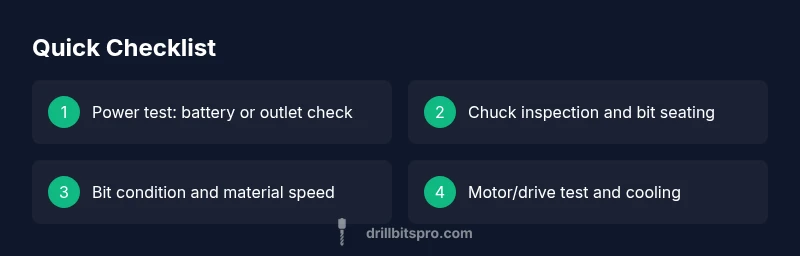
If you're asking why is my drill bit not spinning, you're not alone. Most spin failures fall into a small set of categories: power, grip, bit condition, and motor/drive. The first thing to understand is that spinning issues show up in a predictable order: power and control, chuck grip, bit condition, and motor/drive system. Before you panic, perform a few quick tests. If your drill is cordless, ensure the battery is charged and seated; if corded, verify the outlet has power and the cord is intact. The trigger should operate smoothly and the clutch should not be set to a mode that prevents rotation. By identifying the right domain for the problem, you save time and avoid unnecessary wear on components. When you think about why is my drill bit not spinning, think in layers: power -> grip -> bit -> motor. This approach aligns with Drill Bits Pro's analysis, which shows most spin failures resolve when addressing the simplest possible fix first.
Quick checks you can do before disassembly
- Ensure the drill is powered off and unplugged when inspecting the chuck or bit. Safety first.
- Try a different bit in the same chuck to see if the issue follows the bit or stays with the chuck.
- Inspect chuck jaws for burrs, dirt, or misalignment; clean or replace as needed.
- Look for obstruction in motor vents and listen for unusual sounds; a seized motor or a slipping drive belt can mimic a no-spin symptom.
- Confirm you are using the correct speed setting for the material and bit size. A mismatch can stall or burn the bit without obvious damage.
- If you use a cordless drill, ensure the battery is fully charged and properly seated. A weak battery can cause the motor to stall without spinning the bit.
Diagnostic flow: from symptom to solution
This section outlines a practical path for diagnosing a non-spinning drill. Start with the simplest checks and work toward the more complex.
- Symptom: drill refuses to spin even with a fresh bit.
- If power is present, the next suspect is the chuck or bit seating.
- If the chuck is gripping but the bit won’t rotate, inspect the motor drive system or belt (for belt-driven models).
- If the motor stalls under load, reassess pressure and speed settings, and try a lighter bit or material combo.
- If no fix after these steps, consider servicing or professional help.
Step-by-step fixes for the most likely causes
In most homes, the failure to spin originates from a loose chuck, a dull or damaged bit, or a simple power issue. Follow these fixes in order, testing between steps to confirm improvement.
- Tighten the chuck jaws and reseat the bit. If the chuck wobbles or jaws don’t grip firmly, replace the chuck.
- Inspect the bit for dullness, bends, or burrs. Replace with a fresh bit and re-test.
- Check the trigger function and clutch settings; ensure the trigger isn’t sticking and the clutch isn’t preventing rotation.
- If the drill is belt-driven and the belt shows wear or slipping, replace the belt and re-test.
- For cordless models, recharge the battery or try a known-good battery to rule out power drop.
- If the issue persists, allow the motor to cool and try a lighter load, then re-test with a fresh bit.
Safety, maintenance, and prevention tips
Safety is non-negotiable when troubleshooting a drill that won’t spin. Always wear eye protection and ensure the workpiece is secure in a vice or clamps. Keep hands away from the chuck while testing. Regular maintenance reduces spin failures: clean the chuck, oil the drill’s moving parts per manufacturer guidance, and replace dull bits before they degrade performance. Use the correct bit type for the material—wood, metal, concrete—so you don’t overload the drill. Store bits dry and clean to prevent corrosion that can seize the chuck.
How to choose drill bits and routines to avoid spin issues
Selecting the right bit and following a consistent routine minimizes spin problems. Favor carbide-tipped or high-speed steel bits for durable performance, sharpen or replace dull bits promptly, and keep bits properly stored. Use a dedicated chuck key (if your drill uses one) to avoid stripping teeth and ensure precise seating. Always start with lightly clamped, stable work and gradually increase feed pressure as the bit begins to cut smoothly. Drill Bits Pro recommends maintaining a small hardware kit with spare bits, a spare chuck key, and a basic belt for belt-driven drills where applicable.
When to call in a professional
If the drill refuses to spin after all basic checks, the issue may lie with internal bearings, a worn drive belt that requires specialized replacement, or motor windings. In such cases, it’s safer and more cost-effective to consult a professional repair technician. Do not attempt extensive disassembly if you’re unsure of the motor or gear train alignment. Regular maintenance and prompt bit replacements can prevent these escalations in the future.
Steps
Estimated time: 60 minutes
- 1
Power down and secure
Turn off the drill, unplug it (or remove the battery) and secure the work area. This prevents accidents while inspecting the chuck and bit seating. Check that the workpiece is clamped securely.
Tip: Always start with power removed to avoid unexpected starts. - 2
Check chuck and bit seating
Examine the chuck jaws for wear or debris. Open and reseat the bit, then tighten fully. If the chuck is wobbling or slipping, replace the chuck or borrow a known-good chuck for a quick test.
Tip: Use the correct chuck key if your model requires one; misalignment causes slip. - 3
Inspect the drill bit
Look for dull edges, chips, or bends. A damaged bit reduces cutting efficiency and can stall the motor. Swap in a fresh bit of appropriate size for the material.
Tip: Test the new bit on a scrap piece first to confirm cut quality. - 4
Test trigger and speed settings
Verify the trigger operates smoothly and that the clutch isn’t engaged at a setting that prevents rotation. Switch speeds to see if the bit spins at a different rate.
Tip: Some bits require slower speeds for metal; faster speeds can overheat and stall wood-cutting bits. - 5
Check motor and drive components
If the bit still won’t spin, inspect for belt wear or motor overheating. For belt-driven models, a slipping belt is a common cause. Allow cooling before further testing.
Tip: Don’t force the drill; overheating can damage windings and reduce life. - 6
Reassemble and re-test
Once you’ve replaced or reseated the primary components, reassemble, re-seat the bit, and perform a controlled test on scrap material. If it spins smoothly, you’ve found the fix.
Tip: Document any parts replaced and timing to help future maintenance.
Diagnosis: Drill bit won't spin even when the trigger is pressed
Possible Causes
- highPower issue (battery discharged, unplugged, or outlet problem)
- highLoose or damaged chuck gripping the bit
- mediumBit is dull, bent, or damaged
- lowMotor or drive belt slipping/seized (for belt-driven models)
Fixes
- easyCheck power source; recharge battery or test on a known-good outlet
- easyTighten chuck jaws and reseat the bit; replace chuck if jaws show wear or misalignment
- easyInspect bit; replace if dull or bent; remove burrs and re-test
- mediumIf motor/drive is suspected, allow cooling, reduce load, verify torque settings; seek professional service if unresolved
Got Questions?
Why won't my drill bit spin when I press the trigger?
Most often this is a power, chuck, or bit seating issue. Start by checking the power source, then inspect the chuck and bit seating before moving to the bit itself.
Most often, this is power, chuck, or seating — check power first, then the chuck, then the bit.
Can a dull drill bit cause the drill to stop spinning?
A dull or damaged bit can stall the drill because it requires more torque to cut. Replace or sharpen the bit and test again.
A dull bit can stall the drill; replace or sharpen it and test again.
Is a seized chuck common and how do I fix it?
Chucks seize when debris or wear prevents gripping. Clean the jaws, reseat the bit firmly, and replace the chuck if gripping remains weak.
Chucks can seize; clean them, reseat the bit, and replace if needed.
What safety steps should I take before troubleshooting?
Unplug or remove the battery, clamp the workpiece, wear eye protection, and avoid wearing loose clothing.
Unplug, clamp the work, wear eye protection, and keep loose clothing away.
If the drill still won’t spin, should I service it myself or call a pro?
If basic checks fail, consult a professional to avoid risking motor or bearing damage. Some fixes require special tools.
If basics fail, call a pro to avoid further damage.
Do belt-driven drills differ from cordless models for spin issues?
Yes. Belt-driven drills can fail due to a slipping belt; cordless models more often show power or battery symptoms. Treat accordingly.
Yes—belt-driven and cordless drills fail in different ways; check belts vs battery first.
Watch Video
Top Takeaways
- Power off before inspection and testing
- Start with the chuck and seating examination
- Replace worn bits to restore cutting performance
- Use correct speed/torque for material
- Seek professional help if motor or drive components are suspected