How Deep to Drill for Oil: A Practical Depth-Planning Guide
A practical, step-by-step guide to estimating oil well depth using geology, reservoir data, and regulatory considerations. Learn how to plan depth safely, cost-effectively, and with minimal risk.


You will learn how to estimate an appropriate drilling depth for an oil well, factoring geology, reservoir targets, and safety constraints. You'll review seismic data, well logs, and regulatory requirements, then outline a depth plan aligned with practical drilling limits. Key prerequisites include access to geological models, planning software, and a qualified team.
The Fundamentals of Depth Planning
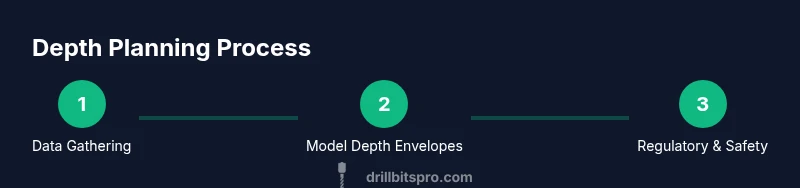
Depth planning in oil exploration is about determining how far down to drill in a reservoir to maximize recovery while minimizing cost and risk. A robust depth plan integrates geology, reservoir engineering concepts, and practical drilling limits. According to Drill Bits Pro, depth decisions start with measuring subsurface structure and rock properties, because the vertical depth controls where you reach hydrocarbons and how the borehole will perform under pressure and temperature. The plan must also account for wellbore stability, mud weights, formation pressures, and potential adverse events such as lost circulation or kicks. In shallow or onshore projects, the target depth might be guided by surface access and logistics; in offshore ventures, you must incorporate water depth, rig capabilities, and standby time. The interplay of rock strength, pore pressure, fracture gradient, and reservoir thickness shapes the final depth envelope. Throughout, you balance the scientific target with practical constraints, project economics, and regulatory requirements. A disciplined, data-driven approach reduces surprises during drilling and improves the odds of hitting the reservoir on budget.
Geological Data and Reservoir Targets
Successful depth planning begins with a clear picture of the subsurface. Seismic surveys illuminate major structural features, faulting, and possible traps, while well logs provide local rock properties, porosity, and fluid content. Integrating regional geology with existing well data helps define a reservoir target and its depth range. Core samples and pressure-plant tests add detail about rock strength and pore pressure, informing safe mud weights and fracture gradients. In practice, engineers construct a depth envelope that aligns the target with achievable borehole stability, while accounting for economic limits and the potential for unexpected formations. This data-driven approach reduces uncertainty and guides decisions about drilling strategy and equipment selection.
Modeling Depth Scenarios and Trajectories
Depth planning is not a single number; it is a set of scenarios that account for variability in geology, pressure, and equipment limits. Engineers build multiple depth envelopes, testing different target depths and trajectory angles to optimize reservoir contact while maintaining borehole integrity. Trajectory modeling helps anticipate doglegs, tortuosity, and the need for borehole sections with different diameters. The goal is a depth plan that achieves reservoir access with minimal risk of stuck pipe, kicks, or caving formations. Scenario comparison also supports contingency planning—if a formation proves different than expected, the team can adapt the plan without delaying operations. The result is a robust, auditable depth strategy that aligns technical targets with real-world constraints.
Safety, Regulation, and Environmental Considerations
Depth decisions must integrate safety margins, well-control readiness, and regulatory requirements from the outset. Regulators enforce safety standards, environmental protections, and permitting timelines that shape drilling depth and timing. The mud program, casing design, and blowout prevention equipment must be chosen to withstand expected pressures at the planned depth. Environmentally responsible planning includes spill prevention, wildlife protections, and proper waste handling. A compliant plan reduces the risk of delays, fines, or shutdowns and supports responsible resource development. While this content is educational, always consult licensed professionals for site-specific guidance and approvals.
Risk Management and Wellbore Stability
Drilling depth is tightly linked to stability and risk management. Rock properties, fracture gradients, and pore pressure influence the required mud weights and casing design to prevent wellbore collapse or kicks. Overestimating depth can lead to excessive cost and time, while underestimating depth may miss the reservoir and leave hydrocarbons behind. A balanced plan includes conservative safety margins, staged drilling objectives, and contingency wells. Regular reviews of real-time data from the drill string help detect deviations early, enabling proactive decision-making and reducing the likelihood of costly non-productive time.
Authority Sources
For readers who want to deepen their understanding, consult these authoritative references: U.S. Geological Survey (USGS) at https://www.usgs.gov; U.S. Department of Energy (DOE) at https://www.energy.gov; and the Bureau of Safety and Environmental Enforcement (BSEE) at https://www.bsee.gov. These sources provide context on geology, energy policy, and safety standards that influence depth planning in oil exploration.
Tools & Materials
- Geological models and seismic data access(3D seismic surveys, volumetric rock property models)
- Well planning software(Petroleum system modelling and trajectory optimization)
- Regulatory guidelines and permits(Local and national approvals before drilling)
- Safety gear and team coordination tools(PPE, comms equipment, checklists)
- Drilling mud and casing design references(Guidance documents; not a substitute for design)
Steps
Estimated time: Estimated total time: 4-6 weeks
- 1
Gather geological data
Collect all available subsurface information: seismic surveys, well logs, production data from nearby wells, and regional geology. Align data with the defined reservoir target and potential trap; identify uncertainties. Validate data quality and document any gaps for risk assessment.
Tip: Always cross-check seismic data with at least two independent data sources to confirm features. - 2
Define reservoir target and risk tolerance
Articulate the primary reservoir objective and acceptable risk levels. Translate reservoir characteristics into depth constraints, considering regulatory and budgetary limits. Establish predefined decision gates to advance or revise the plan as new data emerges.
Tip: Document assumptions clearly so future teams can audit the depth decision. - 3
Model depth envelopes and trajectories
Create multiple trajectory options that reach the target while preserving borehole stability. Use trajectory software to anticipate doglegs and wellbore sections that require different diameters or mud programs. Compare scenarios to select a preferred depth envelope.
Tip: Run sensitivity analyses for different rock strengths and pore pressures to test robustness. - 4
Assess equipment, mud program, and safety
Align drilling hardware with the chosen depth envelope. Design a mud program and casing schedule that maintain well control and minimize formation damage. Prepare an emergency response plan and ensure the team is trained.
Tip: Confirm mud weight windows and hydrostatic pressure margins before rig-up. - 5
Incorporate regulatory checks and approvals
Align the depth plan with permitting requirements, environmental assessments, and safety standards. Schedule regulatory reviews early to avoid drilling delays. Keep documentation ready for audits and stakeholder reviews.
Tip: Engage regulators early; early feedback reduces later rework. - 6
Develop contingencies and finalize depth plan
Add contingency wells or alternate depth scenarios to cover data uncertainty. Finalize a depth plan with explicit numbers, margins, and validation steps. Prepare a formal final report and present to the project team.
Tip: Lock in at least one back-up depth scenario to respond to unexpected data quickly. - 7
Team review and implementation
Lead a cross-disciplinary review to ensure all stakeholders agree on depth targets and safety measures. Translate the plan into operational instructions for the drilling crew. Schedule a pre-spud briefing to align everyone on the depth strategy.
Tip: A short pre-spud briefing reduces miscommunication on depth decisions.
Got Questions?
What factors most influence drilling depth?
Drilling depth is influenced by geology, reservoir depth, rock strength, formation pressures, and regulatory constraints. Operators balance potential hydrocarbon recovery with borehole stability and safety.
Depth is driven by geology, reservoir depth, rock strength, pressures, and rules. The plan aims to balance recovery with safety and stability.
Is it ever safe to drill shallower than the target?
Yes, if the data indicates a viable nearby pay zone or to test a shallower prospect. However, this must be justified by data quality and regulatory approval.
Sometimes you test a shallower zone if data supports it, but approvals and quality data are essential.
What data sources are essential for depth planning?
Seismic data, well logs, core samples, regional geology, and pressure data are essential. These inputs inform trajectory design and depth envelopes.
You need seismic, logs, cores, geology, and pressure data to plan depth accurately.
How do regulatory requirements affect depth decisions?
Regulations dictate permitting, environmental impact, and safety standards that influence depth choices and timing. Non-compliance can halt drilling.
Regulations shape depth choices and timelines to ensure safety and environmental protection.
What are common signs that depth planning needs reassessment?
Unexpected formation data, higher-than-expected pressures, or new seismic information can prompt a depth re-evaluation. Early warning signals help avoid costly missteps.
If new data or pressure changes appear, revisit the depth plan early.
Watch Video
Top Takeaways
- Assess geology first to define depth bounds.
- Cross-check data with multiple sources.
- Incorporate safety margins and regulatory requirements.
- Document assumptions and keep the plan auditable.
- Revisit depth decisions as new data arrives.