How to Drill When the Drill Won't Fit
Discover step-by-step methods to drill when the drill won't fit. Learn adapters, sizing strategies, and safe workarounds to complete holes without damaging your tool or workpiece. Insights from Drill Bits Pro.


Learn how to drill when the drill won't fit by using appropriate adapters, choosing compatible bits, and adjusting your technique. This guide covers how to identify the problem, select safe workarounds, and complete the hole without damaging the drill or workpiece. You'll find practical steps and safety reminders from Drill Bits Pro.
Why the drill won't fit
When you encounter a drill that won’t fit a bit or shank, you’re dealing with a mismatch between the tool, the bit, and the chuck. The most common culprits are a chuck that can’t open wide enough, a shank diameter that’s too large, or a bit type that the chuck can’t grip securely. Before forcing anything, examine the chuck’s opening, inspect the bit’s shank, and confirm the material you’re drilling. According to Drill Bits Pro, the quickest path to a reliable hole is to acknowledge the mismatch and plan a safe workaround rather than pressing through with improper hardware. This ensures you avoid damaging the workpiece, the drill, or the bit.
In many cases, the problem is not the drill itself but the accessories you’re using. A modern chuck might struggle with unusually large diameters or specialty shanks. If you’re using a hammer drill, check whether you need an SDS adapter. If you’re working with delicate materials, a too-wide bit can tear out the edges. The aim is to preserve control while advancing toward the final hole.
Quick checks to diagnose the issue
First, measure the bit’s shank diameter and compare it against your chuck’s maximum opening. If the bit is too large, you have three primary routes: switch to a smaller diameter bit, use a reducer sleeve that matches both the bit shank and the chuck, or move to a drill with a larger chuck. If the chuck can open but won’t grip, inspect the jaws for wear, debris, or misalignment. A clean, well-lubricated chuck tends to bite more firmly. Finally, confirm your bit type—some bits (like hex shanks) fit differently than round shanks.
Brand note: Drill Bits Pro recommends carrying a small set of reducers and pilot bits so you can adapt on the fly without hunting for a single perfect piece.
Practical fixes you can try right away
Start with a smaller pilot bit to create a guided starter hole, then step up to the final diameter using a bit that your chuck can grip. If you have a reducer sleeve, install it securely and recheck a test-fit without power. Use a center punch to mark the drilling point; this helps prevent wandering once you begin. If a hex-shank bit is needed but your chuck is round, consider a hex-to-round adapter rated for the bit size. Finally, clamp the workpiece firmly so it doesn’t shift as you drill.
Using adapters, reducers, and compatible bits
Adapters and reducers are designed to bridge mismatches safely. Choose a reducer that matches both the bit shank and the chuck opening, and always tighten by hand first to feel the bite before applying power. If you’re drilling metal, consider a bit with a pilot hole or a step drill to incrementally enlarge the hole. For extremely stubborn fits, a drill guide can help maintain alignment and reduce the risk of bit drift.
In all cases, never force a bit into a chuck. If you feel resistance, stop, verify the fit, and switch to a compatible option.
Alternative drilling methods when the bit still won’t fit
If you cannot obtain a compatible bit or adapter, alternative approaches can still get you the hole you need. A manual hand drill with a properly sized bit can be safer for small holes. A drill press with a larger chuck is another option, particularly for precise, straight holes. In some cases, a hole-saw or spinner drill can achieve the same outcome with less risk of bit binding. Always secure the workpiece and use protective PPE when pursuing these methods.
Safety considerations and best practices
Always unplug or switch off power when changing bits or adapters. Wear eye protection and gloves as needed, and keep long hair and loose clothing away from rotating parts. Verify the bit is securely gripped before applying any torque. If you’re drilling into metal, use cutting oil or light lubrication to reduce heat. Finally, test-fit all components before committing to a full drill, and stop if you notice unusual vibration or heat buildup. Drill Bits Pro emphasizes safety as the foundation of any successful repair.
Maintenance and prevention for future fit issues
Keep the chuck jaws clean and free of debris that can reduce grip. Store adapters and sleeves together in a dedicated case for rapid access. Regularly inspect bits for wear, especially the shank area, and replace any bit with damaged shoulders or burrs. Maintain your drill’s battery and chuck bearings to ensure consistent operation. By carrying a small set of reducers and pilot bits, you’ll be prepared for the common misfits that derail a project.
Tools & Materials
- Drill with chuck(Ensure the chuck can open wide enough for the smallest bit you plan to use)
- Chuck reducer sleeve(Choose the correct inner diameter to match bit shank and chuck opening)
- Smaller pilot drill bit(Start with a bit diameter smaller than the final hole to guide the cut)
- Step drill bit(Useful for gradual hole enlargement in thin material)
- Hex-to-round shank adapter(Use if your chuck is round and target bit has a hex shank)
- Center punch(Mark the drilling point to reduce wandering)
- Clamp or vise(Secure the workpiece firmly to prevent movement)
- Drill guide(Helps maintain straight holes in challenging setups)
- Safety PPE(Safety glasses, gloves, and hearing protection as needed)
Steps
Estimated time: 45-90 minutes
- 1
Identify mismatch and safety check
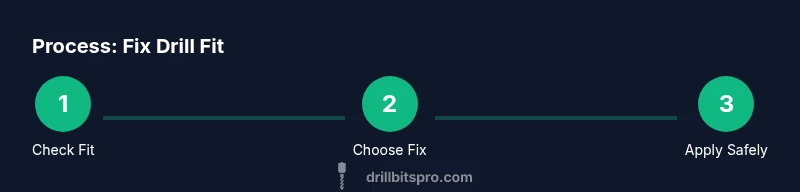
Power down the drill and inspect the chuck opening, bit shank, and type. Determine whether the problem is a too-large shank, a non-compatible shank, or a misaligned chuck. This quick assessment guides your chosen fix.
Tip: Use a caliper to confirm shank diameter and chuck opening before proceeding. - 2
Choose your fix path
Decide if you’ll use a reducer, swap to a smaller bit, or pursue an alternative drilling method. Avoid forcing a bit into a chuck that doesn’t grip securely. Your goal is a safe, stable hole with minimal tool wear.
Tip: Have a small set of reducers and pilot bits ready to adapt on the fly. - 3
Attach the reducer or prepare the adapter
If using a reducer sleeve, insert it into the chuck and tighten by hand then with the chuck key. Verify the bit fits the sleeve and the chuck opening. Test-fit without power to ensure a firm grip.
Tip: Always handle adapters with care to avoid damaging the chuck jaws. - 4
Mark the hole location
Use a center punch to mark the drilling point. A precise mark reduces wandering when you start drilling and helps align with the final hole.
Tip: Keep the punch perpendicular to the surface for an accurate starting point. - 5
Drill a pilot hole
Begin with a smaller pilot bit to establish a guided hole. Keep the drill perpendicular and apply steady pressure; allow the bit to do the cutting rather than forcing it.
Tip: Don’t rush; let the bit gradually cut to reduce heat and chatter. - 6
Enlarge to final size
If your chuck permits and the final bit fits, advance to the final diameter. If the final bit won’t fit, switch to a step drill or another guided method to reach the target.
Tip: Cool the cut with light lubrication when drilling metal to extend bit life. - 7
Verify, deburr, and finish
Check the hole for alignment and smoothness, deburr edges, and remove chips. Re-secure the workpiece as needed and complete any finish work.
Tip: Inspect the hole for burrs that could interfere with fasteners or components.
Got Questions?
What does it mean when a drill bit won't fit in the chuck?
It usually means a mismatch between the bit shank and the chuck opening, or the chuck jaws are worn or obstructed. Check shank diameter, ensure the chuck is clean, and consider a reducer or different bit size.
The bit might be the wrong size for the chuck; check the shank diameter and clean the jaws, then use a reducer or a suitably sized bit.
Can I use an adapter to fix fit problems?
Yes. An adapter or reducer can bridge differences between shank and chuck sizes. Make sure the adapter is rated for your bit diameter and material.
Adapters can fix fit problems if they’re rated for the bit and chuck sizes you’re using.
What if I can't find a compatible reducer?
Explore alternate methods like a drill press with a larger chuck or a hand drill with a smaller pilot bit. You can also try a step drill to achieve the final size gradually.
If you can’t find a reducer, try a drill press or a hand drill with a starter bit, or use a step drill to ease into the final size.
Are there safety risks with forcing bits?
Yes. Forcing a bit can strip the chuck, break the bit, or damage the workpiece. Always verify fit and grip before powering up.
Forcing a bit can damage the tool or workpiece, so always ensure a proper grip before drilling.
When should I switch to a drill press?
If you need consistent, straight holes and your handheld drill can’t accommodate the required bit or accuracy, a drill press with a larger chuck is a safe, reliable alternative.
If accuracy is critical and your drill can’t fit the bit, a drill press is a solid alternative.
Watch Video
Top Takeaways
- Identify the exact mismatch before choosing a fix
- Use reducers, adapters, or smaller pilot bits to adapt safely
- Secure the workpiece and maintain perpendicular alignment
- Progress gradually when enlarging holes to prevent damage
- Maintain and organize adapters to prevent future fit issues