How to Use Drill Bits with an Impact Driver
Learn how to pick the right drill bits, pair them with an impact driver, and drill safely through wood, metal, and masonry with expert tips from Drill Bits Pro.


You will learn to safely pair the right drill bits with an impact driver, maximize torque, and prevent bit breakage and cam-out. Start with a fresh bit set and ensure hex-shank compatibility. Always wear safety glasses, secure the workpiece, and follow recommended speeds for wood, metal, and masonry projects, at the start of any job.
Why pairing drill bits with an impact driver matters
Pairing the right drill bits with an impact driver is essential for clean holes, fast progress, and long bit life. The impact driver's torque and hammering action can both help and hinder your results, depending on the bit you choose. According to Drill Bits Pro, understanding hex shank compatibility, bit geometry, and material differences will save you time and reduce wear on your tools. In practice, selecting a bit designed for impact-rated drilling reduces cam-out and bit wandering. For most DIY tasks, start with high-quality twist bits for wood, or cobalt and masonry bits for tougher materials. Then fine-tune speed and pressure to the task. This foundation matters across wood, metal, and masonry work.
Key points to remember:
- Use bits labeled impact-rated or designed for hammer-drill or impact drivers.
- Check your shank: most modern drivers use 1/4" hex, but some older models use different interfaces.
- Keep bits sharp; a dull bit generates more heat and wears faster.
- Inspect bits for chipping, bending, or rust before each project.
- Always secure your workpiece with clamps and wear safety glasses.
The right pairing isn’t about power alone; it’s about control, fit, and procedure. With the proper bit, you can drill faster, with better hole quality, and with less effort. This approach reduces wear on your impact driver and the bit itself, which translates into longer tool life and more predictable results on the jobsite.
How to choose the right drill bit for impact driving
Not all drill bits are created equal, and an impact driver benefits from choosing tools that are engineered for high-torque, impulsive action. For wood, start with twist bits made of high-speed steel (HSS) or cobalt variants for harder softwoods. For metal, use HSS twist bits or cobalt bits; for stainless, extend to cobalt or premium HSS with proper lubrication. For masonry, choose carbide-tipped masonry bits with a robust carbide tip and a steel body capable of withstanding hammering. When using impact drivers, prefer hex shank bits or bits sold as impact-rated; avoid plain shank bits in low-end drivers. Check bit geometry and flute design: more flutes for faster clearing, fewer for tougher materials. Also verify the bit length suits your hole depth and the material’s thickness. Materials and coatings vary: titanium-coated bits stay sharper longer but can chip if mishandled; carbide tips excel in masonry applications but are brittle if dropped. This section helps you match bit selection to material, hole size, and the driver’s torque profile so you avoid common issues like wandering, overheating, or premature wear.
Preparing your workspace and safety basics
Safety and organization are the foundation of successful drilling with an impact driver. Begin by clamping your workpiece securely to a stable surface to prevent movement. Wear proper PPE: safety glasses or a face shield, hearing protection if you’re running at higher speeds, and a dust mask when cutting or drilling dusty materials. Clear the area of trip hazards and ensure there’s adequate lighting. Keep a small brush or vacuum handy to manage debris, as metal shavings or wood particles can affect bit performance. Before you start, inspect your impact driver for worn batteries or loose parts, and confirm the bit is designed for hammering action. Finally, lay out measurement marks and pilot-hole references so you drill with precision rather than guesswork.
Step-by-step workflow overview
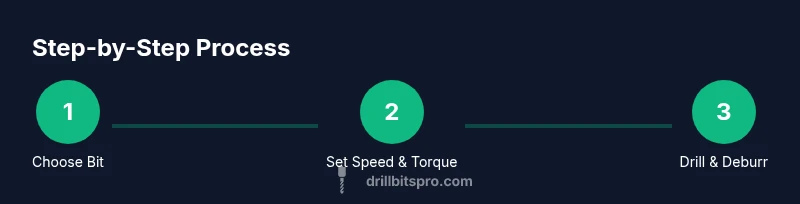
This section provides a high-level flow you can reference while performing the actual steps. It prepares you to execute the process with confidence and consistency. First, identify the material and desired hole size, then select the appropriate impact-rated bit. Secure the workpiece with clamps and mark the drill point clearly. If you’re drilling metal, consider a center punch to prevent skidding. Start with a light pilot hole where appropriate, and set your impact driver to a conservative speed and torque. Gradually increase as the bit bites, keeping steady, controlled pressure. After breaking through, back the bit out smoothly to clear debris and cool the bit. Finally, deburr the hole and store the bit properly after use. Visual aids, such as diagrams and quick-reference tables, can help you apply these steps consistently across projects.
Common mistakes and how to avoid them
Common mistakes include using non-impact-rated bits, applying too much pressure, and running at too high a speed for your material. To avoid cam-out and bit breakage, always use the correct bit type for the material and keep the bit sharp. Do not force the bit through a stubborn material; instead, back off, lubricate if needed, and re-engage with reduced speed. Another frequent error is drilling with the hex shank partially seated; ensure the bit is fully seated in the chuck or hex socket and that the driving surface is clean. If the bit overheats, pause to let it cool and check for dull edges or misalignment. Finally, avoid drilling in a dusty or wet environment that could cause rust or reduced grip on the bit shank.
Maintenance, care, and extending tool life
To extend the life of your drill bits and impact driver, store bits in a dry container, away from moisture and corrosion. Keep bits dry and sharpen them regularly; a sharp edge reduces heat buildup and improves hole quality. Clean the driver chuck and hex interfaces after use to prevent debris from jamming the bit. If you’re drilling abrasive materials, consider stepping down to a sturdier bit and allowing cooling breaks to avoid overheating. Lubrication is material-specific: use minimal oil when drilling metal to reduce friction, but avoid oil on wood, which can bead and contaminate the hole. Regularly inspect bits for cracks or bending, and retire any bit that shows significant wear.
Real-world projects and quick-start plan
A practical, real-world approach helps you build confidence quickly. Start with simple wood projects like drilling pilot holes for shelves or cabinet hardware to get a feel for the driver’s torque and the bit’s bite. Progress to light metal work, such as drilling holes in a steel frame or aluminum extrusion, using cobalt or HSS bits with a conservative speed. For masonry, use carbide-tipped bits and a hammering action, reinforcing the habit of proper lubrication and cool-down periods. A quick-start plan can be: (1) set up a scrap piece, (2) choose a 1/8"-to-1/4" bit for wood or appropriate size for metal, (3) clamp securely, (4) drill with pilot hole if needed, (5) widen gradually if required, (6) deburr and clean up. These projects help you apply the principles in a safe, repeatable way and build your toolkit over time.
Tools & Materials
- Impact driver(Hex-shank drive compatible; ensure battery is charged and torque settings are suitable)
- Impact-rated drill bits (wood, metal, masonry)(Choose bits with carbide tips for masonry; HSS or cobalt for metal; ensure bit is marked for impact use)
- Hex shank adapters or bit holder(Secure seating and reduce wobble in the chuck)
- Safety glasses(Eye protection at all times)
- Clamps or vise blocks(Prevent movement during drilling)
- Measuring tools (tape measure, pencil)(Accurate hole placement and depth control)
- Center punch or marking tool(Helps start holes accurately on metal)
- Lubricant or cutting oil(Optional for metal drilling to reduce heat)
- Dust mask(Optional for dusty materials)
Steps
Estimated time: 30-45 minutes
- 1
Check tool compatibility and safety
Inspect your impact driver to confirm hex bit seating is clean and secure. Verify the bit is designed for impact use and the material you’ll drill matches the bit’s purpose. This reduces the chance of slippage or bit breakage.
Tip: If the bit wobbles in the chuck, stop and reseat it or try a different bit with a tighter fit. - 2
Mark the drilling location
Use a pencil for wood, center punch for metal, and a guide mark for masonry. Accurately marking the hole helps prevent wandering once the bit starts turning.
Tip: For metal, a center punch helps the bit start precisely and reduces wandering. - 3
Attach the bit and prepare the workpiece
Insert the hex bit fully into the driver and secure with a bit holder if needed. Clamp the workpiece firmly and ensure your workspace is clean and well-lit.
Tip: Make sure the bit is seated all the way and the collar isn’t binding. - 4
Drill with controlled speed
Begin at a low speed and light torque to establish bite. Increase speed gradually as the bit engages, maintaining steady pressure without forcing the bit.
Tip: Let the bit do the work; pushing hard can cause cam-out or bit breakage. - 5
Deburr and inspect
Withdraw the bit slowly while rotating to avoid tearing the hole. Check for burrs and remove with a deburring tool if needed.
Tip: Back out the bit before pulling it all the way out to clear debris. - 6
Clean up and store
Wipe down bits and the driver, then store in a dry container. Inspect for wear and retire any bit showing significant damage.
Tip: Keep a small maintenance kit handy for quick touch-ups.
Got Questions?
Can I use regular drill bits in an impact driver?
Use bits labeled for impact or hammer actions. Regular bits may strip quickly or break under high torque.
Use impact-rated bits to avoid wear and breakage.
What is cam-out and how can I prevent it?
Cam-out is the bit slipping from the hole, often due to excessive torque or dull bits. Prevent it by using the right bit, sharp edges, and moderate speed.
Cam-out happens when the bit slips; keep torque moderate and bits sharp.
What materials can I drill with an impact driver?
Wood, metal, and masonry are common. Use wood bits for wood, HSS/cobalt for metal, and carbide-tipped bits for masonry.
Match the material to the bit type for best results.
Can I drill through metal with a wood bit?
Not recommended. Use metal-cutting bits like HSS or cobalt and adjust speed and pressure accordingly.
Wood bits aren’t ideal for metal; switch to metal bits.
How do I extend bit life when using an impact driver?
Keep bits sharp, avoid overheating, and store them dry. Regular inspection helps catch damage early.
Keep bits sharp and dry to extend their life.
Do I need a drill press for precision?
A drill press offers precision, but clamps and guides with an impact driver can achieve good results for most DIY tasks.
A drill press helps precision, but clamps and guides can work well handheld.
Watch Video
Top Takeaways
- Choose impact-rated bits for reliable results
- Securely clamp workpieces before drilling
- Start with pilot holes and low speed, then increase
- Maintain and store bits properly for longevity