Milwaukee Core Drill: A Practical Guide to Concrete Drilling
Learn how to use a Milwaukee core drill for precise concrete cores. This comprehensive how-to covers setup, bit selection, safety, technique, and maintenance for DIYers and pros.


With a Milwaukee core drill, you can bore accurate holes in concrete or masonry by selecting the right core bit, securing the work, and using water cooling to control heat and dust. This guide covers setup, safety, technique, and maintenance so you can tackle projects with confidence.
Understanding the Milwaukee core drill ecosystem
A Milwaukee core drill is designed to create large, precise cores in hard materials like concrete and masonry. The key advantages of using a Milwaukee setup include a robust motor, vibration-damping features, and compatibility with a wide range of diamond core bits. When used correctly, these drills deliver clean cutouts with minimal chipping and reduced noise compared to older hammer-drill methods. According to Drill Bits Pro, choosing a system that matches your job size and power needs is essential for reliable results. This section explains how the core drill system works, what to expect in terms of performance, and how to plan for different job sites—from residential remodels to commercial installations. Understanding job goals, such as hole diameter, depth, and required finish, helps you select the right equipment and protect yourself from common pitfalls like overheating and bit wear.
Core bits and accessories you’ll rely on
Diamond core bits are the heart of any Milwaukee core drill job. Bit diameter determines hole size, while the segment type and length affect core life and cut quality. For best results, pair your core drill with bits rated for concrete, rated for wet or dry operation as appropriate, and sized to the hole you intend to create. In addition to bits, you’ll need a reliable water source for cooling and dust control, a way to manage slurry, and a method to stabilize the drill—such as a stand or clamps. Milwaukee’s accessory ecosystem includes alignment guides, pilot bits, and lubricants; using the right combination minimizes wand wobble and improves accuracy over long runs.
Preparing your workspace and safety essentials
Before any cutting begins, verify that utilities are clear and that the marked hole location is accessible from a stable work surface. Wear appropriate PPE: safety goggles, hearing protection, gloves, and a dust mask or respirator. Secure the workpiece with clamps or a drill stand to minimize movement, and set up dust containment if possible. Prepare a water supply and a catch basin to avoid creating a slipping hazard. Drilling concrete generates a lot of dust and heat, so planning a clean, well-lit workspace will save time and reduce safety risks. Drills should be inspected for cord integrity, and the battery or power source should be charged or connected before you start.
Drilling technique and best practices
Start at a low speed to establish the center and minimize bit wander. Apply steady, moderate pressure—let the core bit do the work rather than pushing aggressively. Keep a consistent feed rate and maintain a constant flow of cooling water to manage heat and dust. If you encounter rebar or a denser layer, pause and assess the path, adjusting depth limits if needed. Periodically remove the core to check depth and to clear debris; this reduces binding and maintains cut quality. After finishing, withdraw the core slowly to prevent chipping and ensure a clean edge.
Tools & Materials
- Milwaukee core drill(Base unit capable of sustaining stable RPMs and accepts diamond core bits.)
- Diamond core bits (various diameters)(Choose a diameter matching the hole size and length suitable for your depth.)
- Water source or misting system(Essential for cooling, dust control, and bit life.)
- Water containment (basin or tray)(Catches slurry and prevents slippery work areas.)
- Clamps or drill stand(Keeps the drill stable and prevents wandering.)
- Centering tools (marking pencil, center punch)(Helpful for initial alignment on larger cores.)
- Personal protective equipment (PPE)(Safety glasses, hearing protection, gloves, and a dust mask or respirator.)
- Measuring tape and marker(For precise hole location, depth planning, and depth markers.)
- Wrench or hex keys(Used to install/adjust bits and clamps.)
- Vacuum or dust extractor (optional)(Improves dust control when a dedicated extractor isn’t available.)
Steps
Estimated time: 60-90 minutes
- 1
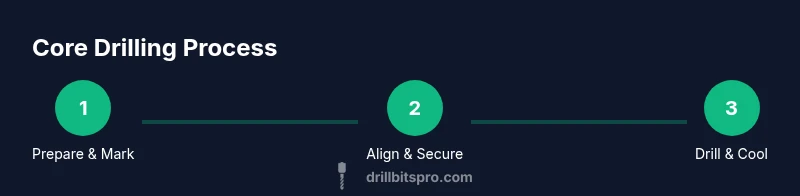
Prepare the work area and PPE
Clear the area of trip hazards and mark the hole location. Put on PPE and verify the power or battery source is ready. If using water, ensure the basin is in place to catch runoff.
Tip: Double-check utilities and avoid drilling near live electrical lines. - 2
Center and secure the workpiece
Mount the workpiece or secure a drill stand to keep the surface steady. Use clamps so the drill won’t move during cutting, which improves accuracy and safety.
Tip: A stable base reduces bit wander and improves edge quality. - 3
Align the bit and set depth
Position the core bit at the center mark and set a depth stop or depth gauge. Ensure the bit is perpendicular to the surface to prevent an oblong core.
Tip: If uncertain about depth, start with a shallow pilot bore to locate the center accurately. - 4
Begin drilling with cooling
Start at a low RPM and feed slowly, applying steady pressure. Use a continuous mist or stream of water to cool the bit and minimize dust.
Tip: Do not force the bit; let the bit cut with controlled contact to preserve its edge. - 5
Check progress and clear debris
Periodically pause to retract the bit, inspect the core, and remove debris. Reapply water and resume drilling until the target depth is reached.
Tip: Regular pauses prevent overheating and bit binding. - 6
Extract core and finish
Once at depth, slowly withdraw the core and remove it from the hole. Clean the bit and area, then inspect the hole for any edge chipping or roughness.
Tip: Carefully lift the core straight out to avoid damaging the surrounding material.
Got Questions?
What surfaces can a Milwaukee core drill handle?
Milwaukee core drills are designed for concrete and masonry. For softer materials, consult the bit manufacturer for compatibility and adjust RPM and cooling accordingly.
Milwaukee core drills work best on concrete and masonry. For softer materials, check the bit specs and adjust speed and cooling.
Do I need water cooling for all cores?
Water cooling is typically required to dissipate heat and suppress dust, especially with larger diameters. Dry drilling is possible in some cases but is less common for core sizes over 1 inch.
Water cooling is usually needed for most core drilling jobs, especially larger cores.
Can I rely on a shop vacuum for dust control?
A shop vacuum helps, but it may not capture all dust and slurry at the drilling point. A dedicated concrete dust extractor performs better for airborne particles.
A vacuum helps, but a proper dust extractor is better for concrete dust.
What maintenance does a Milwaukee core drill require?
Regularly clean the exterior, inspect and replace worn bits, lubricate moving parts per the manual, and store the unit in a dry place to prevent corrosion.
Keep it clean, check bits, lubricate as advised, and store properly.
What should I do if the bit overheats?
If overheating occurs, stop drilling, allow the bit to cool, and reapply water. Reduce RPM and ease back on feed pressure to regain control.
If the bit overheats, stop, cool it, and resume with gentler pressure.
Watch Video
Top Takeaways
- Choose the correct core bit diameter for the target hole.
- Maintain continuous cooling to protect the bit and minimize dust.
- Secure the workpiece and keep the drill aligned to maximize accuracy.
- Inspect and clean tools after each job to extend life.