Where to Drill in Wall: Safe, Practical Guide
Discover where to drill in wall safely. Learn how to identify studs, avoid electrical lines, select the right drill bits, and follow a step-by-step method for drywall, plaster, and masonry.


By the end of this guide, you’ll know how to locate safe drilling zones in walls, identify studs and wires, and choose the right drill bits for drywall, plaster, brick, or concrete. Expect a practical, repeatable process that minimizes wall damage and avoids hidden hazards.
Why choosing the right drilling location matters
Knowing where to drill in wall is about safety, wall integrity, and a clean result. A mislocated bore can compromise support, hit electrical wires or plumbing, and create ragged holes that look unprofessional. For DIYers and professionals using Drill Bits Pro guidance, a deliberate approach reduces surprises and speeds up the project. This section emphasizes the practical outcomes of correct hole placement: predictable hole depth, less drywall damage, and fewer repairs. Repeatedly asking the question, where to drill in wall, helps you standardize a safe approach for future projects and maintains wall performance across different materials such as drywall, plaster, or masonry. The method combines wall assessment, careful probing, and clean pilot holes to ensure you hit the right spot every time.
Understand wall types and what they mean for drilling
Walls come in several varieties, and each type dictates the tools and methods you should use. Drywall (gypsum board) is thin and easy to bore, but you must avoid staples and embedded wires. Plaster walls over lath require slower feeds and often larger pilot holes. Masonry walls (brick or concrete) demand a hammer drill and carbide-tipped masonry bits for clean, accurate holes. When you ask where to drill in wall, start by identifying the material at the intended location, then choose the appropriate bit size, drill speed, and support strategy. This knowledge helps you plan for dust control, possible backer material, and the right type of anchor for load-bearing holes.
How to locate safe zones: studs, wires, and pipes
A precise bore begins with locating the structural and hazard features behind the surface. Use a stud finder to identify edges of vertical studs and mark their centerlines. Switch to a non-contact voltage tester to confirm no live wiring in the intended path, and check for water pipes in bathrooms or kitchens using local building layouts or a magnet to follow nails in pipes. Pencil marks should clearly identify safe zones and avoid areas near outlets, switches, or inspectable plumbing. Remember, the goal is to drill in a zone where there is solid backing and no hidden utilities. If you’re unsure about a wall, pause and reassess rather than forcing a larger hole.
Safe spots for common wall tasks
For lightweight anchors or small fixtures, center zones between studs or into solid backing are preferable. Avoid drilling through electrical boxes, near outlets, or within 6 inches of a switch unless you’re certain there is backing. If you must drill into a wall near a fixture, consider using a thinner pilot hole to confirm clearance before the full bore. For masonry sections, ensure the surface is clean and dry, then begin with a small pilot hole to guide the larger bit. The general rule is to choose a location with direct backing behind the surface and minimal risk of striking hidden infrastructure.
Tools, bits, and fasteners: choosing the right equipment
Your tool selection depends on wall type and the purpose of the bore. For drywall or plaster, a sharp drywall bit or paddle bit with a slow-to-moderate feed is ideal. For brick or concrete, a carbide-tipped masonry bit paired with a hammer drill is essential. Always select the correct drill bit diameter for your anchor or fastener, and dry-fit a test hole first if possible. Safety gear matters: wear eye protection and a dust mask, and use a vacuum or drop cloth to manage debris. If you are drilling for a cable or pipe, use a hole saw or spade bit only when you’ve confirmed the location and avoided utilities. The key to success is using the right bit for the material and backing behind the wall surface.
Step-by-step approach to drilling with minimal damage
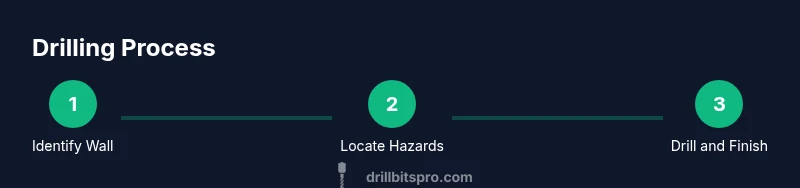
This section outlines a repeatable process you can apply to most walls. Start by confirming the wall material, then locate studs and utilities. Mark the exact drilling point, set the correct drill bit, and drill slowly with a light touch to avoid tear-out. For larger holes, drill a pilot hole first, then step up to the final size. Deburr any rough edges with a deburring tool or sandpaper, then install the anchor or fastener. Clean up dust and inspect the hole for any cracks or misalignment. This approach minimizes wall damage and helps maintain the wall’s structural integrity.
Common mistakes and how to avoid them
Common errors include drilling without checking for wires, choosing the wrong bit, and applying too much force. Another mistake is misjudging the material, which leads to shredded drywall or cracked plaster. Always test with a small pilot hole first and verify backing behind the wall. Avoid drilling near the edge of a stud where it could split, and never force a large drill bit through a narrow gap. By following the steps above, you reduce the risk of injury, wall damage, and the need for patching later.
Tools & Materials
- Drill/driver with variable speed(Corded or cordless, 18V+ recommended)
- Stud finder(Locate stud edges and centerlines)
- Non-contact voltage tester(Test for live wiring in path)
- Carbide-tipped masonry bit(For brick/concrete walls, choose diameter with anchor size)
- Drywall bit or paddle bit(For drywall and plaster surfaces)
- Hammer drill (for masonry)(Required if drilling into brick/concrete)
- Pilot bit(Start with a small hole to guide the larger bit)
- Tape measure(Accurate measurements)
- Pencil for marks(Clearly mark drilling point and backing)
- Safety goggles(Eye protection)
- Dust mask(Optional for dusty walls)
- Anchors and screws appropriate to wall material(Choose length based on hole size and backing)
- Level or straight edge(Help keep holes plumb)
- Vacuum or drop cloth(Contain dust)
Steps
Estimated time: 60-90 minutes
- 1
Identify wall material and backer
Determine whether the wall is drywall, plaster, or masonry. Use a stud finder to locate edges and confirm backing before drilling. This helps you avoid wires and pipes while ensuring a solid anchor.
Tip: If unsure about material, perform a small test hole in an inconspicuous area. - 2
Locate studs, wires, and pipes
Use the stud finder to map stud edges. Switch to a voltage tester to check for live wiring near the planned bore path and look for signs of plumbing behind the surface. Mark safe zones with a clear pencil line.
Tip: Double-check with magnets to detect nails in pipes if you suspect metal conduits. - 3
Mark the drilling point and backing
Mark the exact center of the hole and verify there is backing behind the surface. If drilling into masonry, mark the precise hole diameter to support correct bit size. Re-measure before drilling.
Tip: Always mark slightly away from joints or outlets. - 4
Choose and prepare the bit
Select the correct bit for the material and hole size. Install the pilot bit first when required. Set your drill to a medium speed and steady pressure.
Tip: Lubricate or cool the bit if drilling into masonry to reduce heat buildup. - 5
Drill with controlled pressure
Begin with light pressure and steady speed. For drywall, stop as soon as you break through to avoid punching through the other side. For masonry, use a hammer drill and keep the drill perpendicular to the surface.
Tip: If you sense binding, pause and recheck alignment and backing. - 6
Finish and inspect
Deburr the hole edges, insert anchors if needed, and inspect for cracks. Clean up dust and test the installed hardware to ensure a secure fit.
Tip: Patch any minor wall damage with appropriate compound after anchor installation.
Got Questions?
What is the safest way to locate wires behind drywall before drilling?
Use a non-contact voltage tester alongside a stud finder to verify there are no live wires in the planned path. If in doubt, pause drilling and consult a professional. Always work with the power off when possible.
To stay safe, test for live wires with a non-contact tester and confirm there are no electrical paths before drilling.
Can I drill directly into a stud or should I use a pilot hole first?
Drilling into a stud is common for mounting or anchoring heavier loads. Start with a small pilot hole to confirm alignment, then drill the final size. Pilot holes reduce the risk of splitting the stud and improve accuracy.
Yes, insert a pilot hole first to keep the stud from splitting and to guide the final bore.
Which drill bits should I use for drywall versus brick walls?
For drywall use a drywall bit or paddle bit. For brick or concrete, use a carbide-tipped masonry bit with a hammer drill. Always choose a bit size that matches your anchor or fastener.
Drywall bits for drywall, masonry bits with a hammer drill for brick or concrete.
Is there a risk of drilling into water pipes near a sink or bathroom?
Yes, avoid drilling near plumbing. Check local layouts and use sensors or a stud finder with depth detection to minimize the chance of hitting a pipe. If in doubt, consult a plumber before proceeding.
Avoid pipes; check layouts and use detection tools before drilling.
How can I minimize wall damage when drilling large holes?
Use pilot holes and step up to the final hole size gradually. Deburr edges and apply the proper patching technique afterward. Consider backing material if mounting heavy fixtures.
Start with a pilot hole and progressively widen it to reduce damage.
Watch Video
Top Takeaways
- Identify wall material before drilling
- Locate studs and check for wires
- Use the correct drill bit for the material
- Pilot holes guide larger bore sizes