Curtain Rod Holders No Drill: A Complete How-To Guide
Discover safe, drill-free ways to install curtain rod holders using adhesive mounts, tension rods, and temporary brackets. This expert guide from Drill Bits Pro walks you through options, setup, and care for damage-free drapery.


Install curtain rod holders without drilling by using tension rods, adhesive mounts, or wrap-around brackets that grip the window frame. Match options to wall type and curtain weight, then prepare a clean surface and follow product instructions for a damage-free setup. These methods let you switch drapery without wall holes or nails.
Why no-drill curtain rod holders matter
No-drill curtain rod options protect wall surfaces and retain flexibility in décor changes. For renters or spaces with delicate finishes, adhesive mounts and tension rods offer a reversible solution that avoids nail holes, screws, or wall anchors. According to Drill Bits Pro, understanding wall type, wall finish, and fabric weight is essential before choosing a method. When you select the right system, you maintain wall integrity while enjoying quick drapery updates. Consider whether your window frame supports tension or needs a more robust adhesive bracket with a flat mounting surface. This section will outline practical options you can implement over a weekend with common household tools.
- Wall type and finish matter: drywall, plaster, brick, or wood each behave differently with no-drill options.
- Curtain weight and rod length influence method choice. Lightweight sheers are ideal for tension rods, heavier drapes may require stronger adhesives or wrap-around brackets.
- Reversibility is a key benefit for tenants and seasonal décor changes.
Types of no-drill curtain rod solutions
There are several reputable, drill-free methods you can use, depending on wall type and the weight of your drapes. The most common are tension rods, adhesive mounting brackets, and wrap-around brackets that grip the window frame. Tension rods rely on spring pressure between window sides, while adhesive mounts rely on strong removals such as 3M Command-branded products; wrap-around brackets latch around the casing or trim for a quick, sturdy hold. For metal frames or glass panes, magnets or bracket clamps can offer additional grip. When selecting, check weight ratings and ensure the product is rated for the curtain load you intend to hang. In real-world homes, a layered approach—combining a tension rod with a lightweight secondary support—can improve stability and balance aesthetics with practicality.
- Tension rods are easiest and cleanest for light-to-medium drapes.
- Adhesive mounts require clean, dry surfaces and compatible wall materials.
- Wrap-around brackets offer secure mounting without perforating the wall when frames permit.
How to choose the right method for your space
Choosing the right no-drill solution starts with an honest assessment of your space. Drywall or plaster walls tend to respond well to tension rods and high-quality adhesive mounts, while painted or sealed walls preserve surface integrity with careful application. If your drapery is light, a tension rod or wrap-around bracket often suffices. For heavier drapes or large windows, consider a combination approach or a heavier-duty adhesive system rated for your load. Always verify the surface is clean, dry, and free of dust or oils before mounting. Measure twice, buy once, and keep receipts in case you need to switch methods.
- Start with the curtain weight and width to guide the weight rating you need.
- Check wall surface compatibility and preferred mounting style.
- Ensure mounting locations are level and aligned with the window geometry.
Adhesive mounting options: pros and cons
Adhesive mounting brackets are popular for their clean look and easy removal. They perform best on smooth, sealed surfaces and dry walls, and they can be removed without wall damage if you follow the manufacturer's removal instructions. The caveat is that heat, humidity, or heavy drapes can reduce adhesion over time, especially on textured wallpaper or older paint. Always patch test on a small area before full installation and keep a spare set of replacement pads. If you’re renting or planning a temporary setup, adhesive mounts are often the simplest path to a secure, drill-free finish.
- Pros: reversible, clean aesthetic, no wall damage with careful removal.
- Cons: weight limits, potential residue, surface dependence.
Tension rod method: setup steps and limitations
Tension rods work by expanding within a window opening and pressing against sides via spring tension. They are ideal for lightweight to mid-weight drapes and require accurate measurement to ensure proper fit. The main limitation is load capacity and the potential for rod warping on very wide or tall windows. Always test the rod’s grip before hanging heavy fabric. If the window frame is not perfectly square, you may notice slippage or misalignment over time.
- Ensure the rod length matches window width; add a small margin for flex.
- Keep warning signs for children: a short rod can be a choking hazard if it detaches.
Non-permanent wrap-around brackets: how they work and when to use
Wrap-around brackets slip over the window trim or casing and grip through friction without drilling. They’re a good choice for frames with sufficient depth and for lightweight to medium drapes. Alignment is critical—start by marking level points, then gently press the bracket around the frame. These fixtures can be disassembled easily if you plan to redecorate or move homes, though thicker frames may require longer mounting brackets.
- Choose depth that clears the trim without crowding the fabric.
- Confirm bracket width matches your rod diameter for a snug fit.
Safety, care, and maintenance
Drill-free does not mean maintenance-free. Regularly inspect tension and adhesive mounts, especially after seasonal changes or heavy wind from open windows. For tension rods, relevel and re-tighten if you notice drift. Adhesive mounts should be checked for signs of detachment, such as creeping gaps or adhesive failure. Avoid sudden pulls or heavy pulling on the drapes. When in doubt, switch to a more secure method before mounting heavier curtains.【Tip: A clean, dust-free surface improves longevity.】
Quick-start checklist and common mistakes
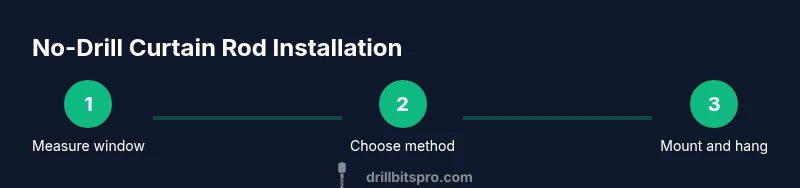
Before you begin, measure the window, select the mounting option, clean the surface, and check weight ratings. Common mistakes include choosing an option that exceeds wall surface capabilities, skipping surface prep, and mounting on uneven windows. A simple, methodical approach reduces risk and ensures a stable result. Remember, no-drill solutions are designed to be reversible and should be treated as semi-permanent fixtures rather than permanent anchors.
Authority sources
For safety and best practices, consult authoritative sources on mounting methods and wall safety. Useful references include university extension resources and OSHA guidelines on safe mounting and working near walls. You’ll find practical considerations here that reinforce the guidance provided in this article. (Links are provided in the Authorities section below)
Tools & Materials
- Measuring tape(To determine rod length and curtain width)
- Pencil(Mark mounting points lightly)
- Tension rod kit(Choose a kit rated for your curtain weight)
- Adhesive mounting brackets set(For adhesive/no-drill option (e.g., Command strips))
- Cleaning supplies (isopropyl alcohol)(Wipe surfaces before mounting)
- Level(Ensure rod is straight)
Steps
Estimated time: 30-60 minutes
- 1
Measure window and decide mounting option
Measure the window width and the drop length to determine rod length. Assess wall type and curtain weight to choose between a tension rod or adhesive/clip-on brackets. This upfront decision avoids wasted materials and misfit hardware.
Tip: Use a level at the start to mark a straight line for an aligned rod. - 2
Prepare the mounting surface
Clean the mounting area with isopropyl alcohol and allow it to dry completely. Removing dust/oil ensures adhesive effectiveness or consistent tension against clean walls. Dry, smooth surfaces yield the best grip.
Tip: If mounting on textured surfaces, consider smoothing with a thin primer or choosing a wrap-around bracket instead. - 3
Install the mounting system
If using a tension rod, extend it to fit the window width and lock the ends. If using adhesive brackets, apply to the marked spots, press firmly for the recommended duration, and wait as directed by the product. Ensure even surface contact.
Tip: Avoid over-tightening a tension rod; a slight bow can reduce grip over time. - 4
Set rod length and center
Center the rod within the window to distribute weight evenly. Re-check level and adjust if needed. This prevents drift and ensures the curtain hangs evenly.
Tip: Use a spacer or piece of scrap wood during leveling to verify symmetry. - 5
Hang the curtain and adjust
Thread curtain rings or tabs onto the rod and slide along to balance the drape. Adjust the fabric so it sweeps evenly from edge to edge. Confirm the curtain hangs straight and the rod remains secure.
Tip: Distribute weight evenly on both sides to avoid tipping or slip. - 6
Test load and monitor
Gently pull on the curtain to test grip and stability. Check the mounting after 24–48 hours, especially in changing weather or if the drapes are heavy. If any slippage occurs, re-tighten or switch to a stronger method.
Tip: Keep a small maintenance check calendar to remind you to re-evaluate grip.
Got Questions?
Can curtain rod holders really hold heavy curtains without drilling?
Yes, no-drill options can support many lightweight to mid-weight drapes if correctly chosen and installed. Always check the manufacturer's weight rating and test the setup before hanging heavy fabrics. Reassess after a few days of use.
Yes—no-drill options can support many drapes if you choose the right system and test it before hanging heavy fabrics.
Will adhesive mounts damage painted walls?
Adhesive mounts can leave residue or remove paint if you pull them off, especially on delicate finishes. Always patch test and follow removal instructions. For longevity, use high-quality adhesive products appropriate for your wall material.
Adhesives can damage paint if removed improperly, so patch-test first and follow removal guidance.
What surfaces are best for no-drill curtain rod solutions?
Smooth, clean drywall or wood frames typically perform best with no-drill options. Avoid textured wallpaper or recently painted surfaces without curing time. Surface condition greatly affects adhesion and grip.
Smooth, clean surfaces work best; textured wallpaper or fresh paint can reduce grip.
Are no-drill options reusable?
Some tension rod systems are reusable and adjustable, while adhesive mounts may lose grip after weight changes or long exposure. If you anticipate changing drapes, prioritize reversible options and check weight compatibility before reusing.
Some tension rods are reusable; adhesives may lose grip if weights change.
How long do adhesive strips last?
Lifespan varies by product and conditions. In dry, stable interiors they can last months, but heat and humidity shorten adhesion. Replace pads as recommended by the manufacturer and avoid frequent removal.
Depends on the product and environment; replace as recommended and avoid heat exposure.
Watch Video
Top Takeaways
- Choose no-drill options based on wall type and curtain weight
- Test load and leveling before hanging drapes
- Clean, dry surfaces improve adhesion performance
- Tension rods require even pressure and proper alignment
- Switch to permanent fixtures for heavy drapes or long-term use