How Long Does It Take to Drill a Well? A Practical Timeline Guide
A practical, data-backed guide to estimating well drilling duration, from planning to testing, with realistic ranges, bottlenecks, and actionable timelines.


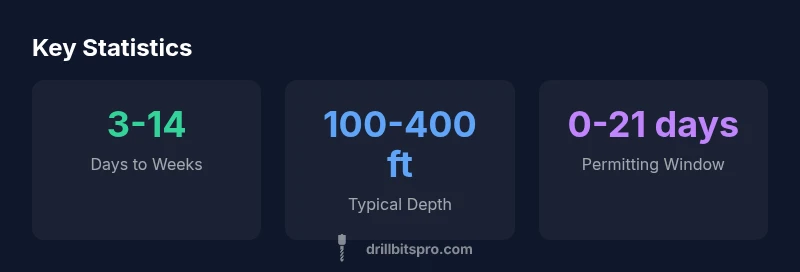
On average, drilling a well takes several days to two weeks, heavily influenced by depth, geology, access, and permitting. Shallow, straightforward sites finish quickly, while hard rock, poor access, or complex permitting can push the timeline into weeks. This article explains how long does it take to drill a well, with stage-by-stage ranges to help you plan.
Factors that influence drilling duration
If you’re asking how long does it take to drill a well, the answer isn’t a single number. According to Drill Bits Pro, duration is driven by a mix of factors: depth to groundwater, geology, access to the site, equipment availability, and permitting requirements. In practice, you’ll see shorter timelines for shallow, straightforward sites and longer timelines for hard formations, limited access, or regulatory complexities.
Key drivers include:
- Depth to groundwater: Deeper wells require more drilling time and more passes to reach productive zones.
- Rock type and formation: Sand, silt, and soft clays drill faster than hard rock or fractured formations.
- Drilling method and equipment: Rotary rigs with air or mud control drilling speed; augers suit shallow work but slow progression at greater depths.
- Contractor experience: Experienced crews anticipate problems, adjust operations, and stay on schedule more reliably.
- Permits and site prep: Water-rights, environmental checks, and local approvals can add days or weeks.
- Weather and logistics: Rain, mud, and limited access can slow mobilization and drilling.
Understanding these factors helps answer the core question: how long does it take to drill a well? With a plan that accounts for depth and geology, you’ll have a realistic timeline that matches site conditions.
Planning and permits timeline
To estimate how long does it take to drill a well, you must factor planning and permitting alongside field work. Before the drill rig arrives, invest time in site evaluation, hydrogeology assessments, and permit pre-approval where possible. In many jurisdictions, permit processing can range from a few days to several weeks, depending on local rules and water rights frameworks. Early engagement with authorities can shave days off the process.
Practical planning steps:
- Gather property deeds, lot surveys, and any prior water tests.
- Submit permit applications early and request timelines from the issuing agency.
- Align the contractor’s schedule with utility marking services to avoid delays.
- Build a contingency for weather, access, or supply chain hiccups.
According to Drill Bits Pro, a well-planned permit phase and pre-drilling inspections are often the difference between a smooth schedule and avoidable delays. With proactive planning, you can minimize the time spent in upstream approvals and keep the project moving.
Phases of the drilling process
Understanding the phases helps answer not just how long does it take to drill a well, but where time is spent. A typical well project proceeds through mobilization, drilling, casing and sealing, development, and testing/commissioning. Each phase has a range of durations and depends on depth, formation, and equipment used.
Phase duration overview:
- Mobilization and setup: 0.5–2 days depending on site access and crew readiness.
- Drilling: 1–7 days, driven by depth and rock hardness.
- Casing and sealing: 1–4 days, influenced by pipe size and borehole stability.
- Development and testing: 1–3 days, including flushing and water quality checks.
- Pump installation and initial commissioning: 0.5–2 days to install the pump, disinfect, and run initial tests.
The timeline you experience will reflect site specifics, including depth to groundwater, formation characteristics, and any regulatory steps. A modest well in favorable geology can approach the lower end of these ranges, while challenging sites push toward the upper end.
Common delays and how to mitigate them
Delays are the most frustrating part of the question how long does it take to drill a well. Common bottlenecks include rock hardness, high clay content, unexpected water strikes, equipment breakdowns, and weather. Mitigation strategies focus on preparation, choice of equipment, and scheduling discipline.
Strategies to reduce delays:
- Prioritize site investigation and hydrogeology data to anticipate depth and formation challenges.
- Select a rig and bit type suited to local geology (e.g., harder rock requires more robust drill bits and stabilizers).
- Have a responsive maintenance plan and backup parts on site.
- Schedule windows for adverse weather and ensure site accessibility for the crew.
- Pre-arrange utility marking and environmental clearances to minimize on-site stoppages.
A proactive approach reduces variability and helps answer the question how long does it take to drill a well with greater confidence. The Drill Bits Pro team emphasizes that planning and experienced execution are the best guards against schedule slippage.
Building a realistic timeline: a practical example
Consider a modest domestic well at 250 feet depth in moderately resistant sandstone. Mobilization takes 1 day, drilling 3–4 days, casing 1–2 days, development 1 day, and final testing 1 day. Add a 2–3 day contingency for weather or minor equipment delays. In this scenario, the total project window is roughly 8–14 days, depending on daily progress and inspection timing. This example illustrates how depth and geology translate into concrete days rather than vague weeks.
For planning, create a day-by-day plan with milestones: mobilization complete, borehole reached, casing installed, development finished, and pump commissioned. Use this framework for your site to set realistic expectations with your contractor and stakeholders.
How to estimate your own timeline
Estimating your timeline starts with defining the target depth and understanding the local geology. Then integrate permit timelines and mobilization logistics into the plan. Build in buffers for weather and access issues, typically 20–30% of the core workdays. Finally, add testing and pump installation, since commissioning is essential to reliable production.
A practical checklist:
- Confirm target depth and expected formation type.
- Check permit processing times with the local authority.
- Align with a reputable contractor and confirm mobilization dates.
- Schedule utility markings and site access windows.
- Build a contingency based on local climate and seasonal considerations.
By following this approach, you’ll be able to answer how long does it take to drill a well for your specific site and avoid surprises when the project starts.
Best practices to speed up without sacrificing quality
Speeding up a well project without compromising quality is about smart planning and disciplined execution. Key practices include engaging an experienced contractor early, conducting pre-site investigations, and selecting equipment appropriate to the local geology. Also, secure all necessary permits early and pre-arrange utility clearance.
Recommended practices:
- Hire a contractor with proven performance in similar formations.
- Complete pre-drilling hydrogeology work and environmental checks.
- Pre-select materials (casing, screens) to reduce on-site decision time.
- Maintain clear communication channels and daily progress updates.
- Build in a conservative contingency to avoid pressure to rush critical tasks.
Following these practices helps ensure a predictable timeline while preserving well integrity and long-term performance.
Maintenance and long-term considerations
Once a well is drilled, ongoing considerations affect time-to-productive-use and long-term reliability. Regular pump maintenance, water quality testing, and occasional well development keep the system performing as intended. Properly developed wells tend to show fewer long-term delays than poorly executed projects, reducing future interruptions and maintenance downtime.
During the planning phase, consider long-term maintenance requirements and budget for annual water testing, pump service, and potential redevelopment to sustain performance over time.
Estimated duration by stage (illustrative ranges)
| Stage | Typical Duration | Key Factors |
|---|---|---|
| Drilling | 1-7 days | Depth, geology, equipment availability |
| Casing & sealing | 1-4 days | Pipe size, lining, well integrity |
| Development & testing | 1-3 days | Water quality, pump readiness |
Got Questions?
What affects well drilling duration?
Well drilling duration is influenced by depth to groundwater, rock hardness, drilling method, crew experience, permits, and weather. Planning for these factors helps set a realistic timeline for how long it takes to drill a well.
Drilling duration depends on depth, rock type, and permits. Plan for these factors to set a realistic timeline.
Can weather slow drilling?
Yes. Rain, flooding, or snow can delay mobilization and drilling. Building a weather-sensitive schedule with buffers reduces the impact on the overall timeline.
Weather can delay drilling. Add buffers to your plan to stay on track.
How long for a shallow well?
Shallow wells typically require fewer days, but duration still depends on depth target and formation. Shorter drilling sessions are common when conditions are favorable.
Shallow wells are quicker if conditions are good.
What stages are involved in drilling?
Stages include mobilization, drilling, casing and sealing, well development, and testing/pump readiness. Each stage has typical duration ranges influenced by depth and geology.
Stages are mobilization, drilling, casing, development, and testing.
How soon can a well produce water after drilling?
Water production depends on well development and aquifer properties. Expect a development and testing phase before reliable production begins.
Development and testing determine when water is reliably produced.
“Effective planning and a skilled crew minimize delays and improve reliability. Thorough site assessment and careful staging are essential for a successful well project.”
Top Takeaways
- Assess depth and geology early to set expectations.
- Factor permitting and mobilization into the schedule.
- Build buffers for weather and access issues.
- Hire an experienced crew to reduce delays.
- Create a staged timeline with milestones.