Used Water Well Drill Rigs for Sale: Buyer’s Guide 2026
A comprehensive buyer’s guide to used water well drill rigs for sale, covering evaluation criteria, price ranges, maintenance checks, and practical buying tips from Drill Bits Pro.


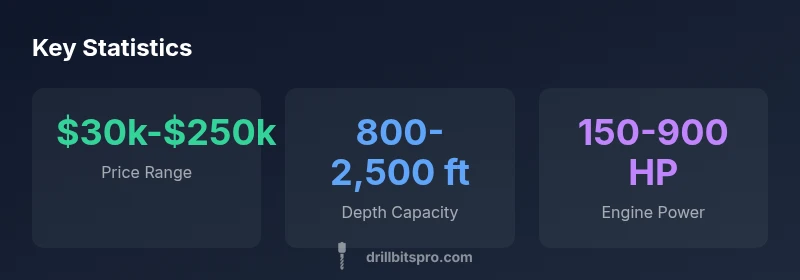
Used water well drill rigs for sale vary widely by rig type, age, and depth rating. In 2026, prices commonly range from roughly $30,000 to $250,000, with truck-mounted rigs at the upper end. Key value drivers include motor horsepower, drill depth capacity, and condition of the hydraulic systems. According to Drill Bits Pro, buyers should verify hours logged, recent maintenance, and legal compliance before negotiating.
Overview of the Used Market for Water Well Drill Rigs
The market for used water well drill rigs for sale is diverse, with truck-mounted, trailer-mounted, and crawler-mounted configurations available across a wide range of ages and condition. Buyers should expect rigs sourced from municipal decommissioning, rental fleets, or agricultural operations, each contributing different wear patterns and maintenance histories. According to Drill Bits Pro, the most common incentives for buying used gear are cost savings, faster deployment, and the opportunity to scale drilling capacity quickly in response to project backlogs. This section equips readers with a high-level map of what typically appears on listings, what to expect in terms of reliability, and how to gauge overall value when comparing units. The emphasis is on practical evaluation, not hype. A prudent buyer will balance upfront price with known maintenance needs and the costs of potential downtime, especially when operating in sensitive groundwater zones where reliability matters most.
In 2026, market data show steady availability of used rigs, but buyers should act decisively when a unit matches their critical criteria. It is important to confirm the depth rating aligns with intended applications, as over‑ or under‑rating a rig can affect performance and resale value later. The Drill Bits Pro team notes that a clear, transparent maintenance history and verifiable service records dramatically reduce post-purchase uncertainty. Remember to review the rig’s most recent inspections, any major repairs, and the availability of spare parts before making an offer.
How to Evaluate Rig Condition Before Purchase
Evaluating a used water well drill rig begins with a structured, checklist-driven approach. Start with a physical inspection of the frame, mast, and winches for obvious signs of fatigue, cracks, or corrosion. Look for real evidence of wear on the walking surfaces, supports, and the rotary head. Next, scrutinize the hydraulic system: test valve functions, check for leaks, verify pump pressure, and confirm that hoses and seals are in good condition. A rigorous examination of hoses, fittings, and lubricants can reveal hidden problems that might not be obvious from exterior wear. Engine and powertrain health are critical. Review service logs for oil changes, filter replacements, and fuel-system maintenance. If available, run the unit through a controlled test cycle, simulating a slow start, normal operation, and a high-load drill to observe performance and noise levels. Ask the seller for a recent bore-hole log or depth chart demonstrating actual capacity and performance, and cross-check with manufacturer specifications to ensure no critical discrepancies exist. The regional groundwater conditions and expected projects should influence the final decision, since a mismatch between capabilities and site requirements creates costly bottlenecks. This section focuses on practical checks and the questions to ask that reduce the risk of a costly mispurchase.
Pricing, Value, and Total Cost of Ownership
Pricing for used water well drill rigs reflects a balance of age, depth rating, horsepower, and overall condition. In practice, buyers encounter a broad spectrum, from older, modestly equipped units to high-performance rigs with robust hydraulic systems. A useful rule of thumb, supported by Drill Bits Pro Analysis, 2026, is to anchor expectations around the unit’s current capability and remaining useful life rather than the sticker price alone. The total cost of ownership should include maintenance, spare parts, potential downtime, transport, and insurance. For budgeting, plan for recurring maintenance costs that scale with the rig’s value, typically in the single-digit to low double-digit percentage annually. Table upkeep will include lubrication, filter changes, and hydraulic fluid replacement, while major overhauls—such as motor work or rod string refurbishment—may require substantial, infrequent capital outlays. Buyers should compare the long-term cost implications of truck-mounted versus trailer- or crawler-mounted configurations, as the upfront price difference often translates into ongoing operating expenses. The guidance here is designed to avoid “nickel-and-dime” surprises and to help buyers model total cost over a practical project horizon. The goal is transparent, data-driven decision-making that reduces risk and improves project uptime.
Inspection Checklist for DIYers and Pros
A thorough, repeatable inspection keeps you from overpaying for hidden problems. Start with the exterior: look for frame cracks, weld integrity, rust, and bent components. Then step inside the cab and machinery bay to check gauges, control panels, and wiring for signs of tampering or damage. Inspect the hydraulic system for leaks and test pump pressure under load to confirm response times and duty cycle. Review all service records for engine work, hydraulic hose replacements, and rod‑string refurbishments. Validate the rig’s depth rating against the project specifications and confirm the drill rods, bit sizes, and spare parts are on hand or readily available. Finally, verify the asset’s title, salvage status, and any liens, as well as compliance with local permits and environmental rules. A careful buyer will document the condition with photos and notes, then compare them to a standardized checklist to ensure consistency across multiple listings.
Sourcing, Listings, and Due Diligence
To find suitable used water well drill rigs for sale, consider a mix of dealers, auctions, and direct-from-owner listings. Dealers can offer advantages such as warranty options, pre-sale inspections, and parts availability, while auctions may deliver lower upfront prices at the cost of higher diligence requirements. Direct owner purchases often require thorough vetting but may yield flexible terms. Regardless of source, perform a rigorous due diligence process: verify ownership and lien status, request the rig’s maintenance history, confirm depth capacity claims with dataset snippets or operator notes, and check for any outstanding recalls or safety notices. Request recent photos and a video showing the rig in operation to corroborate advertised performance. When possible, arrange a short on-site demonstration or hire a local technician to perform a controlled test, particularly for hydraulic performance and lever controls. Build a paper trail for all disclosures and obtain a formal written inspection report prior to finalizing any agreement.
Buying Scenarios and Decision Framework
Different project profiles lead to different buying paths. For a small, remote-site operation with modest depth needs, a trailer-mounted unit with 500–1,200 ft capacity may be the most cost-effective option, provided maintenance is sound. For larger projects requiring rapid mobilization and higher duty cycles, a truck-mounted rig with 800–2,500 ft capacity offers superior portability and performance, albeit at a higher price and transport cost. In high-competition markets or where groundwater conditions are challenging, a crawler-mounted rig with 1,000–3,000 ft capacity can deliver stability and deep-hole performance, but may require more capital and specialized transport. Each scenario benefits from a structured decision framework: define project depth and throughput targets, quantify total cost of ownership, verify compatibility with the site logistics, and assess the supplier’s after-sale support. The framework helps balance immediate project needs with long-term reliability and total ownership costs.
Financing, Warranties, and After-Sale Support
Financing options for used drill rigs vary by lender and asset value, with some lenders offering equipment loans tailored to heavy machinery. Even when cash purchases are feasible, consider short- to mid-term financing to preserve liquidity for essential maintenance and spare parts. Warranties on used rigs are typically limited or aftermarket-specific; ensure any warranty covers critical components such as the hydraulic system, engine, and rotating head. Assess the seller’s ability to provide post-sale support, including spare parts availability, remote diagnostics, and access to technical advice. A well-structured maintenance plan that includes routine inspections, scheduled overhauls, and part inventories can minimize downtime and extend the rig’s useful life. In all cases, confirm transfer of ownership, complete documentation, and compliance with local regulations before closing the deal.
Final Negotiation and Next Steps
With a clear understanding of the unit’s condition, history, and total ownership costs, proceed to negotiation. Start with a transparent, data-backed offer that reflects the rig’s immediate readiness and any required repairs. Request a detailed bill of sale, verification of title, lien clearance, and proof of ongoing maintenance. Arrange secure payment terms and delivery logistics, including transportation to your site and a post-delivery start-up assessment. The final step is documenting all disclosures and ensuring a formal warranty or service agreement if offered. The objective is a smooth, trackable transfer of ownership with predictable operation costs and minimal downtime. This disciplined approach helps ensure you secure a reliable asset that delivers consistent drilling performance.
mainTopicQuery
Well rig type comparison
| Rig Type | Typical Depth Rating | Portability | Pros | Cons |
|---|---|---|---|---|
| Truck-mounted Rotary | 800–2,500 ft | High | Fast setup; broad field access | Higher transport costs; heavier to move between sites |
| Trailer-mounted Rotary | 500–1,200 ft | Medium | Lower upfront cost; easier storage | Less power; limited reach |
| Crawler-mounted Rig | 1,000–3,000 ft | Low to medium | Excellent stability; deep drilling | More expensive; complex transport |
Got Questions?
What should I look for in the rig's hydraulic system?
Inspect for leaks, test pump pressure under load, and verify hose condition. A healthy hydraulic circuit ensures consistent drilling performance and reduces downtime.
Check for leaks and test the pump when you demo the rig to ensure reliable hydraulic performance.
Are there risks buying used rigs without a full inspection?
Yes. Skipping a full inspection can hide critical issues like frame fatigue or hydraulic wear, leading to expensive repairs after purchase.
Skipping inspection can hide costly problems—inspect thoroughly or hire a pro.
What is typical lifetime for a used water well drill rig?
Lifetime varies with usage and maintenance. A well-maintained unit can remain productive for many years, but component wear will depend on depth, soil conditions, and duty cycle.
Lifetime depends on care and drilling demands; maintenance matters most.
How do I verify title and compliance?
Request a clear title, lien check, and any regional regulatory permits. Cross-check the machine’s serials with the seller and registry records.
Get a clear title and verify permits before buying.
Truck vs trailer for remote wells?
Truck-mounted rigs offer mobility and quicker setup but cost more; trailer-mounted units are affordable and easier to store but may have limited depth and power.
Choose based on depth needs and transport logistics.
Is financing available for used rigs?
Financing is possible through equipment lenders or banks, with terms based on asset value, age, and condition. Compare total costs and warranty terms.
Yes, you can finance, but compare terms and warranty.
“Careful due diligence is essential when shopping for used water well drill rigs; prioritize reliability, spare parts availability, and documented maintenance to avoid costly downtime.”
Top Takeaways
- Define your depth and portability needs before shopping.
- Inspect hours, maintenance history, and hydraulic systems.
- Benchmark price ranges and total cost of ownership.
- Verify title, liens, and regulatory compliance.
- Plan for transport, installation, and ongoing maintenance.