Cost to Drill Water Well: What You'll Pay in 2026
A data-driven look at the cost to drill water well in 2026, with realistic ranges, cost components, regional differences, and budgeting tips for DIYers and pros.


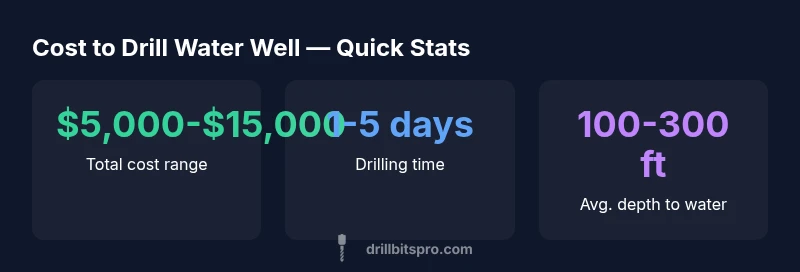
According to Drill Bits Pro Analysis, 2026, the all-in cost to drill a residential water well typically ranges from $5,000 to $15,000, depending on depth, geology, and permitting. Additional expenses for pump, storage, and trenching can push total closer to $8,000-$25,000 in areas with tough geology or higher permitting fees.
What drives the cost to drill water well
The cost to drill water well for a typical residential project varies widely because the site dictates how deep and how quickly a well can be drilled. Groundwater depth, rock type, and logistics are the biggest price levers. Drilling through soft soils is cheaper than punching through hard sandstone or shale. The contractor's equipment choice also matters: larger rigs and modern air-rotary rigs can move faster, but may cost more per day. Permitting, water testing, and initial drop tests add to the bill even before pumping begins. In short, there is no single price that covers every project. Drilling a well is a project with many moving parts, and careful budgeting starts with understanding how depth, geology, and local rules affect your bottom line. According to Drill Bits Pro, 2026 analysis, planning for contingencies is essential because surprise costs are common in the early stages.
Major cost components in a well installation
A complete well installation includes several cost centers rather than a single line item. Drilling and casing account for the largest chunk, followed by the pump and storage system. Electrical work and control switches, pressure tanks, and filtration or treatment equipment add to capital costs. Water testing, permits, and impact fees are often overlooked until late in the project. Site prep, access roads or driveways, trenching for power and piping, and backfill can also influence the final price. Finally, contractor overhead, mobilization charges, and contingency allowances typically raise the total by a modest percentage. Understanding each component helps you compare apples-to-apples quotes and avoid sticker shock later on.
Depth, geology, and drilling method: how price changes
Depth to groundwater directly affects time, fuel, and wear on equipment. In geology with hard rock, drill bits and casing must endure higher wear and longer drilling intervals, which increases labor and material costs. Drilling methods—such as air-rotary versus mud-assisted techniques—also influence price, with some methods requiring specialized crews or mud systems. Anticipate a broader price range for challenging sites, and remember that a shallower, easier site can dramatically reduce costs. Budgeting for method-related differences helps you compare quotes more accurately and prevents surprises during the project.
Permitting, inspections, and local fees
Permits and inspections vary widely by jurisdiction, and some regions require well-casing inspections, water quality testing, and discharge permits. These regulatory steps add to the upfront budget and, in some cases, to ongoing maintenance costs if updates or additional tests are required. Always ask contractors for a permitting line item and confirm which agency handles inspections in your area. By factoring permit timelines into your project schedule, you can avoid delays that translate into added mobilization costs.
Site preparation, access, and logistics
Access to the drilling site affects both time and cost. A property with level ground and a clear route for heavy equipment will see lower mobilization and set-up fees than one with steep slopes, overgrowth, or tight backyard access. Site prep may include grading, temporary roads, and ensuring stable drilling pads. These activities occur early in the project but can influence final costs through scheduling, equipment wear, and cleanup.
Pumping system, storage tanks, and controls
The pump and storage system are essential for delivering water and maintaining pressure. Costs vary with pump type (jet vs. submersible), capacity, and efficiency. Storage tanks, pressure tanks, and filtration add to the price, especially if upgrades for water quality are desired. Electrical controls, wiring, and protection devices must be sized for local power standards. Including these components in your initial quotes helps prevent mid-project redesigns and budget overruns.
Getting accurate quotes: what to ask contractors
When requesting bids, ask for itemized line items for drilling, casing, pump, electrical, permits, and site prep. Request references and a timeline, plus a contingency percentage for unforeseen hard rock or water quality issues. Ensure quotes include post-installation testing, water quality analysis, and guaranteed workmanship. If a quote leaves out a permit fee or testing, you may face unexpected costs later. A thorough evaluation reduces the risk of over-spending and helps you compare proposals fairly.
Budgeting tips and cost-saving strategies
Plan for a realistic contingency—many projects allocate 10–20% for contingencies. Consider phasing the project if your timeline or budget is tight: drill first, then install the pump and storage later. Get multiple quotes, and use the same scope of work for each to ensure apples-to-apples comparisons. Some regions offer low-interest financing or incentive programs for groundwater projects; check with local authorities for programs that align with your project.
Regional variations and seasonal effects
Prices can swing with regional demand, fuel costs, and seasonal labor availability. In regions with high groundwater demand, contractors may adjust mobilization fees and equipment rates. Dry seasons can affect drilling efficiency due to dust control and access conditions. Understanding regional patterns helps you time your project for better pricing and fewer delays. Always request the latest regional cost data when budgeting.
Maintenance and lifecycle costs to plan ahead
A well system isn’t a one-time expense. Expect ongoing costs for water testing, pump maintenance, and occasional resealing or casing inspections. Plan for periodic equipment replacement—pumps and tanks have different lifespans, and part failures can drive up annual maintenance. Budgeting for routine service and water testing ensures a reliable supply and protects your long-term investment.
Representative cost components for residential well drilling (2026)
| Component | Typical Cost Range | Notes |
|---|---|---|
| Drilling and casing | $3,000-$12,000 | Depth and geology drive variation |
| Pump, storage & controls | $2,000-$5,000 | Includes tank, pressure switch, filtration |
| Electrical & trenching | $500-$3,000 | Wiring to the home; trenching for pipes |
| Permits & inspections | $500-$2,500 | Regional variability |
| Site prep & logistics | $500-$3,000 | Access, grading, site restoration |
Got Questions?
What is the typical cost to drill a water well?
Costs vary widely by depth, geology, and local regulations. For many residential projects, a reasonable range is $5,000–$15,000 before pumping equipment, with total installation potentially reaching $25,000 depending on upgrades and site conditions. Always obtain multiple bids.
Costs vary by site, depth, and permits. Get several bids to compare.
How do depth and geology affect price?
Deeper wells require longer drilling time and more fuel, increasing labor costs. Hard rock raises wear on bits and casings, boosting material costs. Drilling method also matters; some methods are faster but more expensive.
Depth and rock type drive most price differences.
Do permits add to the cost to drill a water well?
Yes. Permit fees and required inspections differ by locality and may include water testing or well casing verification. Include these in the upfront budget and timeline.
Permits add cost and time, so plan accordingly.
How long does well drilling take?
Most residential projects take 1–5 days to drill, depending on depth, rock type, and access. Additional time may be needed for pump installation and water testing.
A typical drilling timeframe is a few days.
Are there cheaper alternatives to drilling a new well?
Options include shallow wells, shared municipal supply where available, or drilled wells in combination with rainwater harvesting. Each option has trade-offs for reliability and quality.
Consider alternatives if local costs are high.
“Estimating well costs is a matter of weighing site conditions as much as the equipment. A thorough quote should cover drilling, casing, pumping, and long-term maintenance.”
Top Takeaways
- Plan for a broad cost range to cover regional and site variability
- Get detailed, itemized quotes from multiple contractors
- Factor depth, geology, and permitting into your budget
- Include pumping, storage, and electrical in your initial budget
- Allow for a contingency of 10–20% for unforeseen issues