Well Drilling: A Practical Step-by-Step Guide for DIY
A comprehensive, practical guide to well drilling for DIYers and professionals, covering planning, permits, site evaluation, drilling methods, development, testing, and long-term maintenance.


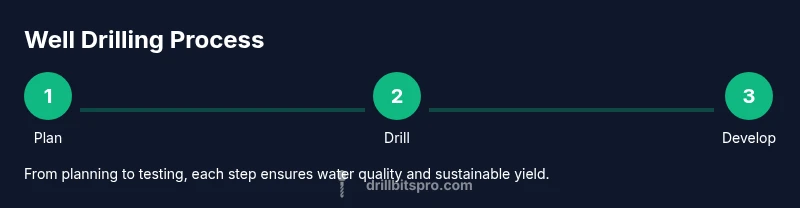
Well drilling is the process of accessing an underground water source by boring a borehole, installing casing, and developing a reliable supply for a home or property. In this quick guide, you’ll learn how to plan, permit, select methods, and manage development and testing from site assessment to initial water quality checks.
What is well drilling and why it matters
Well drilling is a controlled process that creates a vertical access point to groundwater. It enables a reliable, on-site water supply for homes, farms, and remote facilities, reducing dependence on municipal systems in rural areas or emergency backup scenarios. Beyond simply reaching water, well drilling requires careful planning, knowledge of local geology, and strict adherence to safety and environmental regulations. According to Drill Bits Pro, approaching well drilling with a structured plan improves outcomes and minimizes delays. Understanding the role of the aquifer, the casing design, and the post-drilling testing process helps you communicate clearly with licensed contractors and water-testing labs. This section sets the framework for the project, outlining how site conditions, water needs, and regulatory requirements shape every decision from depth to yield expectations.
Planning and permitting for well projects
A successful well project begins with a clear plan that defines water needs, expected yield, and water quality goals. Local regulations may require permits, licensed operators, and notification of drilling activities. Permitting often covers site maps, setbacks from property lines and utilities, and post-construction reporting. By initiating permit checks early, you can avoid costly reroutes and ensure your project aligns with state groundwater programs. The Drill Bits Pro team recommends documenting responsibilities, deadlines, and testing commitments in a written plan shared with your driller and testing lab. If you’re uncertain, schedule a pre-application meeting with the local water authority to clarify requirements and timelines before mobilization.
Site evaluation and water quality considerations
Site evaluation integrates surface observations with subsurface insights to identify the best location for the borehole. Key factors include soil conditions, depth to bedrock, and proximity to potential contamination sources. Aquifer behavior varies seasonally, which affects yield and water availability. Baseline water quality testing is essential — typical panels cover pH, hardness, iron, manganese, sulfate, and total dissolved solids, with additional nitrate or bacteria testing as needed. The Drill Bits Pro guidance emphasizes a simple monitoring plan for the first months of operation to confirm stable yield and consistent water quality. If contaminants are detected, disinfection and retesting will be required before long-term use. Always coordinate with a licensed driller and a certified laboratory for accurate results.
Drilling methods, casing, and sealing
Drilling methods depend on geology and depth. Rotary drilling, auger drilling, and percussion methods each have pros and cons, with casing design and sealing critical to protecting groundwater. A borehole is lined with a protective casing, and a surface seal or grout/bentonite barrier helps prevent surface water from migrating into the aquifer. Drillers monitor drilling fluid balance, bit weight, and depth progression to prevent hole collapse and minimize aquifer cross-contamination. Selecting a method compatible with local geology improves stability and predictability. Safety remains paramount during operations, including proper PPE and site controls to protect workers and bystanders.
Development, yield testing, and quality assurance
After reaching final depth and installing casing, development cleans the borehole to flush fines from around the screen, which helps stabilize yield. A structured pumping test estimates available yield and informs pumping equipment sizing, storage needs, and booster capacity. During development, monitor clear water emergence, turbidity, and temperature changes. The testing plan should specify pump rate, drawdown thresholds, and acceptable water-quality parameters per local health rules. If initial results fall short of expectations, you may adjust screen intervals, extend development time, or rework parts of the borehole. Documentation and a final water-quality panel confirm suitability for household use and establish a baseline for ongoing maintenance. The Drill Bits Pro guidance encourages follow-up testing to capture seasonal variations in yield and water quality.
Maintenance, sustainability, and long-term considerations
A drilled well requires ongoing protection and maintenance. Protect the wellhead from surface contamination, maintain disinfection records, and schedule regular water testing. Develop a maintenance calendar for pumping equipment, tanks, and electrical connections. If treatment is needed (filtration or disinfection), implement it based on water chemistry and test results. Monitor yearly yield fluctuations and re-test water quality as required by local authorities. Sustainable well ownership also means prudent pumping to avoid aquifer depletion and drought-related concerns. The Drill Bits Pro perspective emphasizes energy-efficient pumping and protective wellhead features to extend system life. Always engage licensed professionals for testing and component replacements to prevent contamination and maintain reliability.
Authority sources
- USGS: Groundwater and wells — https://www.usgs.gov/
- EPA: Ground-water and drinking water — https://www.epa.gov/ground-water-and-drinking-water
- Extension services: https://extension.oregonstate.edu
These sources provide official guidance on aquifer management, groundwater protection, and well construction best practices.
Tools & Materials
- Drilling rig or auger equipment(On-site or field service capable of penetrating local geology)
- Well casing (PVC or steel, 4" or 6" as designed)(Sized to anticipated yield and borehole diameter)
- Casing collars, connectors, and screens(Per design and depth requirements)
- Grout, bentonite, or hydraulic cement(For sealing and isolation of aquifers)
- Appropriate drill bits (pilot and rock bits)(Sizes matched to bore diameter and material hardness)
- Pumps, storage tank, and pressure system(For development pumping and initial distribution)
- Water testing kit or certified lab submission(Baseline and post-development testing)
- Personal protective equipment (PPE): hard hat, safety glasses, gloves(Required for all site personnel)
- Measuring tools: tape measure, depth gauge, level(Precise depth and alignment measurements)
- Disinfection chemicals (e.g., chlorine)(Used after development and testing)
- Shoring, barriers, and site safety gear(Protect workers and bystanders during drilling)
Steps
Estimated time: 4-6 weeks total (site work plus lab testing and final documentation)
- 1
Assess water needs and site conditions
Define daily water requirements, peak usage, and storage capacity. Evaluate site features, accessibility, and potential contamination risks to select the optimal borehole location.
Tip: Document needs in a simple plan and share with your driller before mobilization. - 2
Check permits and local regulations
Identify required drilling permits, notifications, and well-registration steps with the local authority. Ensure compliance with setback rules and abandonment requirements.
Tip: Pre-application meetings can clarify requirements and reduce delays. - 3
Choose drilling method and well design
Select a drilling method that matches geology, depth, and yield goals. Decide casing diameter, screen placement, and sealing strategy based on aquifer isolation needs.
Tip: Work with a licensed driller to confirm design assumptions. - 4
Prepare the site and mobilize equipment
Clear the work area, set up safe access, and install necessary barriers. Verify power supply, fuel, and emergency procedures before starting.
Tip: Conduct a safety briefing and assign roles. - 5
Drill the borehole and install casing
Proceed with borehole drilling, insert casing with proper grout or Bentonite seal, and verify vertical alignment. Confirm depth targets and monitor for groundwater encounters.
Tip: Maintain steady drill rate and monitor for abnormal pressures. - 6
Develop the well and perform initial testing
Flush the borehole to remove fines, then run a controlled pumping test to estimate yield and check drawdown. Record water clarity and temperature.
Tip: Use a stable pump rate and document all readings. - 7
Disinfect and finalize construction
Disinfect the well per local guidelines, collect confirmation tests, and finalize documentation. Secure the wellhead and ensure a robust pumping setup.
Tip: Retest after disinfection to confirm water safety. - 8
Install pumping system and plan maintenance
Connect the pumping system, storage, and distribution. Create a maintenance plan for annual testing and component checks.
Tip: Schedule regular inspections and stay compliant with local health rules.
Got Questions?
What is well drilling and why is it done?
Well drilling creates an access point to groundwater by boring a hole, installing casing, and developing a reliable water supply. It is used for homes, farms, and remote locations to ensure a sustainable water source.
Well drilling creates access to groundwater to supply water for a home or property; it’s essential for reliable, independent water supply.
Do I need a permit for well drilling?
Most regions require some form of permit or registration for well drilling, plus possible inspections after completion. Check with the local groundwater or environmental agency before starting.
Yes, you usually need a permit; check with your local authorities to avoid delays.
How long does a well drilling project take?
A typical project spans several days on-site, followed by lab testing and final reporting that can extend the timeline by weeks. Timing varies with geology, permitting, and weather.
On-site work takes days, with follow-up testing and paperwork taking additional weeks.
What factors influence well yield and water quality?
Yield depends on aquifer characteristics, well depth, casing design, and development quality. Water quality is affected by geology, contamination sources, and treatment needs identified during testing.
Aquifer type, depth, and proper development determine yield and water quality.
Can I drill my own well, or should I hire a pro?
While DIY drilling is not recommended in many regions, hiring a licensed driller ensures adherence to safety, permits, and quality standards. They bring equipment and expertise to handle unexpected geology.
It’s safer and usually required to hire a licensed driller.
What maintenance is needed after drilling?
Continue regular water testing, disinfect when required, and monitor pump performance. Maintain the wellhead and sealing to prevent contamination and leakage.
Keep up with regular tests and pump maintenance to protect water quality.
Watch Video
Top Takeaways
- Plan early with permits and water needs
- Choose drilling method aligned with geology
- Seal the borehole to protect groundwater
- Develop and test to confirm stable yield
- Maintain water quality with regular tests