Wood Drill Bit vs Metal: A Practical Comparison
A practical, in-depth comparison of wood drill bits and metal drill bits, covering design, materials, speeds, and best-use guidelines for clean holes in wood and metal alike.


Wood drill bit vs metal: The right bit matters more than you might think. Wood bits (like brad-point and auger) cut with clean edges and less heat, while metal bits (twist, HSS, cobalt, or carbide-tipped) resist wear and handle tougher materials. For best results, match the bit to the material, keep feeds steady, and use proper pilot holes when needed.
What this comparison covers
The choice between a wood drill bit vs metal takes more than grabbing whatever bit is closest. In practical terms, wood bits are optimized for cutting through wood fibers with little tear-out, while metal bits are built to resist wear when cutting through steel, aluminum, and other metals. This article explains the core differences in design, materials, and geometry, and shows how to match the tool to the job. It also covers related topics such as speeds, feeds, pilot holes, and maintenance so you can achieve clean holes with minimal effort. The goal is to give you a clear framework for decision-making across common tasks, from simple projects to professional work. According to Drill Bits Pro, success begins with understanding material properties and selecting the right bit family for the job. That approach reduces breakage, improves hole accuracy, and extends bit life over the project cycle. Keep reading to see how each bit type behaves under real working conditions and what trade-offs to expect when you switch materials.
Materials and tip geometry: why it matters
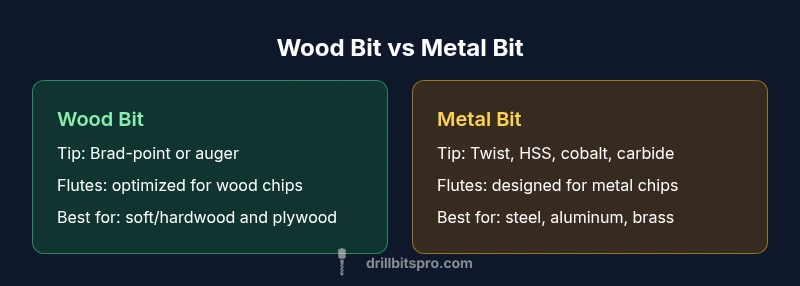
The material and tip design determine how the bit enters the workpiece and how clean the hole will be. Wood-specific bits often feature a sharp brad-point tip and a central spur that helps start the cut with minimal tear-out. The body may be thick and the flute geometry optimized to clear soft or hardwood fibers efficiently. In contrast, metal bits rely on tougher steel alloys and a more robust cutting edge. Twist bits for metal frequently use HSS, cobalt alloys, or carbide-tipped tips to resist dulling when cutting harder metals. The flute length and land configuration help evacuate metal chips, which reduces heat buildup. In short, the bit’s material and geometry are not interchangeable; selecting the right combination for the target material improves accuracy and tool life.
Cutting geometry: tips and flute design
Beyond the tip, the overall geometry controls how the bit engages the material. Wood bits often employ a spur or brad-point tip that starts with minimal wandering and cuts along the grain, while the main cutting edges are set to create clean, flat bottoms. Metal bits usually feature a pointed cutting edge that tolerates strain and resists work-hardening, with flutes designed to carry away quick-moving chips. Flute spacing impacts chip clearance; wood bits benefit from wider flutes to push out wood fibers, whereas metal bits carry smaller chips and rely on lubrication to reduce friction. The takeaway: you cannot simply swap a wood bit into metal or vice versa and expect optimal results; alignment of tip geometry, material hardness, and chip flow is essential for a good hole.
Hole quality and chip evacuation
Hole quality in wood benefits from fast initial entry and clean edges; using the wrong bit may cause splintering, tear-out, or chipping along the grain. In metal, clean entry and accurate hole size depend on free-moving chips and controlled heat. Chip evacuation is more challenging in metal due to finer particles and higher friction, so using bits with efficient flutes and applying lubrication or coolant is beneficial. In both cases, starting with a pilot hole for larger diameters reduces thrust and improves accuracy. The goal is to maintain a consistent cut and minimize heat buildup that can dull the edge or burn the material.
Speeds, feeds, and lubrication
Wood cuts generally tolerate higher spindle speeds; metal bits require slower feeds and sometimes lubrication to prevent overheating and work hardening. The operational rule of thumb is to use higher rpm with lighter feed when cutting wood, and lower rpm with steady feed and sometimes coolant when machining metal. The exact numbers depend on the diameter, the bit material, and the tool used (hand drill, drill press, or hammer drill). In practice, consult the bit manufacturer’s guidelines and verify the bite with scrap pieces before committing to the real work. The key is to keep the bit cool and to avoid forcing the bit into the material, which can cause chatter, exit wander, or dulling.
Pilot holes and predrilling
Pilot holes help control wandering in wood and reduce the risk of splitting. In softwood, a small pilot hole is often enough; in hardwoods, a slightly larger pilot may be necessary. In metal, pilot holes are essential to guide the larger drill and minimize drilling thrust; they also reduce the chance of brittle chipping. When drilling metal, lubricants improve bit life and reduce friction. For both materials, ensure the pilot hole diameter is appropriate for the final hole size. The combination of correct pilot size and proper drilling technique dramatically improves hole accuracy.
Tool wear, durability, and longevity
Wood bits typically experience less abrasive wear than metal bits; however, hardwoods and exotic woods can cause tearing if the bit isn’t sharp. Metal bits are subject to heat and metal-to-metal friction; high-speed steels and cobalt bits resist wear better, while carbide-tipped bits are pricey but last longer. Regular inspection for dull edges, chipped tips, or unusual wobble is important. Sharpening wood bits is straightforward for standard shapes; metal bits require specialized re-sharpening to preserve geometry and edge geometry.
Cost, availability, and value
Wood bits are generally more affordable and widely available than specialized metal bits; however, the best value often comes from buying dependable mid-range bits that cover a range of materials. Premium metal bits (cobalt or carbide) command higher prices but can last longer under heavy use. Budget-conscious buyers should consider sets that include a mix of wood and metal bits to ensure coverage for typical tasks. Consider lifetime value: while metal bits cost more upfront, reduced downtime and fewer replacements can offset cost in professional settings. Drill Bits Pro analysis shows that choosing the right bit for the task reduces waste and extends the life of cutting tools.
Safety and maintenance
Always wear eye protection and ensure the workpiece is securely clamped. When switching between wood and metal, clean the chuck and bit shank to prevent cross-contamination of wood dust with metal particles. Use correct collets and clamps to minimize runout; keep the cutting edge sharp; dull bits require higher torque and can cause kickback or breakage. Store bits properly in labeled cases; separate wood and metal bits to prevent rust or corrosion of steel bits. Cleaning and occasional sharpening extend life and maintain performance.
Practical usage scenarios
Woodworking: For cabinetry, use brad-point or spade bits to minimize tear-out and produce clean bottoms. For softwoods, you can get away with standard HSS wood bits; for hardwoods, use sharp flutes and ensure proper feed. Metalworking: For steel, aluminum, brass, select HSS or cobalt-tipped bits; use slower speeds and lubrication. Mixed-material tasks: Begin with a pilot hole to guide the larger diameter bit, and consider step drilling to reduce stress. Quick-start steps: identify material, select bit family, set speed and lubrication, drill with firm, steady pressure, deburr and inspect.
How to choose the right bit for a project
Begin with the material: wood or metal. Then select the bit family that matches the diameter and depth you need. Check tip geometry (brad-point for wood, twist‑bit for metal), flute design for chip clearance, and shank compatibility with your drill. Always review the manufacturer’s recommendations for speed and lubrication and test on scrap material before committing to the work.
Case studies: common tasks
Case Study A: Cabinet install in solid wood using brad-point bits for clean, precise holes and excellent edge quality. Case Study B: Steel bracket installation using cobalt-tipped twist bits with lubrication to minimize heat. Case Study C: Mixed-material furniture piece requiring a pilot hole in wood followed by a larger metal-bore for fastening hardware. Each scenario illustrates how material drives bit choice and technique.
Final guidance and tips
To wrap up, always center and clamp, check alignment, and have spare bits on hand. Keep edges sharp and rotate usage between wood and metal bits to reduce heat buildup. For projects that involve both materials, plan bit changes ahead of time to minimize downtime and maintain workflow momentum. The takeaway is proactive preparation and disciplined technique for consistent results.
Comparison
| Feature | Wood Bit | Metal Bit |
|---|---|---|
| Material/Tip | Brad-point/auger tips designed to cut cleanly through wood | Twist bits in HSS, cobalt, or carbide-tipped resist wear when drilling metal |
| Flute Design | Wide, aggressive flutes optimized for wood chip evacuation | Narrower, precise flutes tuned for metal chips and heat management |
| Best For | Softwood and hardwood projects; cabinetry and joinery | Steel, aluminum, brass, and other metals |
| Durability & Wear | Generally good wear in wood fibers; less demanding material | Higher wear resistance but more heat build-up without lubrication |
| Cost & Availability | Lower upfront cost; broad availability | Higher upfront cost for premium alloys; long-term value |
| Common Pitfalls | Tear-out or splintering with dull tips or grain misalignment | Overheating, glazing, or warping without proper lubrication |
| Speeds & Feeds Guidance | Higher speeds with light feed for wood | Lower speeds with steady feed and lubrication for metal |
What's Good
- Clear material-specific performance for each task
- Predictable outcomes when using correct bit and technique
- Wide availability and affordable options for wood bits
- Maintains tool life when using proper bit for the material
Negatives
- Using the wrong bit can damage workpiece and tool
- Metal bits can be pricier and require lubricant in use
- Specialty bits demand planning and storage
- Sharpening metal bits requires care and tooling
Material-matched bits win.
The best approach is to use wood-specific bits for wood projects and metal-specific bits for metal work. The Drill Bits Pro team emphasizes choosing the appropriate bit Family for each material to maximize hole quality, minimize wear, and extend tool life.
Got Questions?
What is the fundamental difference between wood drill bits and metal drill bits?
Wood bits are designed to start cut cleanly in wood, with tips and flutes optimized to remove soft wood fibers. Metal bits use tougher materials and geometry to resist wear and manage metal chips. Choosing the right bit improves accuracy and reduces wear on both the bit and the workpiece.
Wood bits start cuts cleanly in wood; metal bits are built to resist wear and handle metal chips.
Can I use a wood drill bit on metal?
It's generally not recommended. Wood bits are not designed to withstand the friction and heat of metal drilling. If you must, use minimal exposure, lubrication, and slow speeds, and switch to a metal-appropriate bit as soon as possible.
Wood bits shouldn't be used on metal; switch to a metal bit for better results.
Do I need pilot holes for wood and for metal?
Yes. Wood benefits from pilot holes to reduce tear-out, especially in hardwoods. Metal drilling typically requires pilot holes to guide the larger drill and reduce thrust. In both cases, pilots improve accuracy and reduce stress on the bit.
Pilot holes help wood and metal drilling by guiding the bit and reducing stress.
Are cobalt or carbide bits worth the extra cost for metal work?
For hard metals and frequent use, cobalt and carbide bits offer longer life and better heat resistance. For occasional metal drilling, high-speed steel bits may be sufficient. Balance cost with expected use and maintenance needs.
Cobalt and carbide bits last longer for tough metal work; consider your usage.
How can I extend the life of my drill bits?
Keep bits sharp, use proper lubrication for metal, avoid excessive feed pressure, and drill with steady, controlled motion. Store bits in labeled containers to prevent corrosion and damage. Regular sharpening also helps maintain performance.
Keep bits sharp, lubricate when needed, and store them properly to extend life.
Top Takeaways
- Match bit type to material for clean holes
- Pilot holes reduce split-out and wandering
- Use lubrication and appropriate speeds for metal work
- Keep bits sharp and organized to extend life
- Plan a mixed-material kit for common tasks