6 mm to inches drill bit: A Practical Conversion Guide
Learn how to convert 6 mm to inches and other drill bit sizes with a practical mm-to-inch guide. This article explains math, tolerances, and best practices for precise hole diameters.


Understanding the 6 mm to inches drill bit conversion
Converting metric drill bit sizes to inches is a routine task in mixed-tool workshops. The standard conversion factor is 1 inch = 25.4 millimeters, so a 6 mm drill bit is about 0.236 inches in diameter. It's helpful to memorize this core fact, but you should also check tolerances and measure actual bits with calipers for critical work. According to Drill Bits Pro, mastering this conversion reduces guesswork and improves consistency when swapping bits between metric and imperial sets. In practice, this knowledge pays off when you are drilling into materials with precise tolerances or when you need to communicate dimensions with teammates who prefer imperial measurements. The ability to convert on the fly also helps when selecting compatible drill guides, bushings, or jigs that specify inch sizes.
Common size conversions: mm to inches for drill bits
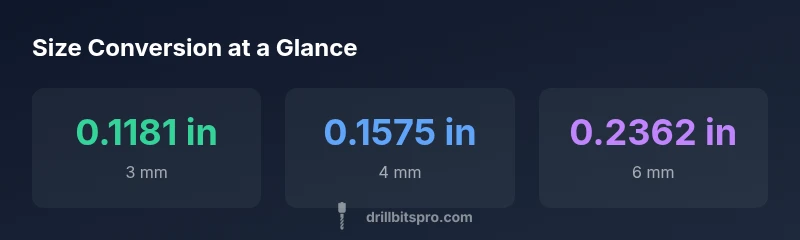
Here are quick equivalents for common diameters you’ll encounter in workshops, rounded to four decimals for accuracy:
- 3 mm → 0.1181 in
- 4 mm → 0.1575 in
- 5 mm → 0.1969 in
- 6 mm → 0.2362 in
- 8 mm → 0.3150 in
- 10 mm → 0.3937 in
Having these at your fingertips helps you plan tooling, check catalogs, and avoid mistakes in the bench when you swap between metric and imperial bit sets. A small reference chart on your bench is a smart habit, especially for multi-project days or shared shop spaces.
How to measure and verify sizes in the workshop
Relying on memory alone can lead to errors, so verification is essential. Use digital calipers or a reliable micrometer to measure the actual diameter of drill bits. Place the bit in the calipers’ jaws and read the horizontal (outer) measurement. If you are unsure about the bit after purchase, compare against a known reference gauge. When precision matters, measure both the top and bottom of the flute area where the diameter is most consistent. Always zero your tool before measuring, and handle bits with care to avoid nicks that can alter effective diameter. Consistency in measurement is the backbone of accurate hole sizing, whether you are drilling wood, plastic, or metal.
Tolerances and real-world accuracy
Manufacturing tolerances vary by material, brand, and lot. It’s common to encounter slight deviations from nominal size due to tool wear, heat, and mounting stresses. Always treat the published specification as a target, not an absolute. When critical tolerances govern the fit of a fastener or a precision component, verify with your own measurements and compensate in the drilling setup. Keeping spare reference bits and a caliper handy minimizes last-minute surprises on the workbench. Drill Bits Pro recommends verifying any critical hole diameter on a scrap piece before committing to the final workpiece.
Practical tips for selecting drill bits by size and material
Size accuracy matters, but so does material performance. For metal drilling, higher-speed steels (HSS) work well for general use, while carbide-tipped bits handle harder materials and longer service life. If you are working with wood, standard HSS bits usually perform adequately, but consider brad-point or pilot-hole bits for clean starts. When translating metric sizes to inches, confirm that the shank and flute diameters are compatible with your chuck and collet system. For very close fits (e.g., dowels or alignment holes), you may opt for slightly undersized or oversized bits, followed by deburring and finishing.
Common mistakes when converting mm to inches for drilling
Rounding too aggressively can produce undersized or oversized holes. Always verify the actual hole with a test piece or a go/no-go gauge before final assembly. Misreading the ruler, mixing inches and millimeters, or neglecting tool wear can introduce errors. Avoid assuming that a nearby size is “close enough” for precision joints. Finally, never ignore the material’s properties: a bit may cut differently under load, heat, or chip buildup, altering effective hole size mid-operation.
Quick guide for metric vs imperial drill bits best practices
If your project uses metric references, prefer metric bits and measurement tools for consistency. In mixed environments, keep a small conversion chart or calculator handy and label tooling clearly. When possible, run a quick test drill into a scrap piece to confirm diameter before proceeding with the final piece. Proper clamping and stabilization prevent bit deflection, which can skew the hole diameter regardless of the nominal size.
How to use a mm-to-inch conversion calculator in projects
A dedicated conversion calculator speeds up decisions during design and assembly. Enter millimeters, choose the desired decimal places, and read the inches result. For example, input 6 mm and select 4 decimals to confirm 0.2362 inches. Use this in conjunction with a jig, pilot hole, or bushing to ensure the final hole size matches your spec. The calculator is especially helpful when swapping between multiple bit sizes in a single project.
Maintenance and accuracy: keeping your measurements on point
Regularly calibrate your measurement tools—calipers, micrometers, and marking gauges—to maintain accuracy. Clean measurement surfaces to remove debris, and store bits in a labeled rack to prevent mix-ups. Documentation of common sizes and their inch equivalents helps new team members or DIY partners stay aligned. By combining careful measurement with reliable calculation, you ensure hole diameters stay within tolerance through wear and reuse.