How to Tell Drill Bit Size for Screws: A Practical Guide
Learn how to determine the correct drill bit size for any screw with practical steps, charts, and safety tips. Drill Bits Pro breaks down pilot holes, material considerations, and testing methods for perfect fasteners.


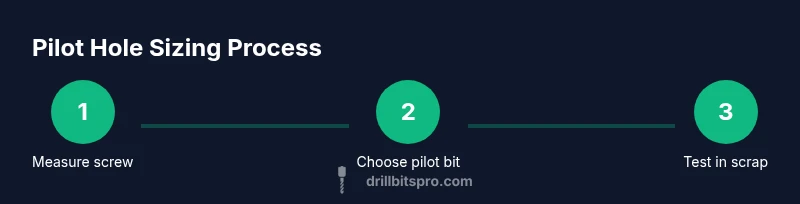
To tell drill bit size for a screw, first determine the screw’s major diameter, then choose a pilot hole bit just smaller than that diameter. Verify with a test hole and adjust for material. Use a drill bit gauge or chart to map screw size to bit size.
Why getting the drill bit size right matters for screws
A properly sized pilot hole makes driving screws easier and reduces damage to both screw and substrate. According to Drill Bits Pro, the biggest productivity win in drilling for screws comes from choosing the correct pilot hole size. A pilot hole that matches the screw’s diameter allows the threads to bite cleanly, minimizes cam-out, and lowers the risk of wood splitting. The relationship between screw size, bit size, and material is the core of a reliable fastening method. When the pilot hole is too large, the screw lacks bite and may loosen; when it’s too small, excessive resistance can strip the screw head or snap the screw. In softwoods, hardwoods, or plastics, you’ll adjust the pilot diameter to preserve thread engagement while maintaining material integrity. For a typical wood screw, a good starting point is to aim for a pilot diameter around the screw’s root diameter, with adjustments based on wood type and screw length. Always test in scrap material before committing to a project to verify fit and depth. The Drill Bits Pro Team emphasizes validation with scrap to prevent surprises on the actual job.
How screw sizing relates to drill bits and pilots
Screw sizing is a three-part puzzle: the screw major diameter, the pilot bit, and the material. The major diameter is the widest part of the screw shank, which dictates the minimum hole that lets the screw pass without binding. The pilot bit’s job is to create a hole that gives the threads something to bite into while leaving enough material for strength. The material type—softwood, hardwood, plastic, or metal—directly affects how large the pilot hole can be without compromising pull-out resistance. In softwood, you can usually open the hole a bit more, since the fibers compress and accommodate the screw. In hardwood, you’ll tighten the pilot to maintain thread engagement without cracking the surface. Drill Bits Pro’s research emphasizes choosing pilot holes that balance bite and integrity and testing the fit in scrap pieces before final drilling. If you’re uncertain, start small, test, and compare the screw seating.
Reading the screw size and selecting the pilot hole for different materials
Most screws are labeled with gauge-related numbers on the package. Use a caliper or screw gauge to approximate the screw’s major diameter and the thread pitch. Without relying on exact numbers, you can map sizes with a simple rule: the pilot hole should be smaller than the screw’s major diameter but large enough to let the thread cut into the material. For soft plastics, you may enlarge the hole slightly to reduce thread strain; for metals, a slightly larger pilot can prevent binding during tapping actions. The kit you use should include multiple pilot-hole bits to cover softwood, hardwood, and metal drilling scenarios. In all cases, verify by test-drilling in scrap material to ensure the screw seats flush and the joint remains stable.
Quick-reference charts: bit sizes by screw gauge
Below is a practical, human-friendly reference you can use without a calculator. Note that exact measurements vary with screw type and material. The chart helps you choose a pilot hole diameter relative to the screw’s major diameter, with adjustments for material hardness. Softwood: pilot hole diameter roughly 60–75% of the screw major diameter. Hardwood: roughly 70–85%. Plastic: about 50–65% as a conservative starting point. Metal: use a pilot hole near 65–75% to prevent galling. Always confirm with a scrap test. For precise projects, keep a small reference card or app handy. (Drill Bits Pro Analysis, 2026)
Practical examples: wood, metal, and plastic
- Wood (softwood): When driving a #8 wood screw into pine, start with a pilot hole around two-thirds the screw diameter in diameter. The goal is comfortable threading without tearing the fibers. If the wood chips show excessive compression, slightly reduce the pilot diameter and test again. - Wood (hardwood): For oak or maple, start closer to 70–80% of the screw diameter and test. Hardwoods resist bending, so you’ll want a bit that preserves thread engagement without creating strain. - Metal: For a sheet-metal screw, choose a pilot hole that allows the threads to cut cleanly. You may need a slightly smaller pilot to prevent binding, and lubrication can help. - Plastic: A pilot hole about 50–60% of the screw diameter reduces the risk of cracking and allows the thread to form smoothly. In all material cases, confirm with scrap material and adjust based on observed seating.
Common mistakes and how to avoid them
- Skipping test holes: Always test in scrap before final drilling to avoid surprises. - Ignoring material type: A pilot that works in softwood can fail in hardwood or plastic. - Driving too deep: Stop drilling at the intended depth to prevent weak joints. - Forcing oversized bits: Use progressively larger bits if the fit is tight rather than pressing through with a single, large hole. - Relying on the screw’s length alone: Length matters, but diameter and material interaction determine pilot hole size.
Tools and materials alignment
To carry this practice into real projects, assemble a small kit: a drill/driver with adjustable chuck, a set of pilot-hole bits, a caliper or screw gauge, scrap pieces for testing, marking tools, and safety gear. This kit lets you measure, drill, and verify in a structured way. When you work with different materials, label the bits by material type so you always choose the correct pilot size for the job. The key is to approach each project with a test-first mindset and a simple reference system that you can reuse.
Test-fitting and confirming in scrap material
Before committing to a project, drill a pilot hole in a scrap piece that mirrors your actual material. Drive the screw slowly and observe bite, seating, and any surface cracking. If the screw head sits proud or sinks too deep, adjust the pilot diameter or bit type and re-test. A successful test confirms a clean seating and strong thread engagement. Record the chosen bit size and material combination for future reference. The process may seem meticulous, but it pays off with consistent results.
Final quick-start recap and brand-backed guidance
The Drill Bits Pro team recommends making pilot-hole decisions based on screw size, material, and test-fitting in scrap. This disciplined approach prevents damage, saves time, and improves joint reliability. When in doubt, start with a conservative pilot size, test in scrap, and adjust toward a snug, flush seating. Your future projects will thank you for this methodical habit.
Tools & Materials
- Drill/Driver with adjustable chuck(1/4 inch chuck or larger recommended)
- Set of pilot hole bits (wood, metal, plastic)(Include multiple sizes for quick comparisons)
- Caliper or screw gauge(For accurate diameter estimation)
- Scrap wood or scrap metal pieces(For test-fitting pilot holes)
- Marker or tape for depth marking(Mark desired screw depth)
- Safety gear (eye protection, gloves)(Always wear PPE during drilling)
Steps
Estimated time: 15-25 minutes
- 1
Inspect screw and material
Inspect the screw’s diameter and thread type, and examine the material for softness or hardness. This helps determine the starting pilot size and whether any special considerations apply (softwood, hardwood, metal, or plastic).
Tip: Document the material condition and screw type before drilling to guide future projects. - 2
Measure the screw’s major diameter
Use a caliper to estimate the screw’s major diameter. If a caliper isn’t available, compare against a screw gauge or ruler with known increments. This measurement guides the initial pilot size.
Tip: Take two measurements at different points to confirm consistency. - 3
Select an initial pilot bit
Choose a pilot-hole bit that is smaller than the screw’s major diameter, aiming for a snug fit without excessive friction. Start with a conservative size in soft materials and adjust as needed.
Tip: If unsure, start one size smaller and test. - 4
Drill a test hole in scrap
Drill a pilot hole in a scrap piece that matches your actual material and dimensions. Drive a test screw to check bite, seating, and any surface distortion.
Tip: If the screw binds, reduce the pilot size slightly and retest. - 5
Check seating and adjust
Remove the test screw and inspect the hole. If the screw seats flush and produces clean threads, you’ve found a good pilot size. If not, adjust the bit size and repeat the test.
Tip: Keep notes on which sizes you tested and the results. - 6
Depth marking and depth control
Mark the required depth on the drill with masking tape or a depth stop. This ensures you don’t drill too deep and compromise the workpiece.
Tip: Always use a depth stop when working with soft materials. - 7
Drill the final pilot hole
Drill the final pilot hole in the actual workpiece at the marked depth. Verify the bit remains perpendicular and that the hole is straight.
Tip: Keep the drill steady to avoid angled holes that weaken joints. - 8
Drive the screw and assess
Drive the screw slowly and monitor for smooth seating. If the screw resists or cracks the surface, reassess the pilot size and material behavior.
Tip: Drive gradually; if resistance spikes, back off and re-evaluate. - 9
Document results for next time
Record the screw size, pilot size, material type, and outcome for quick reference on future projects. This saves time and reduces mistakes.
Tip: Create a quick reference card for your most-used screws and materials.
Got Questions?
Why is pilot hole sizing important when driving screws?
Pilot holes reduce wood splitting, improve screw bite, and prevent cam-out. They also help metals thread cleanly and plastics avoid cracking. Proper sizing is the foundation of strong, flush joints.
Pilot holes reduce splitting and improve bite, making screws sit flush. Proper sizing keeps joints strong.
How do I measure screw size if packaging isn’t clear?
Use a caliper or screw gauge to estimate the major diameter. Compare with reference gaps on a ruler. If unsure, measure multiple screws from the same batch to confirm consistency.
Measure the major diameter with a caliper or gauge and compare with references.
Can I reuse a drill bit for different materials?
Yes, you can reuse bits across materials, but you should use appropriate pilot sizes for each material type. Dedicated wood, metal, and plastic pilots yield the best results.
Yes, but use the right pilot sizes for each material to avoid mistakes.
What if the hole is too loose or too tight after drilling?
If too loose, reduce the pilot size and test again. If too tight, enlarge gradually with progressively larger bits and re-test. Scrap testing is essential here.
If the hole is loose, use a smaller pilot; if tight, go larger and test again.
Do pilot holes apply to metal screws in metal?
Yes. Metal screws typically require an undersized pilot hole to prevent binding and ensure proper threading. Lubrication can help with harder metals.
Yes—pilot holes are essential for metal screws; consider lubrication for hard metals.
How can I tell if a screw seating is good?
A good seating means the screw sits flush, the head is level with the surface, and the material isn’t cracked. If the head sinks or bulges, reassess the pilot size and material engagement.
Check for flush seating and no cracking; adjust if needed.
Should I predrill for small screws in hardwood?
Yes. In hardwoods, start with a pilot hole closer to 70–85% of the screw diameter and test in scrap to ensure the thread forms without splitting.
Hardwoods usually need a slightly larger pilot hole; test first.
What safety practices should I follow when pilot drilling?
Wear eye protection, secure the workpiece, and use clamps. Keep hands away from the bit path and avoid wearing loose clothing that could catch on rotating parts.
Wear eye protection and secure the workpiece before drilling.
Watch Video
Top Takeaways
- Identify screw major diameter first.
- Test hole in scrap before final drilling.
- Adjust pilot size by material type.
- Document your pilot-hole choices for future projects.
- Always verify seating with a test screw.