Star Drill: Usage, Tips, and Safety
Learn how to choose, set up, and safely use a star drill for masonry and hard materials. Practical steps, maintenance tips, and expert guidance from Drill Bits Pro.


This guide shows you how to use a star drill, what it’s best suited for, and the key safety steps you should follow. You’ll learn tool compatibility, material considerations, setup, and a clear step-by-step process to achieve clean, accurate holes with proper technique.
What is a star drill?
The star drill is a specialized drill bit designed for heavy-duty masonry work. It features a star-shaped or multi-point cutting geometry intended to cut through hard materials such as concrete, brick, and stone more efficiently than standard bits. When used with a hammer drill, the star drill combines rotational action with percussive impact to break up the material and create a bore. For DIYers and professionals, understanding the star drill’s purpose helps in selecting the right bit, speed, and pressure for the job. In practice, a star drill is most effective for larger holes where traditional masonry bits would wear quickly or wander. The Drill Bits Pro team notes that choosing a carbide-tipped star drill can improve wear resistance and hole quality in demanding materials.
In terms of density and strength, star drills are built to endure repetitive impacts without losing their edge. They are most commonly used in masonry work, but skilled users may also deploy them in other hard substrates when conditions permit. When you see a star drill, expect a tool that is purpose-built for tougher tasks where precision and speed matter—especially in concrete or brick walls, columns, and foundations.
If you’re new to this tool, start with scrap material to gauge how the star drill interacts with your specific substrate, as different blends of cement, aggregate, and reinforcement can change how the bit cuts and how heat builds up during drilling.
How star drills differ from standard drill bits
Star drills differ from conventional twist bits in several key ways. First, the cutting geometry is tailored to hard materials, with multiple cutting points that help distribute forces and reduce wandering. Second, star drills excel in hammer-mode operation, where percussive action helps advance the bit through tough substrates. Third, the materials and coatings—often carbide-tipped tips and robust shanks—are designed for high wear resistance and longer service life under demanding use. Finally, recommended RPM and pressure levels differ: you typically want slower speeds with steady, controlled pressure to prevent overheating and bit glazing.
From a performance standpoint, you’ll notice that star drills produce cleaner holes with fewer chipping issues when used correctly. However, improper use—such as high speed without adequate cooling, or excessive downward pressure—can dull the tip quickly or cause substrate spalling. The bottom line: treat a star drill as a high-performance masonry bit that rewards patient, deliberate technique and proper tool settings.
Materials and compatibility with tools
Carbide-tipped star drills offer the best wear resistance for hard substrates, including reinforced concrete and dense brickwork. When selecting a star drill, verify its shank size and ensure your hammer drill can accommodate it. Most star drills are compatible with standard hammer drills, but some setups may require an SDS-plus or SDS-Max adapter, especially for larger diameter bits. Always check the bit’s manufacturer recommendations for speed ranges and rotational torque. For long-term reliability, use bits with good carbide bonding and inspect the cutting edge frequently for signs of dullness or chipping. In addition, having a pilot drill on hand can help guide the star drill and reduce wander on slippery or uneven surfaces.
Safety-wise, wear eye protection and a dust mask when drilling masonry. Hold the drill with two hands, keep elbows slightly bent, and maintain a straight line with the bore path to avoid bit deflection. When working in tight spaces or near rebar, adjust your approach or switch to a drill designed to handle metal obstructions. Drill Bits Pro emphasizes choosing a carbide-tipped star drill for most hard substrates and avoiding cheap, low-quality bits that fail quickly.
Before you begin, gather the right tools and ensure the workpiece is firmly clamped. A star drill can generate significant vibration; securing the material minimizes kickback and helps you maintain accuracy.
When and where to use a star drill
Use a star drill when you need larger, cleaner holes in hard masonry where standard bits struggle or wear rapidly. It’s particularly effective for anchor holes, passes through concrete walls, or creating openings in dense brickwork during renovations. Star drills work well for construction tasks that require durability and precision over multiple holes in similar materials. For DIY projects, practice on scrap material to understand how the bit handles different substrates and to optimize your feed rate. Professionals may rely on star drills for repetitive tasks in offices, basements, or outside masonry where clean bore holes are essential for anchors or conduits.
If you’re drilling through reinforced concrete, expect some resistance around rebar. In such cases, using a rebar cutting drill bit or a purpose-built core bit may be more appropriate for avoiding damage or excessive wear. Drill Bits Pro suggests starting with a smaller pilot hole when necessary to guide the star drill, then progressively enlarging the hole to the desired diameter. Always assess substrate hardness, moisture content, and potential dust hazards before drilling.
Finally, consider whether a core drill or larger-diameter masonry bit would be more efficient for your project. For many repetitive anchoring tasks, a star drill delivers speed and stability, but for high-volume production, specialized core bits and rigs may offer advantages.
How to set up your star drill safely
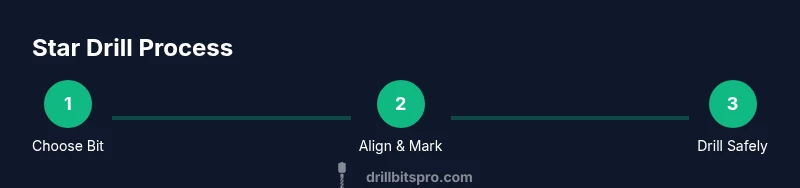
Safety begins before you power up. Put on eye protection, hearing protection if needed, and a dust mask. Secure the workpiece with clamps or a vise so it won’t shift during drilling. Verify the bit is properly seated in the chuck and that the drill is in hammer mode if available on your tool. Mark the hole location accurately with a pencil or marker, and consider drilling a shallow pilot hole first if the substrate is irregular. Check for hidden obstructions like rebar or embedded conduits.
Set your drill to a controlled speed that matches the bit size and substrate. A slower RPM with steady pressure reduces bit heat, which helps preserve the carbide tip. Begin at a shallow depth and advance gradually. Maintain alignment with the intended axis of the hole to prevent bit wandering and ensure the hole is straight and centered. If the drill binds or overheats, pause to cool and reassess the alignment and feed rate.
After starting, keep hands clear of the rotating bit and never twist or yank the drill out while the bit is still spinning. Use a firm grip and let the hammer action do the work without forcing the bit into the material. When you finish, retract slowly and clean the bore to remove dust and debris.
Common mistakes and troubleshooting
One common mistake is applying excessive downward pressure, which overheats the bit and can wear or chip the carbide tip. Another pitfall is starting at full speed without a steady guide, leading to wandering holes and poor alignment. In cold or wet conditions, cutting performance may drop; temperate, dry conditions typically yield better results. If the bit binds or stalls, stop, unload, and assess whether the workpiece is secured, the bit is tight, and you’re not striking at a too-acute angle. Let the tool do the work and avoid forcing it through the material.
If you notice excessive vibration, inspect for dull cutting edges or damaged shanks. Worn tips require replacement, and a compromised bit should never be used on critical work. For stubborn substrates, consider using a pilot hole or different bit geometry tailored to the material. If you’re drilling into reinforced concrete, be prepared for longer jobs and use a larger-diameter bit with extra drive power if needed. Drill Bits Pro reminds readers to never drill near electrical lines or plumbing without confirmation of safety.
Maintenance and care for star drills
After use, clean debris from the bit’s flutes and wipe away dust from the shank. Store star drills in a protective case to prevent chipping on the cutting edge. Inspect carbide tips regularly for wear, and replace the bit if you notice rounding, chipping, or cracking. Keep the chuck and arbor clean to avoid slippage or misalignment. For best performance, avoid exposing carbide-tipped bits to sudden temperature swings that can cause cracking. Lubrication is generally not required for masonry drilling, but a light wipe-down to remove residue can extend the bit’s life. Finally, verify compatibility with your hammer drill before your next job to minimize wear and ensure consistent results.
Tools & Materials
- Star drill bit (carbide-tipped)(Match shank size to tool (e.g., 1/4)
Steps
Estimated time: 45-60 minutes
- 1
Verify tool compatibility
Check that your hammer drill supports hammer mode and that the star drill bit matches the shank size of your drill. Confirm the bit is clean, undamaged, and properly seated in the chuck. Proper compatibility prevents slippage and ensures efficient cutting.
Tip: Use a wrench to snugly secure the chuck and avoid overtightening, which can deform the bit shank. - 2
Mark hole location
Accurately mark the drilling spot on the workpiece using a pencil or chalk. Align a square guide if you’re drilling multiple holes to maintain uniform spacing and alignment across the job.
Tip: Double-check measurements with a tape measure and level to avoid misaligned anchors. - 3
Secure the workpiece
Clamp the material firmly to prevent movement during drilling. Loose workpieces increase the risk of wandering holes and bit breakage.
Tip: Use vise grips or a sturdy clamp and place a sacrificial piece beneath the work surface to protect your underlying material. - 4
Start with a pilot guide (optional)
If the substrate is irregular or you anticipate drift, begin with a small pilot hole using a standard masonry bit to guide the star drill.
Tip: Pilot holes reduce chatter and help the star drill bite in cleanly from the start. - 5
Drill with controlled feed
Switch to hammer mode and begin drilling at a slow, steady pace. Apply consistent pressure, allow the bit and tool to work, and pause if you notice excessive heat or wobble.
Tip: Keep the drill aligned with the hole axis to prevent deflection and ensure a straight bore. - 6
Clear debris and inspect
Withdraw the bit slowly while the drill is still running to bring out debris. Inspect the hole for cleanliness and edge quality; re-drill if necessary.
Tip: Wipe the bit edge with a clean cloth to remove dust and reveal any signs of wear.
Got Questions?
What is a star drill and what is it best used for?
A star drill is a carbide-tipped drill bit designed for masonry. It excels at cutting through hard materials like concrete and brick, delivering larger, cleaner holes when used with hammer mode. For best results, pair it with the right drill and follow proper technique.
A star drill is a masonry bit designed for hard materials like concrete, used with hammer mode to make cleaner holes.
Can a star drill be used in wood?
Star drills are optimized for masonry and hard substrates. They’re not ideal for wood because the cutting geometry is tailored for stone and concrete and may dull quickly. If you must drill wood, use a wood-specific bit.
Star drills are designed for masonry, not wood, and work best with concrete or brick.
What materials can a star drill handle?
Star drills handle hard masonry like reinforced concrete, brick, and stone. Always verify bit compatibility with your substrate, and consider pilot holes for guidance on uneven surfaces.
Star drills work well on hard masonry like concrete and brick with the right bit.
Do I need a pilot hole?
Pilot holes can help guide the star drill on irregular surfaces and reduce wander. Depending on the material, a small pilot may improve accuracy.
A pilot hole can help guide the star drill and prevent wandering.
How do I maintain a star drill?
Regularly inspect the carbide tip for wear, keep the bit clean, and store it in a protective case. Replace worn bits to preserve hole quality.
Inspect, clean, and store your star drill; replace worn bits to keep holes clean.
Is drilling with a star drill dangerous?
Any masonry drilling carries dust, noise, and risk of kickback. Always wear PPE, secure the workpiece, and keep hands away from the rotating bit.
Yes—wear PPE and secure your workpiece to reduce risk when using a star drill.
Watch Video
Top Takeaways
- Choose carbide-star drills for hard substrates.
- Secure the workpiece and mark holes accurately.
- Use slow RPM and steady pressure to avoid overheating.
- Inspect and maintain bits after use.