What Size Drill Bit for a 5/16 Tap: A Practical Guide
Learn the correct drill bit size for a 5/16-18 UNC tap, with practical steps, material considerations, and a tested workflow to ensure clean, strong threads.


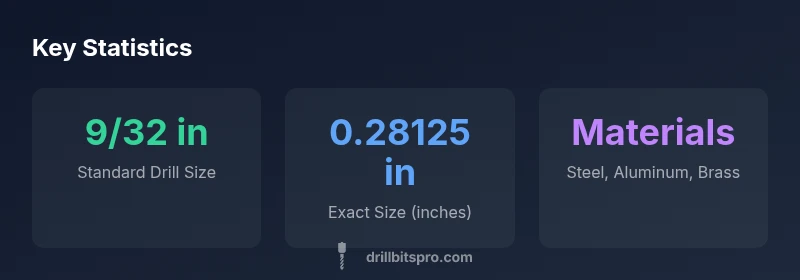
For a 5/16-18 UNC tap, the standard tapping drill size is 9/32 inch (0.28125 in). This is the most common choice for steel and many alloys, balancing thread engagement with hole strength. According to Drill Bits Pro, always verify the exact size with the tap manufacturer’s chart before committing to a cut, as material, lubrication, and tap type can shift the ideal size slightly.
What size drill bit for a 5/16 tap
If you're wondering what size drill bit for a 5/16 tap, the standard tapping drill size for 5/16-18 UNC is 9/32 inch. This size balances the amount of material removed with the strength of the resulting threads. In practice, many DIYers and pros rely on this chart-backed size for steel and common alloys. Remember, the exact size can shift with material hardness, lubrication, and the tap type (regular, bottoming, or plug). According to Drill Bits Pro, always verify the size using the manufacturer’s tapping chart before committing to a cut. Test on scrap to confirm fit and thread engagement before finishing the part.
How thread geometry dictates hole size
Understanding thread geometry helps explain why you can't just pick a larger or smaller hole arbitrarily. The hole you drill must create a path that allows the thread profile to form properly. If the hole is too large, there will be insufficient contact between the threads and the mating part, reducing grip and strength. If the hole is too small, the tap will bind, potentially breaking. The major diameter and the pitch determine the optimal hole. For a 5/16-18 UNC, the goal is to balance engagement with material integrity. Start with the standard tapping drill and adjust only after testing on scrap to see how the threads form.
Standard tapping drill size for 5/16-18 UNC
For 5/16-18 UNC, the standard tapping drill is commonly cited as 9/32 inch (0.28125 in). This size is widely used in tapping charts and is a reliable starting point for steel and aluminum. In softer materials, you may experiment with a slightly smaller hole, but always confirm with the tap manufacturer’s data and perform a controlled test hole first to avoid cross-threading.
How to measure and prepare: tools you’ll need
Before you drill, assemble a small toolkit: a sharp HSS drill bit in the target size (9/32 in), a solid drill press or a steady hand drill, calipers or a precise ruler, a center punch, machinist’s blue or a marker to mark the hole, thread-cutting oil or tapping fluid, a clean work surface, and a tap wrench with the appropriate tap. Deburr the hole after drilling to promote smooth threading, and secure the workpiece in a vise to minimize drift during tapping.
Step-by-step workflow: mark, drill, tap
- Confirm the correct size from the manufacturer’s data for your 5/16-18 UNC tap. 2) Mark the drill point with a center punch to ensure a precise start. 3) Drill the hole with a slow, steady feed and avoid yaw. 4) Deburr the hole edge to reduce chip buildup and binding. 5) Apply a light coat of tapping oil or lubricant on the bit and the tap. 6) Start the tap by hand to center the thread path, then use a tap wrench to cut threads with even pressure. 7) Back the tap out occasionally to clear chips. 8) Clean the finished hole and test with a thread gauge or properly threaded fastener.
Material considerations: steel, aluminum, brass
Material choice affects how aggressively the threads cut and how much material is removed. Steel typically requires a precise tapping drill and steady lubrication. Aluminum is softer and may be more forgiving, but heat buildup can still cause galling if lubrication is insufficient. Brass is relatively easy to tap but can work-harden if overly aggressive. Always start with the standard drill size and test on scrap of the same material to verify thread engagement.
Lubrication and tapping technique: impact on hole size
Lubrication reduces friction and helps the tap cut cleaner, effectively allowing for smoother thread formation. Use a light, compatible tapping fluid or oil, especially on harder materials. A well-lubricated tap reduces the likelihood of thread tearing and extends tool life. Maintain steady torque and let the tap do the work; avoid forced twisting or rapid back-and-forth motions, which can deform threads and degrade hole integrity.
Common mistakes and how to avoid them
Avoid skipping the test hole on scrap material; always verify the drill size against the manufacturer’s chart. Never rush the tapping process, and avoid dry tapping, which can cause tool wear and poor threads. Deburr both entry and exit holes, ensure alignment with the workpiece, and secure the part firmly. If the hole is misdrilled or the tap binds, back off, clear chips, and reassess the hole size before continuing.
Quick reference and testing procedure
- Start with the standard drill size of 9/32 in for 5/16-18 UNC. - Drill into scrap material to confirm proper thread engagement. - Use lubricant and a slow, steady tapping rhythm. - If threads feel weak or misaligned, re-drill at the manufacturer-recommended size and retap. - Validate the final threads with a gauge or a test fastener before production runs.
Tap drill sizes for common UNC taps
| Tap size | Recommended drill size | Notes |
|---|---|---|
| 5/16-18 UNC | 9/32 in (0.28125 in) | Standard tapping drill for steel/aluminum; verify with chart |
| 1/4-20 UNC | 7/32 in (0.21875 in) | Smaller size for comparison; verify with chart |
Got Questions?
What is the standard drill size for a 5/16-18 UNC tap?
The standard tapping drill for 5/16-18 UNC is 9/32 inch. Always verify with the manufacturer’s data for your specific material and tap type.
The standard drill size for a 5/16-18 UNC tap is 9/32 inch, but always check the manufacturer’s chart for your material.
Can I use a smaller drill size for softer materials?
Yes, softer materials may tolerate a slightly smaller hole, but verify with charts and test on scrap to avoid under-tapping or cross-threading.
In soft materials you can use a smaller hole, but always test first and follow the manufacturer’s guidance.
What should I do if the hole is already too large?
If the hole is oversized, you generally cannot form proper threads. The fix is to re-drill to the correct size and re-tap. In production, plan for pilot testing.
If the hole is too large, re-drill to the correct size and re-tap; testing on scrap helps prevent waste.
What tools besides the drill are needed?
You’ll need a tap wrench, lubricants, a center punch, a caliper or scale for measurement, and a drill press or stable hand drill with proper alignment.
Besides the drill, use a tap wrench, lubricant, and measurement tools for precise tapping.
Is there a difference between pilot holes and tapping sizes?
A pilot hole is the pre-drilled hole size before tapping. The tapping size is typically smaller than the major thread diameter to allow thread formation.
Think of the pilot hole as the start—tapping uses a size that lets threads form properly.
Do lubricants affect the drill size?
Lubricants reduce friction and can improve tool life and thread quality, but they do not usually change the nominal tapping size. Always apply consistently.
Lubrication helps the tap cut better but doesn’t usually change the required size.
“Tap drill sizes are a starting point; always confirm with the official chart to account for material and tooling variations.”
Top Takeaways
- Start with the standard tapping drill for the target thread, then verify.
- Always consult the manufacturer’s data for your specific tap.
- Test on scrap material before committing to production.
- Lubrication improves thread quality and tool life.
- Deburr and align the hole to prevent cross-threading.