Can a Regular Drill Be Used for Brick: A Practical Guide
Explore whether a standard drill can handle brick, when to switch to a hammer drill, and step-by-step techniques for safe, effective brick drilling with practical tips from Drill Bits Pro.


Quick answer: Yes, a regular drill can be used for brick for small-diameter holes, but only with the right carbide-tipped masonry bit, a steady pace, and pilot holes. Expect slower progress on dense brick or older masonry. For larger holes or tough bricks, switch to a hammer drill. Always wear safety gear and clean dust between holes.
Understanding brick drilling basics
If you’re wondering can a regular drill be used for brick, the short answer is yes for small-diameter holes, but only when you approach the task with the right mindset and tools. Brick is a masonry material that resists cutting, and its hardness varies with the type of brick and the mortar that binds it. A standard drill can cope with brick in straightforward situations when paired with a masonry bit and careful technique. This article from Drill Bits Pro emphasizes choosing the correct bit, inspecting the brick wall, and maintaining a steady, controlled motion to avoid wandering. By starting with a clear plan and proper PPE, you’ll improve your odds of clean holes without cracking surrounding material.
Material differences that matter
Brick comes in many forms—soft brick, common brick, and dense engineered bricks all react differently to drilling. The mortar joints can also affect the drilling experience. A regular drill excels at small, shallow holes in softer bricks when a sharp masonry bit is used. As brick hardness increases and hole sizes grow, the tool’s performance drops, and heat buildup can reduce bit life. Understanding these differences helps you decide when to press ahead with a regular drill and when to switch to a hammer drill for efficiency and reliability.
Key takeaway: Matching the brick type to your drill and bit choice is the foundation of a successful hole without damaging the masonry.
Safety considerations and setup
Before you touch the trigger, set up a safe workspace. Wear safety glasses to protect eyes from flying debris, and use hearing protection if you’re drilling for an extended period. Secure the workpiece so it cannot shift, and mark the exact starting point with tape to minimize wander. Keep a clear line of sight to the bit tip and your drill’s chuck to ensure the bit is seated properly before starting. This section also highlights the importance of heat management and taking short breaks to cool the bit, especially when drilling brick repeatedly.
Step-by-step approach to small brick holes
For small-diameter holes, your approach with a regular drill should be patient and deliberate. Start by applying light pressure and using a center punch or tape as a guide to reduce bit wandering. Drill at a low to moderate speed, periodically withdrawing the bit to clear debris and prevent binding. If you notice the drill slowing or the bit binding, stop, back out, and re-establish your starting point. With each successful pilot hole, you’ll gain confidence to extend the hole to the final diameter if needed.
Pitfalls to avoid with a regular drill on brick
Common mistakes include using the wrong bit type (carbide-tipped masonry bits work best with bricks), applying too much downward pressure, and forcing the drill when the bit begins to dull or bind. Overheating is a frequent issue, which can shorten bit life and damage the masonry. To mitigate this, drill in short bursts, pull the bit to clear dust, and allow time for the bit and drill to cool between attempts. Remember, patience often yields more accurate holes than speed.
When to switch to a hammer drill
If you’re tackling larger holes, very hard brick, or dense mortar, a regular drill may struggle to produce clean, straight holes. In these cases, a hammer drill provides percussive action that makes brick penetration easier and reduces friction. The choice depends on the hole size, the brick type, and the time you’re willing to invest. While a hammer drill delivers speed, it also demands proper control to prevent wall damage. For many DIY tasks, a regular drill still suffices with the right technique and bit.
Tools & Materials
- Masonry drill bits (carbide-tipped)(Choose diameter and length appropriate for the hole you need; ensure bit is sharp)
- Regular drill (variable speed, non-hammer function)(Set to a moderate speed; avoid using hammer mode)
- Safety glasses(Protect eyes from debris)
- Dust mask or respirator(Beneficial for prolonged drilling to reduce dust inhalation)
- Tape or center punch(Helps start hole precisely and prevents wandering)
- Clamps or a workbench/secure surface(Keeps brick steady during drilling)
- Water spray bottle or cooling mist (optional)(Keeps bit cool on hard bricks)
- Vacuum or brush for dust removal(Clears debris between attempts)
Steps
Estimated time: 30-45 minutes
- 1
Prepare the workspace
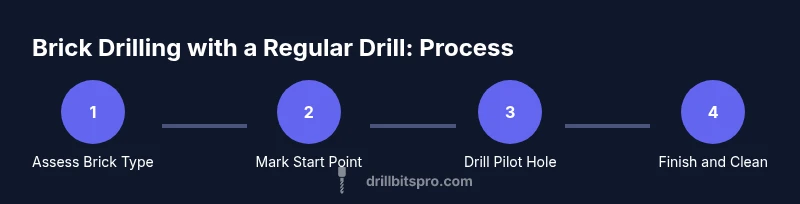
Clear the area, secure the brick or masonry surface, and mark the drill point with tape. Check that your drill is set to a non-hammer mode and that the bit is sharp and properly installed.
Tip: Double-check the bit depth and clamp the brick to prevent movement. - 2
Mark and center the starting point
Apply a small guide mark at the center of the hole location. Use tape or a center punch to reduce bit wandering when you begin drilling.
Tip: A marked starting point dramatically improves accuracy on brick. - 3
Start with a pilot hole
Drill a shallow pilot hole with a smaller masonry bit at a slow to moderate speed. Withdraw the bit occasionally to clear debris and prevent binding.
Tip: Pilot holes reduce stress on the larger bit and improve straightness. - 4
Drill to final diameter with steady pressure
Switch to the final masonry bit and maintain steady, moderate pressure as the bit cuts through brick. Pause briefly to clear dust if needed.
Tip: Avoid excessive downward force; let the bit do the cutting. - 5
Cool and inspect the hole
Wipe away dust, inspect the hole for straightness and depth, and apply cooling spray if heat builds up. If the hole isn’t square, stop and re-align on the next attempt.
Tip: Keeping the bit cool extends life and maintains cutting efficiency. - 6
Finish and clean up
Clean the area, remove debris, and test-fit any anchors or fixtures intended for the hole.
Tip: Fill any gaps around the anchor with appropriate filler if required.
Got Questions?
Can a regular drill be used for brick in all bricks?
No. A regular drill works best on soft or medium-brick with a proper masonry bit and cautious technique. Hard bricks or large holes may require a hammer drill for efficiency and better results.
A regular drill can work on many bricks if you choose the right bit and work slowly, but for very hard bricks or large holes, a hammer drill is typically better.
What size holes can I drill with a regular drill into brick?
Hole sizes depend on the bit diameter and the brick’s hardness. Start with small pilot holes and gradually increase, ensuring the bit stays sharp and cool.
Hole sizes depend on the bit; start small and increase gradually while keeping the bit cool.
When should I switch to a hammer drill?
If you experience rapid dulling, excessive heat, or difficulty penetrating hard brick, switch to a hammer drill for faster, cleaner holes and less tool wear.
If the brick is hard or the drill slows down, switch to a hammer drill for better performance.
Is center punching necessary?
Center punching helps start the hole precisely and reduces wandering. It’s highly recommended for accuracy.
Center punching helps you start exactly where you want and keeps the bit from wandering.
Is indoor brick drilling safe?
Yes, with appropriate PPE and dust control. Keep a clean workspace and ensure ventilation if drilling indoors.
Yes, with safety gear and dust control you can drill bricks indoors.
Can a cordless drill handle brick drilling?
A cordless drill can handle light bricks and small holes depending on battery life and bit quality. Performance varies, so plan accordingly.
A cordless drill can work for small jobs, but may not be ideal for hard bricks or large holes.
Do I need special anchors after drilling brick?
Yes, use masonry anchors appropriate for brick and chosen hole diameter. Clean the hole before insertion for a secure fit.
Use masonry anchors and clean out the hole for a secure fit.
How do I maintain my masonry drill bits?
Keep bits sharp, clean the dust from the flutes, and avoid overheating. Regular inspection prevents sudden bit failure.
Keep bits sharp and cool; inspect regularly to avoid failures.
Watch Video
Top Takeaways
- Assess brick type and mortar before drilling.
- Use a carbide-tipped masonry bit with a regular drill in non-hammer mode for small holes.
- Pilot holes improve accuracy and reduce bit wear.
- Switch to a hammer drill for large holes or dense brick.
- Prioritize safety and bit cooling to extend tool life.