What Type of Drill Bit for Brick: A Practical Guide
Learn which drill bit to use for brick projects, including carbide-tipped masonry bits, hammer drills, and best techniques for brick, veneer, and masonry.


A brick drilling setup relies on a carbide-tipped masonry bit used with a hammer drill. These bits are designed to cut dense brick by abrading rather than shearing, delivering clean holes with less surface damage. For most anchor holes, choose a 4–10 mm carbide-tipped masonry bit; larger holes may require core or stepped bits. While concrete bits can work, brick-specific masonry bits last longer and stay sharper. Always start with a light pilot hole to guide the bit and maintain steady pressure while cooling the bit as needed.
Understanding brick drilling: key bit types and objectives
When planning a brick drilling task, you might ask what type of drill bit for brick will deliver clean, accurate holes without cracking. The short answer is: use a masonry bit with a carbide tip designed for dense masonry. These bits cut by abrading and shaving material rather than mowing through it with a standard twist bit. For most anchor holes, a carbide-tipped masonry bit in the common 4-10 mm range is sufficient, especially when used with a hammer drill. Larger holes or anchors require specialized bits such as core bits or stepped bits, and a drill with adjustable hammer action to avoid bit wandering. While concrete bits can work on brick, dedicated brick-friendly masonry bits last longer and stay sharper. Drill Bits Pro recommends starting with a light pilot hole to guide the bit and reduce surface spalling, then advancing with steady pressure and frequent pauses to cool the bit. With the right bit choice and technique, brick drilling becomes predictable and repeatable.
Carbide-tipped masonry bits: the workhorse for brick
Carbide-tipped masonry bits are the industry standard for brick because the carbide tip offers superior wear resistance when cutting through dense masonry. Look for bits labeled as masonry or brick bits with a carbide tip and a robust shank. Use sizes that match your anchors (commonly 4–10 mm for light to medium loads) and keep an extra few sizes on hand for future projects. When used with a hammer action drill, these bits cut efficiently, produce clean holes, and resist heat buildup that can dull other bit types. If you notice dulling or smoking, pause to cool the bit and avoid forcing it. Pro tip: keep the bit perpendicular to the surface to prevent wandering and ensure a true hole.
Brick types and how they influence drill bit choice
Brick comes in several varieties—clay brick, concrete brick, and brick veneer. Clay bricks and engineered bricks are typically denser and more abrasive, which makes carbide-tipped masonry bits the safer choice for longevity and hole quality. Brick veneer, installed over a backing, can be gentler on bits but still benefits from sharp, carbide-tipped bits to prevent slower cutting or chipping. Softer bricks may allow slightly faster drilling, but always start with a pilot hole and monitor bit temperature. In all cases, avoid dull bits and recheck hole depth before final anchoring. If you encounter veering, re-align the bit gently rather than forcing it through
Choosing between hammer drill and standard drill
For brick work, a hammer drill or rotary hammer is almost always preferable to a standard drill. The hammer action helps chips, dust, and debris clear away from the cutting edge while the masonry bit does the actual cutting. When you enable hammer mode, drill at a steady pace rather than high speed; higher speeds can overheat the bit and brick surface. If you’re working on very small holes in softer brick, you may survive with a standard drill, but you’ll still benefit from masonry bits and limited hammer action. Always use a drill with variable speed control and a locking clutch to reduce kickback and improve control while you bore. Maintain perpendicular alignment to the surface to avoid elongated or angled holes
Pilot holes, speeds, and feed pressure
Start with a small pilot hole to guide the larger masonry bit. A pilot hole also reduces the risk of brick cracking around the entry. Use moderate drilling speed and constant, light pressure; forcing the bit can cause cracks and spalling. Pause to cool the bit if you notice smoke or a strong smell of overheated material. For hard bricks, slow down the rotation and use shorter drilling bursts, removing dust between bursts with a brush or vacuum. If you’re anchoring, ensure the pilot already matches the anchor diameter, then drill to the required depth using a depth stop or depth-marked tape. Finally, clean the hole and test the fit before inserting anchors.
Step-by-step overview for brick drilling
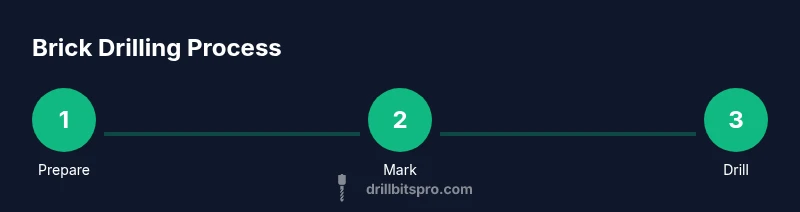
This section provides a high-level view of the process. For the detailed, step-by-step actions, see the dedicated STEP-BY-STEP block. In brief, prepare your area and equipment, mark your location, set your depth, switch to a masonry bit, drill with hammer action, cool as needed, install anchors, and perform a final check before cleanup. Each step emphasizes safety, accuracy, and control to avoid brick damage and ensure a solid hold for fasteners.
Common mistakes and how to avoid them
Common mistakes include using the wrong bit type, drilling without hammer action, and applying excessive pressure. Also, neglecting to mark depth can lead to oversize holes or damaged brick faces. Avoid overheating by taking short breaks and using cooling periods. Always align the drill perpendicularly to the surface; angled drilling creates oversized or oblong holes. Finally, skip the pilot hole when the brick is very soft or you know your anchor size is large—that can still result in cracks or spalling.
Maintenance and care for masonry bits
Masonry bits don’t like overheating. After drilling, wipe away dust and inspect the carbide tip for wear. If the tip shows signs of wear, rotate to a fresh edge or replace the bit. Store bits clean and dry to prevent rust on the steel shank. If you notice dull cutting, avoid forcing and instead switch to a cooler, slower operation with a fresh bit. Regular inspection and proper storage extend the life of your masonry bits and ensure cleaner holes over many projects.
Drilling into brick veneer vs solid brick
Brick veneer often has a backing material, which can influence hole depth and install methods. For veneer, you should drill through the veneer with care to avoid cracking the facing brick, and then proceed into the backing with a similar technique. Solid brick requires more careful heat management, slower speeds, and frequent bit checks. If anchors are required, select the correct expansion plug or sleeve for brick and ensure you’ve penetrated into the solid substrate. Always verify electrical wires and plumbing behind the wall before drilling, using proper detection tools.
Budget and availability of bits
Carbide-tipped masonry bits are widely available and come in a wide range of diameters. Prices vary by size and quality, so it’s worth investing in a few rings of common sizes (4, 6, 8, 10 mm) for versatility. Cheap bits will dull quickly and cost more in the long run due to frequent replacements. Look for reputable brands that advertise carbide tips and standard shank sizes to ensure compatibility with most hammer drills. Consider buying a small set with a carrying case for frequent brick projects.
Quick-start checklist for brick drilling projects
- Gather PPE: safety glasses, dust mask, gloves. 2) Prepare the surface and mark the drilling points. 3) Choose carbide-tipped masonry bits in 4–10 mm. 4) Use a hammer drill with variable speed. 5) Start with a pilot hole if needed and drill at a moderate pace. 6) Pause to cool the bit and dust between bursts. 7) Install anchors and test the fit. 8) Inspect the hole for cracks and clean up the workspace.
Tools & Materials
- Carbide-tipped masonry drill bits (assorted sizes 4–10 mm)(Carry multiple diameters; include pilot-size bits for small holes)
- Hammer drill or rotary hammer(Variable speed with hammer action; keep perpendicular to the surface)
- Safety PPE: safety glasses, NIOSH dust mask, gloves(Eye protection, respiratory protection, and hand protection)
- Tape measure and pencil(Mark locations, spacing, and depths accurately)
- Depth stop or tape(Control hole depth to match anchors)
- Masking tape(Secure marking and protect surface edges)
- Anchors and plugs (plastic anchors for brick)(Choose based on load and brick thickness)
- Vacuum or brush for dust cleanup(Keep the work area clear for visibility)
Steps
Estimated time: 45-60 minutes
- 1
Prepare the work area and select the bit
Set up a clean, well-lit workspace. Put on PPE and choose a carbide-tipped masonry bit that matches your anchor diameter. Ensure the drill has a hammer function and a 90-degree alignment to the surface.
Tip: Clamp the workpiece if possible to prevent movement. - 2
Mark location and depth
Use a pencil and masking tape to mark the exact hole location and depth. The tape helps prevent bit wandering and provides a visual depth cue.
Tip: Double-check measurements before proceeding. - 3
Optional pilot hole
For harder bricks, start with a small pilot hole (2–3 mm) to guide the larger masonry bit. This reduces stress on the brick face.
Tip: If bricks are very soft, skip the pilot hole to avoid extra steps. - 4
Switch to masonry bit and engage hammer mode
Install the correct carbide bit and enable hammer action. Keep the bit perpendicular and at a comfortable height to maintain control.
Tip: Do not press the bit too hard; let the bit do the cutting. - 5
Drill with steady pressure and moderate speed
Drill in short bursts, removing dust between bursts. Pause to cool if the bit becomes hot or smoke appears.
Tip: Keep the drill moving to avoid scrapes and ensure clean entry. - 6
Clear debris and check hole depth
Vacuum or brush out dust and verify the hole depth with your depth stop or tape. Adjust if additional depth is needed.
Tip: Inspect the hole for chips or cracks before inserting anchors. - 7
Install anchor or fastener
Place the anchor into the hole and tap gently if needed. Then drive the screw to ensure a secure hold.
Tip: Choose an anchor length that reaches solid brick behind the veneer. - 8
Final checks
Confirm hole alignment and depth, test the fit of the fastener, and ensure no visible cracks around the hole.
Tip: If cracks are present, stop and reassess with a smaller bit. - 9
Cleanup and tool care
Turn off the drill, disable hammer mode, and clean up the area. Wipe the bit and store in a dry place to prevent rust.
Tip: Allow the bit to cool before touching it after drilling.
Got Questions?
What type of drill bit is best for brick?
A carbide-tipped masonry bit designed for brick and concrete used with a hammer drill is typically best for clean holes and longer bit life.
A carbide-tipped masonry bit with a hammer drill is the safest choice for brick.
Can I drill brick with a standard drill?
Yes, if your drill has a masonry bit and a hammer function or percussion mode. Without hammer action, holes may be rough and harder to control.
You can, with a masonry bit and hammer mode. Without hammer action, it's tougher.
Do I need a pilot hole when drilling brick?
Pilot holes help guide the bit and reduce cracking, especially in harder bricks. Start small and grow gradually.
Yes, a pilot hole helps guide the bit and prevents cracking.
How can I prevent brick from cracking while drilling?
Use the correct bit, keep speeds moderate, avoid excessive pressure, and cool the bit regularly to prevent overheating.
Choose the right bit, drill slowly, and keep the bit cool.
What safety gear should I wear when brick drilling?
Wear safety glasses, a dust mask, and gloves. Use hearing protection if your drill is loud.
Protect eyes and lungs, and wear gloves; ear protection helps with loud drills.
Should I drill through brick veneer the same way as solid brick?
The technique is similar, but veneer backs can influence edge casting. Use proper anchors and avoid excessive pressure.
Yes, the method is similar, but backings matter for veneer.
Watch Video
Top Takeaways
- Use carbide-tipped masonry bits for brick.
- A hammer drill dramatically improves brick drilling results.
- Pilot holes and steady, cool drilling prevent cracks.
- Choose sizes to match anchors and backer material.