How to Drill Brick Walls: A Practical Step-by-Step Guide
Learn to drill brick walls safely and accurately using masonry bits. This practical guide covers tool selection, step-by-step technique, anchors, and common mistakes for DIY and professionals.


With brick walls, the right drill bit brick wall and a masonry hammer drill let you create clean holes for anchors and fasteners. You will learn how to choose the correct bit, mark depth, drill steadily, and insert anchors safely. This guide emphasizes practical steps, safety, and error-free results. Drill Bits Pro guides you through the process.
Understanding brick walls and drilling challenges
Brick walls present a combination of hard surfaces and mortar joints. The goal is to create clean, centered holes without causing cracks or spalling. When you tackle brick with a drill bit brick wall, you rely on masonry bits with carbide tips and a hammer drill to fracture the brick rather than the surrounding mortar. In this section, we outline the core challenges and how proper technique mitigates them. According to Drill Bits Pro, the right bit and technique dramatically reduce wear and maximize hole quality. Ground rules: choose a bit with a carbide tip, use a masonry hammer drill in hammer mode, and support the workpiece to prevent wandering. This foundation helps readers understand why the right tools and method matter, especially for mounting shelves, fixtures, or anchors in brick masonry.
Tools and materials you’ll need
Before you start, assemble gear and parts so you don’t stop mid-work. A hammer drill or rotary hammer in hammer mode is essential for brick, while carbide-tipped masonry bits do the actual cutting. Keep a small pilot bit handy for starting the hole, and have a depth marker to avoid over-penetration. PPE—eye protection, a dust mask, and hearing protection—helps keep you safe in dusty brick environments. A tape measure, marker, and a sturdy work surface will save you time and prevent mistakes. Finally, ensure you have the appropriate wall anchors for the final hole size.
In practice, prepare the tools and workspace first. Check that the drill is clean, bits are sharp, and the drill settings are ready. Work at a steady pace, letting the bit do the cutting rather than applying excessive pressure. A well-prepared setup reduces the risk of wandering and minimizes spalling on brick faces.
Choosing the right drill bit brick wall for masonry
Selecting the correct drill bit brick wall depends on the wall’s composition and the anchor you plan to install. For brick walls, carbide-tipped, masonry-grade bits are the standard choice because they resist heat and wear when forcing through masonry. Start with a small pilot bit (often 3/16 inch or 4–5 mm) to create a centered starter hole, then step up to the final size. Length matters: use bits long enough to penetrate the brick and board a proper depth without bottoming out in the wrong layer. If you’re drilling through brick into a hollow cavity, consider a longer bit and appropriate anchors designed for brick.
Step-by-step technique: drilling into brick safely
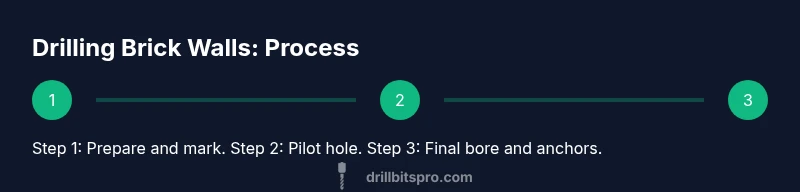
Follow a clear, methodical process to minimize risk of crack propagation. Start by marking the exact spot with a pencil and place masking tape over the mark to reduce bit wandering. Put the drill in hammer mode and begin at a slow speed to create a small pilot hole. Increase to the final drill size once the hole is centered. Use a steady, moderate pressure—pushing too hard can break bricks, while too little pressure stalls the bit. Periodically withdraw the bit to clear dust and cool the tip, especially on dense brick. Finish by inserting the anchor and test for bite, alignment, and stability.
In this stage, consistent technique matters more than brute force. If you notice the bit smoking or the brick flaking, pause, withdraw, and let the bit cool. A cooler bit lasts longer and produces cleaner holes.
Finishing and mounting: anchors, plugs, and sealants
After the hole is drilled, deburr it gently with a small punch or a blunt tool to remove loose mortar. Clean the hole of dust using a compressed air can or a bottle brush. Choose an anchor suited for brick: plastic plugs for light loads or mechanical anchors (like sleeve anchors) for heavier loads. Insert the anchor fully until it sits flush with the brick surface, then drive in the screw. For exterior applications, consider a masonry-rated sealant to protect against moisture intrusion. Properly installed anchors ensure reliable mounting for shelves, fixtures, or outdoor fixtures.
Remember to re-check the drill hole diameter against the anchor kit before installation. Small inconsistencies can lead to insecure mounting or wall damage over time.
Common mistakes and troubleshooting
Wandering bits, over- or under- drilling, and using dull bits are the main culprits that compromise results. If the hole wanders, stop and realign with masking tape and a fresh pilot. If the bit binds, back it out slightly and clear debris before continuing. Always use the hammer drill in its masonry setting and avoid high-speed wood-drilling modes, which can overheat bits. For brick with hollow cores, ensure you choose the right anchor type to avoid pull-out. If you’re consistently encountering cracks, double-check your depth and consider using an impact-rated bit designed for masonry.
Safety and maintenance for masonry drilling
Masonry drilling can generate significant dust and debris. Wear eye protection, a dust mask, and hearing protection. Work in a well-ventilated area and keep the workspace clean to avoid slips and lost fasteners. After drilling, store bits clean and dry to prevent corrosion. Regularly inspect the hammer drill for heat buildup and clean cooling vents. If a bit becomes dull, don’t force it—replace or sharpen it to maintain performance. Routine maintenance reduces wear and prolongs tool life.
Bonus: tips from our experts
- Keep a consistent yaw-free stance to maintain drill alignment. - Start with pilot holes for accurate positioning. - Use masking tape to mark depth and prevent wandering. - Let the bit do the work; hard pressing wastes energy and can crack bricks.
Tools & Materials
- Hammer drill (in masonry/hammer mode)(Essential for breaking through brick and mortar without overstressing the tool)
- Masonry drill bits, carbide-tipped(Assortment including 4 mm–12 mm or 5/32)
- Masking tape(Marks the drilling spot and helps prevent wandering)
- Safety goggles(Eye protection against dust and chips)
- Dust mask or respirator(Protects lungs from brick dust)
- Depth stop or marker tape(Prevents over-penetration and ensures consistent hole depth)
Steps
Estimated time: 45-60 minutes
- 1
Assess area and safety
Inspect the wall, ensure area is clear of pipes or electrical lines, and select anchors appropriate to brick. Put on eye protection, a dust mask, and hearing protection. Set your drill to masonry/hammer mode and confirm the bit is sharp.
Tip: Check behind the wall using a stud finder or visual cues to avoid hazards. - 2
Mark hole site and depth
Mark the exact drilling spot with a pencil and cover it with masking tape to prevent wandering. Apply depth marker tape at the desired hole depth, so you know when to stop.
Tip: A centered starter hole improves accuracy and reduces mortar breakout. - 3
Start with a pilot hole
Using a small masonry bit, drill a shallow pilot hole at a slow speed to establish alignment. Increase pressure gradually as the bit bites into the brick, keeping the drill steady.
Tip: Do not push aggressively; let the bit do the cutting. - 4
Drill to final size
Switch to the final size masonry bit and continue drilling to the marked depth. Withdraw occasionally to clear dust and prevent the bit from overheating.
Tip: If the hole binds, back out and clean the dust before continuing. - 5
Install anchor and test
Clean the hole, insert the anchor fully, then drive in the screw to verify fit and hold. Confirm that the anchoring system is appropriate for brick and load.
Tip: Small cracks indicate over-penetration or misalignment; re-drill if necessary. - 6
Final inspection and cleanup
Inspect the drilled hole for uniformity, remove dust, and wipe the surface. Store tools properly and prepare for mounting or sealing as required.
Tip: Seal exterior joints if moisture exposure is likely.
Got Questions?
What type of drill bit is best for brick walls?
Carbide-tipped masonry bits are the preferred choice for brick walls. They resist heat and wear, providing cleaner holes when used with a hammer drill in masonry mode.
Carbide-tipped masonry bits are best for brick, especially with a hammer drill.
Should I pre-drill a pilot hole when drilling brick?
Yes. Start with a small pilot hole to guide the larger bit and reduce the chance of brick breakage or mortar breakout. This improves accuracy and reduces wear on the bit.
Yes, start with a pilot hole for better accuracy and less wear.
What RPM should I use for brick drilling?
Use a slow to moderate speed and let the bit cut. High speeds overheat masonry bits can cause wear and glazing on the bit.
Drill slowly and let the bit do the cutting to avoid overheating.
Is it necessary to drill in hammer drill mode for brick?
Yes. Drill in hammer/masonry mode to efficiently break through brick while protecting the bit and reducing breakage.
Hammer mode is essential for brick drilling.
Can I drill into brick from the outside of a building?
Yes, but ensure you select anchors rated for exterior use and seal joints to prevent water infiltration. Use weather-appropriate hardware.
Outside brick drilling is fine with proper exterior anchors and sealing.
How do I remove a stuck masonry bit?
Gently back the bit out with the drill off, then clean the dust. If it won’t budge, power down, switch bits, and try again with light pressure.
Back the bit out slowly, clean, then retry with light pressure.
Watch Video
Top Takeaways
- Identify brick type and plan the hole size before drilling.
- Choose carbide-tipped masonry bits and use hammer mode for brick.
- Mark depth, start with a pilot hole, then enlarge to final size.
- Clean debris, test anchors, and inspect for accurate mounting.
- Prioritize safety and tool maintenance for repeatable results.