Where to Drill into Brick: A Practical Masonry Guide
Learn where to drill into brick safely, selecting the right masonry bits, drilling method, and anchors to avoid cracks and ensure secure installations.


In this guide you’ll learn where to drill into brick safely and effectively. You’ll choose the right masonry bit, drill type, and anchors, plus how to avoid common mistakes. Key requirements: proper PPE, a hammer drill or rotary hammer, and clean pilot holes before installing anchors. Also, you’ll understand when to drill through brick versus mortar and how to test hole hardness.
Why drilling into brick requires the right approach
Brick is a durable building material composed of fired clay units bound by mortar. Drilling into brick requires respect for both the brick units and the mortar joints that tie them together. The goal is to create clean, straight holes that accept anchors or fasteners without causing spalling, cracking, or widened holes. The right combination of bit selection, drilling technique, and depth control reduces dust, heat buildup, and the risk of damaging hidden conduits behind the wall. In practical terms, this means planning the location of anchors with respect to brick courses, avoiding soft mortar when you can, and using a method that minimizes vibration while keeping the drill perfectly perpendicular to the surface.
For the beginner, thinking through the material layers you’ll encounter—brick, mortar joint, and backing—helps you decide where to drill into brick. If you’re anchoring to a load-bearing position, prefer brick over mortar for the strongest grip, but only where the brick is solid and not too brittle. When you encounter hollow sections or very soft brick, switch to appropriate anchors designed for weaker masonry or to through-bolts that bite into the backing material. The approach you take today will affect the durability of your installation for years to come. The Drill Bits Pro team emphasizes that preparing the right setup is as important as the drill itself in achieving reliable results.
bold$
Bulleted advice: Plan locations in advance; avoid drilling through joints when possible; maintain perpendicular drilling; inspect for cracks and setbacks; use anchors suited to brick type.
Tools & Materials
- Hammer drill or rotary hammer(Use with a masonry bit; higher impact helps penetrate brick without excessive force.)
- Carbide-tipped masonry drill bits(Sizes typically range from 4-12 mm; select based on anchor size.)
- Pencil or marker(Mark exact hole locations and depths.)
- Tape measure(Verify spacing and alignment, especially for multiple anchors.)
- Safety goggles(Eye protection against debris.)
- Dust mask(Protect lungs from brick dust and particles.)
- Vacuum or brush for dust(Keep work area clean to improve visibility and control.)
- Plastic or masonry anchors(Choose anchors suited for brick and the load requirement.)
- Depth stop or masking tape(Helps prevent drilling too deep.)
Steps
Estimated time: 20-40 minutes
- 1
Prepare and mark the drilling area
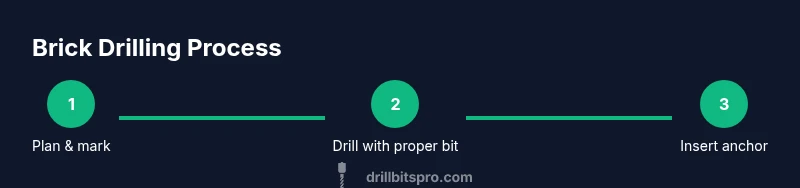
Clear the work area and protect nearby surfaces. Put on PPE, then use a tape measure and level to mark the exact locations of your holes. Use a pencil to make precise marks on the brick face, avoiding mortar joints when possible for better grip.
Tip: Use a laser guide or a small square to ensure marks are perfectly square to the brick surface. - 2
Choose the correct masonry bit and drill setup
Select a carbide-tipped masonry bit that matches your anchor size. Attach the bit to your hammer drill and set it to a steady, controlled speed—too fast can overheat the bit and damage the brick. If you have a depth stop, align it to the planned hole depth.
Tip: Start with a smaller pilot bit if you’re unsure of brick consistency to reduce the risk of cracking. - 3
Begin drilling with perpendicular alignment
Position the drill perpendicular to the brick surface. Start with light pressure to allow the bit to bite without wandering. Maintain steady, even pressure and let the hammer action do the work rather than forcing the bit.
Tip: Keep the drill at a 90-degree angle and avoid angling the bit into the brick. - 4
Drill to depth and clean residue
Drill to the full required depth using a slow, steady pace. Withdraw the bit occasionally to clear dust and cooling debris. Use a vacuum or brush to keep the hole free of debris for better anchor seating.
Tip: If you hit a denser layer, ease off slightly and let the bit cut rather than forcing it.” - 5
Insert the anchor and test the bite
Clean the hole again and insert the masonry anchor fully. Tap it gently if needed so it sits flush with the brick surface. Install the screw or bolt just enough to seat without stripping; test by gently pulling to confirm the hold.
Tip: Avoid overtightening—the brick can crumble if the anchor is overdriven. - 6
Finalize and inspect the installation
Wipe away dust, install any trim or fixtures, and check alignment once more. If any cracks appear nearby, reassess the location or anchor type. Document the drill depth and anchor size for future reference.
Tip: Record hole locations and anchor specs to simplify future maintenance.
Got Questions?
What is the best drill bit for brick?
Carbide-tipped masonry bits are preferred for brick. Pair with a hammer drill and start with a smaller pilot hole to guide the larger bit. This reduces wandering and minimizes brick damage.
Use a carbide masonry bit with a hammer drill and start small to guide the larger bit.
Should I drill into brick or mortar?
When possible, drill into brick for stronger grip and load-bearing anchors. If the brick surface is damaged or you need to avoid cracking, consider anchors designed for hollow or weak masonry and avoid mortared joints when drilling.
Aim for brick, not mortar, for better anchor support; use specialized hollow-masonry anchors if needed.
Can I drill without a hammer drill?
A standard drill struggles with brick; a hammer drill or rotary hammer makes drilling faster and cleaner. If a hammer drill isn’t available, use a slower speed and a sharp masonry bit.
A hammer drill is usually necessary for brick. Without it, expect slower progress and more effort.
How do I measure drill depth accurately?
Use a depth stop on the drill or wrap a piece of tape around the bit to mark the desired depth. Stop frequently to check depth and prevent over-drilling.
Mark the depth on the bit with tape, and check as you go.
What safety gear is essential?
Wear safety goggles, a dust mask, and hearing protection if using loud tools. Keep bystander safety in mind and remove clutter from the work area.
Goggles and a dust mask are a must; protect your ears if you’re using a loud drill.
What if I hit a hollow space behind brick?
If you encounter hollow space, switch to anchors designed for hollow masonry or avoid drilling completely in that area. Through-bolting can be an alternative where backing exists.
If you find hollow space, use hollow-masonry anchors or change the location.
Watch Video
Top Takeaways
- Plan locations precisely and mark bricks, not mortar.
- Use a carbide masonry bit with a hammer drill for clean holes.
- Pilot holes and depth stops improve accuracy and hold.
- Avoid over-tightening anchors to prevent brick damage.