Hammer Drill for Brick: Step-by-Step Guide
A practical, step-by-step guide to using a hammer drill for brick. Learn tool selection, masonry bit types, drilling technique, safety, and common mistakes for clean, reliable hole installation.


In this guide you'll learn how to use a hammer drill for brick to create clean, accurate holes for anchors and wiring. You'll understand tool selection, bit types, drilling technique, and safety practices to prevent cracking brick or dulling bits by following best practices and avoiding common mistakes.
Why a Hammer Drill for Brick Matters
Brick and mortar demand a tool that can both rotate and deliver percussive force. A hammer drill for brick combines rotation with an impact mechanism that hammers the bit as it spins, allowing the bit to cut into hard masonry without excessive torque. For DIYers and professionals, choosing the right tool reduces the chance of cracked brick, chipped mortar, or misaligned anchors. According to Drill Bits Pro, the best results come from matching the drill's performance to the job size and brick type, and from using the correct masonry bits. When you work with brick, you are drilling through a composite of fired clay and glue-like mortar; the hammer action helps the bit bite into both materials. In this guide you will learn what to look for in a hammer drill, which bits to pick, and how to drill holes cleanly and safely. The focus is practical technique, not theory, so you can apply these lessons immediately on the job site.
How a Hammer Drill Works on Brick
A hammer drill for brick uses a percussion mechanism that alternates between turning the bit and delivering rapid impacts. This dual action helps the bit grind through tough masonry by breaking up the brick and mortar ahead of its cutting edge. The effect is most noticeable when drilling into solid brick or loaded mortar joints, where a regular drill would struggle or glide. The ability to adjust hammer force, variable speed, and rotation direction gives you control for different brick types and anchor sizes. Carbide-tipped masonry bits tolerate heat and abrasion better than plain bits, which matters when you’re drilling multiple holes in dense material. Proper technique—keeping the bit perpendicular, steady pressure, and periodic bit withdrawal—reduces heat buildup and extends bit life. Remember, drills with a true hammer function perform better over time than those that only spin. As you gain experience, you’ll recognize how the brick’s texture and mortar hardness affect the process.
Evaluating Your Brick-Drilling Needs
Before picking a drill setup, assess the scope of the job. Consider the number and size of holes, the surrounding brickwork, and whether holes will be placed in bricks or in mortar joints. In brick, anchors usually require deeper, well-cut holes to ensure secure holding power; in mortar, holes can be shallower but must still be clean for a solid grip. If you’re drilling into older brick, expect denser material and potential crumbling if you apply too much pressure. A versatile hammer drill with variable speed and a reliable percussion mode lets you adapt to both small, precise anchor holes and larger, more demanding openings. Drill Bits Pro analysis shows that selecting a drill and bits suited to the brick type reduces wear and improves hole quality across a range of masonry projects.
Masonry Bits and Drill Selection
Carbide-tipped masonry bits are essential for brick because they resist the heat and abrasion produced by continuous hammering. Choose bits with a straight shank for most standard chucks, and ensure the bit length matches the required hole depth. For multiple holes, consider a bit set that includes common diameters used for anchors. The shank style and overall bit rigidity affect how well you maintain a straight path through dense material. Always verify the bit’s condition before starting: a dull edge or a slightly bent bit will wander and cause imperfect holes. In addition to bits, a compatible depth stop helps you reach the exact hole depth required for your anchors and reduces the risk of drilling too deep.
Drilling Techniques for Clean, Accurate Holes
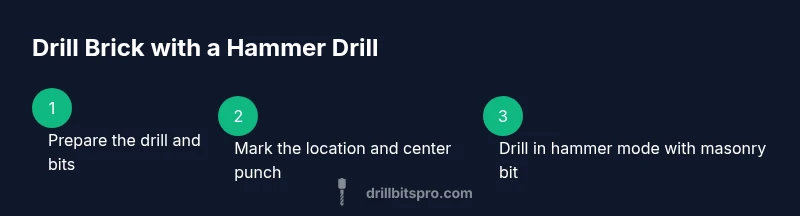
Start by preparing the work area with PPE and securing the brick surface. Mark the hole location precisely, and consider using a center punch to prevent bit wandering. Begin with a pilot approach if the brick is heavily textured; then switch to the masonry bit in hammer mode. Maintain a steady, moderate pace rather than forcing the drill; let the bit do the work. Periodically pull the bit out to clear dust and check progress. For longer holes, pause occasionally to reduce heat buildup and extend bit life. After drilling, clean the hole, remove debris, and insert anchors per the manufacturer’s instructions to ensure a solid hold.
Safety, Maintenance, and Common Mistakes
Always wear eye protection, hearing protection, and a dust mask when drilling brick. Secure the workpiece and keep hands clear of the rotating bit. Use the correct masonry bit and never force the drill; let the tool do the work. Common mistakes include drilling at too high or too low a speed, not aligning the drill perpendicularly, drilling into mortar when brick is intended, and neglecting to use a depth stop. Regularly inspect bits for wear and replace them when needed. After drilling, clean the hole and inspect the anchor fit to avoid loose fixtures or failure over time.
Tools & Materials
- Hammer drill (corded or cordless with sufficient power)(Choose models with variable speed, hammer function, and a robust chuck.)
- Carbide-tipped masonry drill bits (masonry bit set)(Select bit lengths to suit hole depth; ensure straight shank fits your chuck.)
- Safety glasses(Eye protection to guard against chips and dust.)
- Dust mask or respirator(Protect lungs from brick dust and silica.)
- Hearing protection(Use ear protection when drilling for extended periods.)
- Depth stop(Helps achieve consistent hole depth for anchors.)
- Marker or pencil(Accurate location marking before drilling.)
- Vacuum or dust extraction(Keeps the work area clean and improves visibility.)
Steps
Estimated time: 45-60 minutes
- 1
Prepare safety gear and tool
Put on safety glasses, mask, and hearing protection. Inspect the hammer drill to ensure the battery is charged or the cord is intact. Verify the hammer function and variable speed controls are working before you touch the brick.
Tip: Test the drill on a scrap brick to confirm the chuck is gripping the bit firmly. - 2
Mark location and center punch
Use a pencil to mark the exact hole location. If the brick surface is irregular, gently center punch the spot to reduce bit wandering once drilling begins.
Tip: A center punch helps keep the bit aligned with the mark during initial contact. - 3
Install masonry bit and set to hammer mode
Insert the carbide-tipped masonry bit into the chuck and tighten securely. Switch the drill to hammer mode and set a moderate speed suitable for brick. Ensure the bit is perpendicular to the surface.
Tip: A straight, perpendicular entry prevents angled holes and mortar chipping. - 4
Drill pilot or start directly
For textured brick, start with a small pilot hole using a smaller masonry bit, then advance to the final size. If brick is uniform and dense, you can begin with the final bit size at a controlled pace.
Tip: Let the bit do the work; avoid heavy pressure that can cause bit deflection. - 5
Drill to depth and clear dust
Drill in short bursts and pull the bit out every few seconds to clear dust buildup. Use a depth stop to prevent over-drilling and to match the anchor length.
Tip: Keep the drill temperature down; overheating shortens bit life. - 6
Finish, clean, and install anchor
Clean the hole with a blast of air or a quick vacuum. Insert the anchor to the recommended depth and tighten as per the hardware instructions. Check that the anchor is secure before proceeding.
Tip: Double-check the anchor type matches the brick and load requirements.
Got Questions?
Do I really need a hammer drill for brick, or can a regular drill work?
For most brick and mortar projects, a hammer drill is recommended because the percussion action helps the bit cut through brick and mortar efficiently. A regular drill can work for very small or soft bricks, but performance and hole quality improve with a hammer drill.
A hammer drill makes brick drilling easier and faster, especially for solid brick and mortar joints.
Can I drill into brick or into mortar?
Yes, but the results differ. Drilling into brick provides stronger anchor holding capacity, while drilling into mortar is typically easier but may offer less load-bearing strength. Match your method to the anchor and load.
Brick holes hold anchors best; mortar holes are easier but less secure.
What bits should I use for brick?
Carbide-tipped masonry bits are best for brick. Choose a bit diameter that matches the anchor size and ensure the bit length reaches the required depth.
Carbide masonry bits are essential for brick drilling.
How deep should holes be?
Hole depth should match the anchor length plus the installed fixture. Use a depth stop to maintain consistent depth and avoid over- or under-drilling.
Depth should equal the anchor depth for a secure fit.
Are cordless hammer drills sufficient for brick?
Yes, many cordless hammer drills perform well on brick, especially for lighter loads or in tight spaces. Check battery life and ensure the model provides a reliable hammer action.
Cordless options can work well if they have good battery life and a solid hammer function.
What safety precautions should I take?
Wear PPE, secure the workpiece, and keep hands away from the bit. Avoid drilling near electrical lines, and never rush holes—slow, steady progress reduces breakage and injury.
Wear PPE and work safely; secure the area and take your time.
Watch Video
Top Takeaways
- Select a hammer drill with variable speed and hammer function.
- Use carbide-tipped masonry bits designed for brick.
- Mark accurately and drill perpendicularly for clean holes.
- Securely anchor holes and wear proper PPE.