What to Drill into Brick With: A Practical Guide
Learn the best way to drill into brick, choose masonry bits, and execute a clean hole with safety and precision. This guide covers tools, techniques, and troubleshooting for DIY and professionals in 2026.


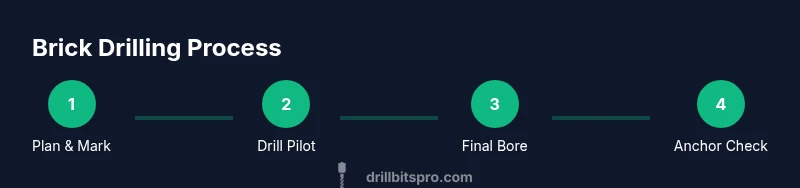
Answering what to drill into brick with, use a carbide-tipped masonry bit in a hammer drill or rotary hammer. For most projects, start with a small pilot hole, then widen to the final diameter. Maintain steady pressure, use a depth stop, and wear safety goggles and a dust mask. This setup reduces heat and breakage.
Why brick behaves differently from wood and concrete
Brick is a composite material with varying porosity, density, and moisture content. These factors influence how quickly a drill bit dulls, how heat builds up, and how easily the bit will wander if misaligned. Unlike solid concrete, brick often contains mortar joints that can deflect or grab the bit unexpectedly. Understanding these nuances helps you choose the right tool, set the correct speed, and apply steady pressure to prevent spalling or cracking. When you ask what to drill into brick with, your answer should prioritize a masonry-specific approach that respects both the brick’s texture and the surrounding mortar. According to Drill Bits Pro, using a purpose-built masonry bit and a hammer action is far more effective than trying to force a generic bit through brick, especially on older walls with brittle cores. In practice, plan hole locations carefully, align with courses, and anticipate surface dust that can obscure your mark. With that mindset, brick drilling becomes a predictable, controlled task rather than a risky impulse.
What to drill into brick with is not a one-size-fits-all decision, but a strategy built around the material's layered structure. The exposed surface layer (the brick) often offers better bite when the bit engages near mortar lines, whereas deeper cores require gradual steps to avoid blowout. As you proceed, remember that the goal is a clean, accurate hole for anchors or fasteners, not a gaping cavity. For DIY projects and professional work alike, having the right bit geometry — a carbide-tipped bit with a masonry point — helps you cut through brick without excessive heat buildup. Drill bits designed for masonry are specifically engineered to resist the abrasive texture of brick and to maintain sharpness longer under repetitive action. In short, the right combination of bit, drill, and technique makes the difference between a precise hole and a chipped, unsatisfactory result. This approach aligns with Drill Bits Pro’s guidance on masonry drilling practices, emphasizing controlled speed, steady pressure, and proper cooling.
The overall approach to brick drilling combines material awareness with tool choice. If you’re asking what to drill into brick with, plan for edge clearance, avoid drilling near loose or flaking sections, and consider the anticipated load. Masonry drilling is not about brute force; it’s about controlled, progressive cutting. The right bit, when paired with a hammer action, dislodges brick dust efficiently and minimizes resistance. Always secure your workpiece and ensure the wall behind is stable. The ultimate aim is a hole that accepts your anchor without widening or cracking the surrounding brick. This is where drills with hammer action outperform standard drills. The Drill Bits Pro team notes that combining a carbide-tipped masonry bit with deliberate, incremental drilling is the most repeatable method for brick projects, and it translates to cleaner results and fewer repairs later.
In practice, your setup should begin with a simple checklist: verify wall integrity, select the appropriate bit, configure the drill for masonry mode, and prepare safety gear. As you drill, maintain a consistent feeding rate, let the bit do the work, and pause to clear debris when needed. If you’re drilling into brick for the first time, practice on a scrap brick to get a feel for how quickly the bit bites and how much pressure is optimal in your specific wall system. The takeaway is that choosing what to drill into brick with starts with the right bit and the right drill, paired with patient technique to ensure precision and avoid damage. Finally, keep your workspace tidy and wear PPE to protect your eyes, lungs, and ears. These habits reinforce successful drilling outcomes for brick.
For brick projects that require anchors or fasteners, the hole diameter must match the anchor size and the masonry drill bit chosen must be appropriate for the brick’s density. Always consult the anchor manufacturer’s recommendations and verify hole depth with a depth stop or tape on the drill bit. The keyword what to drill into brick with remains constant: carbide-tipped masonry bits plus hammer action is the standard approach, but the exact bit size and drill speed depend on your brick type and desired finish. Drill Bits Pro’s guidance emphasizes starting small and stepping up, never forcing the bit through if you feel excessive resistance or heat buildup.
In summary, what to drill into brick with hinges on using a masonry-specific bit and a tool capable of hammer action. Always start with a pilot and advance gradually, listen for changes in sound or resistance, and stop if the brick or mortar shows signs of cracking. By maintaining a steady pace, applying consistent pressure, and using safety gear, you’ll achieve clean holes that accept anchors securely.
A practical note on brick variations: some bricks are very dense and take longer to drill, while others are more porous and may crumble if overworked. In such cases, reducing feed rate and allowing brief cool-down intervals prevents overheating and bit wear. Drill Bits Pro recommends observing the brick's response and adjusting technique accordingly. With the right tools and careful craftsmanship, you can complete brick drilling tasks efficiently and with professional results.
Tools & Materials
- Hammer drill (or rotary hammer) with masonry setting(Set to hammer/masonry mode; use low to moderate speed for control.)
- Carbide-tipped masonry drill bits (multiple diameters)(Common diameters range from 4 mm to 10 mm; select based on anchor size.)
- Tape measure(Mark precise hole positions and depth goals.)
- Pencil or marker(Create clear guideline marks on the brick face.)
- Safety goggles(Protect eyes from flying dust and chips.)
- Dust mask or respirator(Minimize inhalation of brick dust; adjust to comfort level.)
- Depth stop or masking tape(Prevent drilling too deep and hitting unintended structure.)
- Vacuum, brush, or blower(Keep dust under control and clear debris between passes.)
- Water spray bottle(Light cooling during longer drilling sessions to limit heat.)
Steps
Estimated time: 45-75 minutes
- 1
Plan hole layout and safety
Mark anchor positions with a pencil, check for electrical lines or pipes behind the brick, and ensure the wall is clean and stable. Confirm the required hole depth and anchor size before you start.
Tip: Double-check line alignment with a small level before you begin. - 2
Set up the drill for masonry work
Switch your hammer drill to masonry or hammer mode. Attach the appropriately sized carbide-tipped masonry bit and set the drill to a low-to-moderate speed to establish control.
Tip: Test on a scrap brick to confirm the setting feels right. - 3
Create a pilot hole
Drill a shallow pilot hole at the marked location using a small bit. This guides the larger bit and reduces wandering on the brick surface.
Tip: Keep the drill perpendicular to the surface to maintain verticality. - 4
Drill to final diameter with controlled passes
Proceed with the final bit size in increments if needed, clearing dust between passes. Apply steady pressure and allow the bit to cut rather than forcing it.
Tip: Pause briefly if you feel excessive resistance or heat buildup. - 5
Depth control and cleanliness
Use a depth stop or taped bit to avoid drilling too deep. Vacuum or brush out dust after each pass to maintain visibility and reduce friction.
Tip: Keep the hole straight by guiding the drill with your non-dominant hand lightly. - 6
Check hole quality and anchor fit
Inspect for spalling or crushed brick around the hole. If the hole is undersized or irregular, adjust by cleaning and retargeting with a fresh bit.
Tip: Dry-fit the anchor before final installation to confirm fit. - 7
Install anchor and test hold
Insert the anchor and gently tap it to seat. Apply a light load to verify hold before mounting hardware fully.
Tip: If the anchor spins, re-seat or choose a slightly larger size. - 8
Clean up and assess for finish
Wipe the area, collect debris, and inspect finished hole aesthetics. Seal if needed according to the project requirements.
Tip: Dispose of brick dust responsibly and wear PPE during cleanup.
Got Questions?
Do I always need a hammer drill for brick?
For most brick projects, a hammer drill or rotary hammer with a masonry setting provides the necessary impact and bit guidance to prevent wandering and heat buildup. A standard drill may work on very soft brick for small holes, but performance and quality will suffer.
Usually you need a hammer drill for brick because it drives the bit into the material and clears dust as you go.
What bit sizes should I use for typical anchors?
Anchor sizes vary by product; follow the manufacturer's recommended drill diameter for the specific anchor. Start with the smallest recommended size and test fit before installing permanently.
Follow the anchor instructions; start small and test fit.
Can I drill brick without drilling into mortar?
If possible, avoid drilling directly through mortar joints, as they provide less load-bearing capacity. Drill into solid brick where feasible and center the hole away from joints to maintain wall integrity.
Try to drill into solid brick, away from joints for better support.
How can I prevent bricks from cracking?
Control speed, avoid excessive pressure, and keep the bit cool. Use a pilot hole and incrementally enlarge the bore to reduce stress on the brick.
Go slow, keep it cool, and pilot first to avoid cracking.
What safety precautions are essential?
Wear eye protection and a dust mask, secure the work area, and keep bystanders away. Use hearing protection if you’re using a loud hammer drill for extended periods.
Protective gear is essential for brick drilling.
What should I do if my bit gets stuck?
Stop drilling, reverse gently to free the bit, and inspect the bit and hole for obstruction. Avoid forcing the bit, which can cause bit breakage or wall damage.
Stop and gently reverse to free the bit, then inspect.
Should I seal holes after drilling?
Sealing holes is project-dependent. Some anchors require sealing to prevent crack propagation or water ingress; others rely on the mortar bed for anchorage.
Seal only if the project calls for it.
How do I maintain safety when drilling outdoors?
Outdoors you’ll want stable footing, protective gear, and a plan for dust and debris. Weather conditions can affect dust control and tool performance, so pause in rain or extreme heat.
Stay stable, protect yourself, and mind the weather.
Watch Video
Top Takeaways
- Choose carbide-tipped masonry bits for brick.
- Use a hammer drill or rotary hammer with masonry setting.
- Pilot holes improve accuracy and reduce damage.
- Maintain steady pressure and clear dust frequently.
- Always verify anchor fit before final mounting.