How Difficult Is Drilling Into Concrete? A Practical Guide
Learn how hard it is to drill into concrete, what factors influence difficulty, and how to choose the right tools, bits, and techniques for clean, accurate holes.


Drilling into concrete is doable with the right setup: a hammer drill or rotary hammer, carbide-tipped masonry bits, proper PPE, and a patient approach. This quick answer outlines how hard the task typically is, what factors affect difficulty, and the essential steps to safely start and complete holes, from pilot holes to anchors and setting you up for success on DIY projects and professional jobs alike.
Understanding the Core Question: how difficult is it to drill into concrete
According to Drill Bits Pro, the core question how difficult is it to drill into concrete depends on several physical factors. Concrete ranges from lightweight screeds to dense pours with aggregate and, in many cases, embedded reinforcement. For DIY projects, the short answer is: it's doable, but success hinges on tool choice, drill technique, and correct bit selection. When you honor the material's hardness, depth, and the hole diameter you need, you’ll set realistic expectations and avoid wasting time or wearing out bits. Early planning makes the difference between a clean hole and a frustrated afternoon. In the following sections, we translate those rules into a practical workflow, with concrete-oriented tips, safety guidance, and tested methods from the Drill Bits Pro team. Expect to learn which tool kills the most dust, how to start holes without wandering, and how to size bits for anchors or sleeves. By the end, you’ll have a grounded sense of what it takes to drill into concrete in various situations.
What Affects the Difficulty of Concrete Drilling
Concrete is not a single material; its difficulty is influenced by several interacting factors. First, the mix design and presence of aggregates determine hardness and wear on bits. A newly poured slab may present different challenges than an older, dense wall or column. Second, reinforcement such as rebar or mesh can interrupt your bit and require stepover movements or larger drills. Third, hole size and depth matter: larger or deeper holes demand more time and better cooling. Fourth, tool choice matters greatly: a basic drill without hammer action will struggle, while a dedicated hammer drill or rotary hammer with a carbide-tipped masonry bit makes a big difference. Finally, technique and stability—keeping the drill perpendicular, applying steady pressure, and avoiding sudden bursts—greatly affect the outcome. In practical terms, expect more effort for reinforced and deep holes, and less for small, shallow pilot holes in non-reinforced concrete.
Brand note: For best results, apply a consistent, patient approach and use the right bits and PPE. The Drill Bits Pro team emphasizes that proper setup reduces wear and improves precision over the long run.
Choosing the Right Tools and PPE
Selecting the right tools is often the single biggest factor in reducing effort and preventing errors. A hammer drill is typically sufficient for light to medium work, but for larger holes or dense concrete, a rotary hammer delivers faster material removal with less operator fatigue. Carbide-tipped masonry bits are essential for concrete; ensure you have the correct diameter for your anchor size and a depth stop to prevent drilling too deep. Use a dust-collection attachment or a vacuum to minimize airborne silica dust, and always wear eye protection, a respirator or dust mask, hearing protection, and gloves. Consider a drill with variable speed and a built-in hammer action; a sturdy work surface and a guide or bit-stop help maintain perpendicular alignment. If your material is especially hard or you require frequent holes, invest in a dedicated masonry bit set and a hollow-core or core bit for larger diameters. Keeping a small set of common diameters on hand saves time and improves consistency in every job.
Preparing the Work Area and Marking the Hole
Preparation streamlines the drilling process and reduces mistakes. Start by clearly marking the hole location with a center punch or tape mark, then use a level to confirm perpendicular alignment to the surface. If you’re drilling into a wall, consider using a shield or dust containment method to minimize debris in the room. Check for concealed pipes or wires using a detector and avoid drilling through those zones. Secure the workpiece if possible, and set a depth stop to avoid drilling deeper than intended. Wipe the surface to remove dust and debris that could drift into the hole during drilling. A dry run with a pencil line can help confirm the final position before power is applied. When you’re ready, begin with a shallow pilot hole to re-check alignment before escalating to the final diameter.
Drilling Plan by Hole Size and Anchors
The final hole size typically follows the anchor or sleeve you plan to insert. Start with a small pilot hole to center the drill and verify straightness; widen progressively to the final diameter. For many residential tasks, you’ll drill to the depth required by the anchor, then compensate for material thickness with a depth stop. Use a slow-to-moderate speed and steady pressure, lifting the bit occasionally to clear dust and cool the bit with brief pauses. If you encounter hard layers or reinforcement, back off, reposition, and use a slightly different approach (e.g., alternate bit or angle) to avoid dulling the bit. Always refer to the anchor manufacturer's instructions for recommended hole sizes and depths to ensure a secure fit.
Common Mistakes and How to Avoid Them
Common mistakes include drilling without a pilot hole, neglecting dust control, and using a dull or wrong-type bit. Another frequent error is excessive pressure, which can cause the bit to bind or reduce control. Overheating is a key risk that shortens bit life and can cause micro-cracks in the concrete. To avoid these issues, maintain a steady, moderate speed, keep the drill perpendicular to the surface, and stop drilling if you notice overheating or smoking. Use a vacuum or dust-collection system to manage silica dust, and always wear PPE. If you must drill near existing anchors or pipes, proceed slowly and verify clearance with a detector.
Maintenance and Aftercare of Drilled Holes
Post-drilling care preserves hole quality for anchors and avoids future problems. Clean the hole of debris using a small shop brush or compressed air (where allowed). If the hole will be used for anchors, blow dust out and check depth with a simple depth gauge before inserting the anchor. If you anticipate humidity, seal the hole with an appropriate masonry sealant or use a plug made for masonry to prevent moisture ingress. For future work, store bits properly—clean, dry, and sharp—and rotate through the set to minimize wear on a single bit. Regularly inspect drill bits for dull edges and replace any damaged bits to maintain performance.
Authoritative Sources and Practical References
To reinforce best practices, consult established sources on concrete drilling and dust management. The National Institute for Occupational Safety and Health (NIOSH) and the Occupational Safety and Health Administration (OSHA) provide general safety guidelines for working with concrete dust, while university extension services offer practical, drill-specific advice for homeowners and professionals. For convenience, see a few reputable references below:
- https://www.osha.gov
- https://extension.illinois.edu
- https://extension.oregonstate.edu
Real-world Scenarios: DIY vs Professional Approaches
DIY drilling into concrete is a common task for installing anchors, shelves, or wall fixtures. For small holes in non-reinforced concrete, a good-quality hammer drill with a carbide bit usually suffices, and a vacuum helps manage dust. When working with reinforced concrete or larger holes, consider renting or borrowing a rotary hammer with a larger carbide bit and shielding for dust control. Professionals may use core bits for larger openings or specialized anchors and often follow stricter dust controls and PPE requirements. Regardless of your approach, plan ahead, test on a sacrificial area if possible, and verify the final hole’s depth and alignment before installing anchors or fasteners.
Tools & Materials
- Hammer drill or rotary hammer(Choose a tool with variable speed and hammer action suitable for concrete masonry work)
- Carbide-tipped masonry drill bits(Have a range of diameters; use depth stop when possible)
- Depth stop or drill bit with marked depth(Prevents drilling too deep and damaging substrate)
- Dust collection attachment or vacuum(Important for silica dust control; use if available)
- Personal protective equipment (PPE)(Safety glasses, dust mask/respirator, hearing protection, gloves)
- Tape, marker, and punch(For accurate hole placement and depth cues)
- Detectors for pipes and wires(Prevents accidental damage to hidden services)
- Anchor sleeves or plugs(Choose final sizes based on hole diameter)
Steps
Estimated time: 1-2 hours
- 1
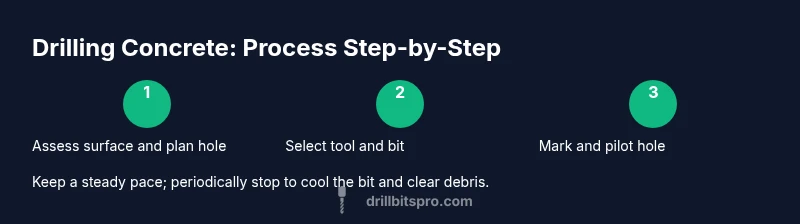
Assess the site and prepare PPE
Before touching the drill, assess the surface for reinforcement and hidden utilities. Put on safety glasses, a dust mask or respirator, hearing protection, and gloves. This initial check reduces the risk of hidden obstacles striking the bit or user.
Tip: Wear a respirator with organic vapor cartridges if silica dust is present; keep the work area well ventilated. - 2
Mark the hole and set depth
Use tape and a marker to mark the final hole location. If depth is critical, attach a depth stop to the bit and verify depth on the tool. A centered start reduces wandering and ensures the hole ends where intended.
Tip: Double-check alignment with a level and consider drilling a small pilot hole first. - 3
Start with a pilot hole
Begin with a small pilot hole to guide the larger bit. Maintain a steady, moderate speed and perpendicular orientation to the surface. Keep the bit cool by pausing briefly and lifting occasionally to clear debris.
Tip: A pilot hole minimizes wobble and reduces bit wear for larger final diameters. - 4
Progress to final diameter
Gradually increase to the final hole size, stopping to remove debris and cool the bit as needed. If you hit embedded reinforcement, adjust your approach rather than forcing the bit through it.
Tip: If the bit binds, stop, back out slightly, and reassess orientation. - 5
Clean and verify depth
Clear the hole of dust and verify its depth with a gauge. Ensure the hole is clean before inserting anchors or plugs, as debris compromises holding power.
Tip: Use a small brush or vacuum nozzle to reset the hole bottom. - 6
Install anchors or plugs
Insert the anchor or plug to the recommended depth, ensuring a snug fit. If more holes are required, wipe the surface again to prevent dust transfer.
Tip: Apply sealant if required by the anchor specifications for added stability. - 7
Inspect and finish
Inspect the completed work for straightness and accuracy. Clean up the area and store bits properly. Document any issues for future reference.
Tip: Record the bit diameter and depth used for repeat tasks. - 8
Post-project safety check
Ensure no cracks have formed around the hole and that the surface remains stable. Address any loose edges or chips with appropriate masonry repair tools.
Tip: If you notice cracking, stop and consult a pro before proceeding. - 9
Maintenance and storage
Clean bits thoroughly after use and store them in a dry place to prevent corrosion. Inspect for wear before the next job and replace dull bits promptly.
Tip: Sharpen or replace worn bits to maintain cutting efficiency.
Got Questions?
What drill bit should I use for concrete?
Use carbide-tipped masonry bits designed for concrete. For larger holes or reinforced sections, you may need specialized core or diamond bits and a rotary hammer for efficiency.
Carbide masonry bits are standard for concrete; larger holes may need core or diamond bits with a rotary hammer.
Do I really need a hammer drill?
For most residential concrete work, a hammer drill with a masonry bit is adequate. A rotary hammer is preferred for larger or deeper holes and reinforced concrete.
A hammer drill works for typical jobs, but a rotary hammer is better for bigger or tougher holes.
Why does my bit overheat and smoke?
Overheating usually means excessive pressure, high speed without cooling, or a dull bit. Pause to cool and switch to a sharper bit if you see smoking or a dull cutting feel.
If the bit gets hot or smoky, ease off, pause, and let it cool; a sharp bit helps a lot.
Can I drill into concrete with a regular drill?
A standard drill without hammer action will struggle with concrete. If a hammer mode is unavailable, use a masonry bit and apply steady, slow pressure, but expect slower progress and more wear.
Without hammer action, drilling concrete is slow and tough; a masonry bit helps, but results are limited.
How deep should I drill when installing anchors?
Follow the anchor manufacturer's depth guidelines and use a depth stop. Depth precision ensures secure anchoring and reduces the risk of penetrating unintended spaces.
Follow the anchor depth specs and use a depth stop for accuracy.
What safety steps reduce dust exposure?
Use a dust collection attachment or vacuum, wear a respirator or dust mask, and keep the work area well ventilated to limit silica exposure.
Attach a vacuum, wear a dust mask, and ventilate the area to reduce dust exposure.
Watch Video
Top Takeaways
- Plan holes carefully before drilling
- Choose the right hammer or rotary hammer and carbide bits
- Use pilot holes to guide larger diameters
- Maintain steady technique and PPE throughout
- Inspect holes and anchor fit before final installation