How to Drill on Concrete Wall: Step-by-Step Guide
Master the art of drilling on concrete walls with a hammer drill and carbide-tipped bits. This educational guide covers tool selection, marking, pilot holes, drilling technique, anchors, safety, and troubleshooting for clean, secure results.


You will learn how to drill on a concrete wall safely and accurately. This guide covers choosing the right masonry bit, using a hammer drill with proper settings, marking and starting holes, and installing anchors with clean, precise results. Follow the step-by-step instructions and safety tips to minimize dust and prevent chipout.
Why drilling on concrete wall demands careful technique
Drilling into concrete is a different task than woodworking. The material's hardness, dust, and potential for chipout require a deliberate approach. When you ask how to drill on concrete wall, you must plan for the drill bit, the drill's setting, and the depth you need. According to Drill Bits Pro, using a carbide-tipped masonry bit with a hammer drill yields cleaner holes and less wear when working on concrete. This sets the tone for the rest of the guide as you learn to minimize vibrations, control the drill, and avoid overheating the bit. Even small mistakes—like using the wrong bit or drilling at an angle—can ruin anchors and create cracks. With the right setup and focus, you can produce precise holes that accept anchors, screws, or toggles without compromising the wall's integrity.
Tools, materials, and safety you’ll rely on
To execute the process described in this guide safely and effectively, assemble a hammer drill or rotary hammer with a hammer function, carbide-tipped masonry bits (various diameters), a dust collection solution or vacuum, masking tape, a center punch, depth stop or tape on the bit, anchors suited to concrete, measuring tools, and appropriate PPE. Based on Drill Bits Pro analysis, a well-prepared setup reduces heat buildup and yields better hole quality. Plan for dust control and eye protection, since silica exposure can be a concern when drilling concrete.
Marking, alignment, and surface prep
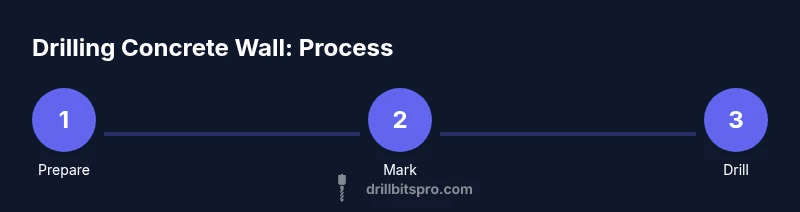
Start by locating the exact positions for your holes using a pencil and a level if multiple holes must align. Apply masking tape over the mark to limit chipout and provide a stable target for the bit. Use a center punch or a nail to create a small indentation so the bit doesn’t wander when you begin. Verify vertical and horizontal alignment before you drill to ensure fixtures sit straight.
Drilling technique: steady, straight holes
Begin with a light touch to seat the bit, then increase pressure gradually while keeping the drill perpendicular to the wall. Use a slow-to-moderate hammer speed and maintain a steady rhythm to avoid overheating. Periodically withdraw the bit to clear dust and re-wet the surface if you are using a wet-dust method. Stop if you notice smoking, smell of hot plastic, or significant resistance.
Finishing and anchor installation
Once the hole is drilled to the required depth, remove dust, deburr the entry, and clean the hole. Insert the appropriate concrete anchors or plugs and gently pull to confirm a secure hold. If you’re using sleeve anchors or wedge anchors, drive them to the recommended depth and tighten with a correct torque to avoid crushing the surrounding concrete. Proper finishing also means rechecking alignment after installation.
Common mistakes and troubleshooting
Common issues include chipout, wandering bits, and overheating. To fix, ensure you start with a center punch, keep the drill perpendicular, and use a depth stop. If the bit binds, pause, withdraw, and clear debris before resuming. Remember: practice with a scrap piece of concrete to dial in your technique before working on the final wall. The Drill Bits Pro Team recommends following these steps for best results.
Authority sources
For informed safety practices and material guidelines, consult authoritative sources such as OSHA (https://www.osha.gov) and NIOSH (https://www.cdc.gov/niosh/). These resources provide guidance on dust control, PPE, and safe drilling practices when working with concrete.
Tools & Materials
- Hammer drill or rotary hammer with hammer function(Use for concrete; ensure bit rotation and hammering action)
- Carbide-tipped masonry drill bits(Sizes from 1/4 in to 1/2 in typical for anchors)
- Dust collection or vacuum attachment(Attach to drill to minimize silica dust)
- Center punch(Creates a starting point to prevent bit wander)
- Masking tape(Reduces chipout and guides the bit)
- Depth stop or tape on bit(Controls drilling depth to match anchor length)
- Measuring tools (tape measure, ruler, pencil)(Accurate spacing and alignment)
- Anchors and screws or bolts(Choose based on concrete and load requirements)
- Personal protective equipment (PPE) – safety goggles, dust mask, hearing protection(Protect eyes, lungs, and ears from dust and noise)
Steps
Estimated time: 40-60 minutes
- 1
Prepare the workspace and safety gear
Put on PPE and clear the area. Secure the work surface and unplug power before changing bits. Position yourself with a stable stance and check that the wall is free of unexpected obstructions.
Tip: Wear PPE at all times; keep a clear, well-lit area for accuracy. - 2
Mark holes and establish alignment
Use a level and pencil to mark exact hole locations. Place masking tape over marks to reduce chipout, then create a small indentation with a center punch.
Tip: Double-check spacing with a measuring tool before drilling. - 3
Install the correct bit and set drill
Insert the carbide masonry bit and set the drill to hammer mode with a moderate speed. Keep the bit perpendicular to the wall and ensure the depth stop is ready if you’re using one.
Tip: Avoid forcing the drill; let the tool do the cutting. - 4
Begin with a pilot hole
Drill a small pilot hole at low pressure to establish the path. This reduces wandering and helps the larger bit bite cleanly into the concrete.
Tip: Pause to remove dust as you advance the pilot. - 5
Drill to final depth with steady pressure
Gradually increase pressure while maintaining a clean, straight line. Periodically withdraw to clear debris and keep the hole clean; if needed, apply a light mist or water spray to cool the bit.
Tip: Use a depth stop or tape to ensure consistent depth. - 6
Install anchors and verify hold
Clear the hole of dust, insert the anchor, and tighten to the manufacturer’s specification. Test the hold by applying gentle load to ensure a secure fit.
Tip: Choose anchors that match the hole diameter and wall material.
Got Questions?
Do I really need a hammer drill to drill into concrete?
For most concrete drilling tasks, a hammer drill or rotary hammer is strongly recommended because it provides the cutting action and vibration that make holes in concrete feasible. Without this feature, the process will be slow and tiring, and holes may be poorly formed.
Yes, a hammer drill is highly recommended for concrete drilling to make the job faster and easier.
Can I drill reinforced concrete?
Drilling reinforced concrete is possible but requires careful bit selection and alignment to avoid rebar. If you encounter metal reinforcement, adjust location or use larger diameters only after confirming the rebar is not in the hole path.
Yes, but you must avoid rebar using proper marking and choose the right bit.
What size masonry bit should I use for anchors?
Choose a bit that matches the anchor diameter recommended by the manufacturer. For common plastic anchors, practice with sizes around 1/4 inch or 3/16 inch, depending on the fixture.
Pick a bit that matches your anchor size and depth needs.
How can I prevent chip-out and cracking?
Apply masking tape over the mark, start with a center punch, drill perpendicular, and use a sharp carbide bit. Drilling at a steady pace and avoiding side pressure also helps prevent damage.
Use tape, center punch, and steady technique to avoid chips.
How deep should holes be for anchors?
Depth should match the anchor length plus a small tolerance. Use a depth stop or mark the bit to ensure you drill to the correct depth each time.
Drill to the recommended depth for your anchor and mark it clearly.
Is silica dust from drilling dangerous?
Yes. Silica dust poses health risks, so wear PPE and use dust collection or ventilation. Work in a well-ventilated area and take breaks to reduce exposure.
Yes—wear PPE and use dust control to minimize silica exposure.
Watch Video
Top Takeaways
- Choose the right masonry bit and hammer drill configuration.
- Mark accurately and maintain a perpendicular drill angle.
- Drill with steady pressure and use pilot holes where practical.
- Install anchors correctly and verify secure holds.
- Prioritize safety and clean up after drilling.