What to Drill into Concrete With: A Practical Guide for DIY
Learn what to drill into concrete with, including bit types, drilling techniques, safety tips, and essential tools for DIYers and professionals seeking durable results.


According to Drill Bits Pro, success starts with the right combination of bit, drill, and technique. For most concrete projects, use a carbide-tipped masonry bit with a hammer drill, and employ a depth stop and center punch to start. The key is controlled, slow starts, steady pressure, and cooling to prevent bit wear and wandering. This guide helps you pick the right tools and follow proven steps for clean holes.
Why the Right Drill Bits Matter
When you tackle holes in concrete, the bit is as important as the drill itself. Concrete is tough, abrasive, and can contain steel reinforcement that dulls ordinary bits quickly. A carbide-tipped masonry bit spins against a hard surface, cutting rather than tearing, which reduces wandering and heat buildup. A hammer drill amplifies impact energy just enough to fracture the material without shattering it. Using the correct bit and technique saves time, increases accuracy, and extends tool and bit life. Drill Bits Pro emphasizes that investing in quality masonry bits and using a proper drilling approach leads to noticeably crisper holes and stronger anchors. Smart selection now pays off on every project, from wall mounts to electrical installations.
Concrete Types and How They Affect Drilling
Concrete comes in several forms: standard poured concrete, reinforced concrete with steel bars, and fiber-reinforced varieties. Reinforcement changes how you drill: you’ll experience more resistance near rebar, louder dulling, and increased heat. In reinforced or high-density concrete, you may need longer bits and slower feeding to avoid bit wear or breakage. Always verify material type before drilling; use a detector if in doubt. For thin toppings or overlays, a shallower hole and shallower bit engagement may be sufficient. Understanding the material helps you choose the right bit, drill speed, and cooling method for a clean, accurate hole. This knowledge also informs safety planning and waste management on site.
Drill Bit Families for Concrete
Masonry bits are the standard choice for concrete, typically carbide-tipped for durability. These bits are designed to cut through stone-like materials and retain sharpness longer than plain steel bits. For heavy-duty tasks or deeper holes, consider longer carbide-tipped masonry bits or SDS-compatible bits if your drill supports it. Avoid using bits intended for wood or metal; they will-wear quickly and produce rough holes. In many DIY and professional setups, a hammer drill paired with a masonry bit achieves the best balance of speed and precision. Remember to select the correct diameter and length for your anchor or plug size, and avoid forcing the bit through the material—let the bit do the work.
Prep and Accessories
Preparation reduces mess and mistakes. Start by marking the hole location with a center punch, then use masking tape to prevent bit walking on glossy surfaces. Secure the workpiece with clamps or a bench vise to prevent movement. Gather depth stops, a drill guide or small template for accuracy, and a vacuum or dust extractor to manage silica dust. A utility knife, marker, and measuring tape help you set precise depths. Safety gear—eye protection, gloves, and a dust mask or respirator—is non-negotiable. Having coolant or water on hand helps keep the bit cool during longer cuts and control dust.
Techniques for Clean, Accurate Holes
Begin with a gentle bite: start at a slow RPM and apply light, steady pressure to help the bit bite without skating. Use a pilot hole when drilling large-diameter holes to guide the bit and reduce wandering. Maintain perpendicular alignment to the surface and avoid tilting the drill. Periodically pause to clear dust and check depth with your stop. For deeper holes, extend gradually while keeping the drill under control. If the bit refuses to cut, back out, sharpen if possible, and re-edge before continuing. Proper cooling—using water or moisture during extended cuts—prevents overheating and preserves bit life.
Safety and Maintenance
Wear approved eye protection, hearing protection if your drill is loud, and a dust mask in dusty environments. Inspect bits before use for chips or cracks and replace damaged tips promptly. Keep cords and batteries in good condition, and avoid running the drill near flammable materials. After drilling, clean the hole with a blow-out and inspect the finished surface for burrs. Store masonry bits dry and away from moisture to prevent rust. This discipline reduces downtime and extends the life of your toolset, saving time on future projects.
Tools & Materials
- Hammer drill or rotary hammer(Variable speed,適 requested with hammer action)
- Carbide-tipped masonry drill bits(Select length to match hole depth)
- SDS masonry bits (if compatible with your tool)(Use with compatible SDS tool)
- Depth stop or drill guide(Keeps holes uniform depth)
- Center punch and tape(Prevents bit walking)
- Clamps or bench vise(Secures workpiece)
- Measuring tape and marker(Accurate hole placement)
- Masking tape(Prevents wandering on smooth surfaces)
- Dust mask or respirator(Protects from silica dust)
- Safety glasses(Eye protection)
- Water bottle or coolant(Keeps bit cool on long cuts)
- Vacuum or dust extractor(Helps with cleanup)
Steps
Estimated time: 60-90 minutes
- 1
Prepare the workspace
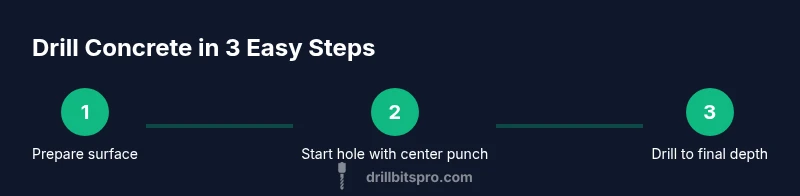
Put on PPE, clear the area, and set up clamps to hold the workpiece. Mark the hole with a center punch to prevent the bit from wandering, then apply masking tape to the surface as an extra guide. This stage reduces drift and creates a visible entry point.
Tip: Double-check electrical and plumbing lines with a detector before drilling. - 2
Set the depth and start mark
Measure the desired depth and set your depth stop to that length. Place the bit at the marked center and begin drilling at a slow, steady pace with minimal pressure. If necessary, apply a light mist of water to control dust and heat.
Tip: Start with a smaller pilot hole if you’re drilling a large-diameter final hole. - 3
Secure the workpiece
Clamp the material firmly to a stable surface to prevent movement. A stable base ensures consistent hole depth and straightness. Keep the drill perpendicular to the work surface throughout.
Tip: Check clamps after the first few seconds to ensure no shifting occurs. - 4
Drill the hole: stepwise
Begin with the pilot hole at low speed, then gradually increase diameter to the final bit size. Use short, controlled bursts rather than sustained heavy pressure to reduce bit wear. Pause occasionally to clear debris and assess progress.
Tip: If the bit starts to bind, back out slightly and resume with lighter pressure. - 5
Cooling and finishing
For longer holes or dense material, apply light water cooling or dampen the surface to minimize heat buildup. Once the hole is complete, back the bit out and deburr the edge for a clean finish. Clean the hole with a quick blast of air or a vacuum.
Tip: Keep the drill in a perpendicular orientation to avoid angled holes. - 6
Inspect and clean up
Remove clamps, check the hole depth and alignment, and clear the workspace of dust. Store bits dry and clean to prevent rust. Document any issues for future projects to improve technique.
Tip: Record the final depth and diameter for quick reference later.
Got Questions?
Can I drill into concrete with a standard drill?
A non-hammer drill struggles with concrete and will wear fast. For most projects, use a hammer drill with a masonry bit and work at a controlled pace. If you only have a regular drill, you can try small pilot holes, but results will be limited.
A normal drill isn’t ideal for concrete; you’ll get better results with a hammer drill and masonry bits.
Is a hammer drill necessary for concrete?
For typical concrete and masonry tasks, a hammer drill is strongly recommended. It provides percussive action that helps the bit cut into the material without excessive force. An impact driver is not a substitute for hard masonry work.
Yes. A hammer drill is usually necessary for concrete unless you’re only doing small pilot holes.
How do I prevent the bit from wandering at the start?
Center-punch the entry, apply masking tape as a guide, and start at a slow speed with light pressure. Once the bit catches, maintain steady pressure and keep the drill perpendicular to the surface.
Center-punch and tape help the bit stay on target from the very first turn.
What if I hit rebar or a metal object?
If you encounter rebar, stop drilling and adjust your angle. You may need a longer bit or a different location. Avoid forcing through metal; rebar can dull bits quickly and cause kickback.
If you hit rebar, back off, adjust position, and continue slowly with the proper bit.
How long should I drill for one hole?
Drilling time varies with hole depth and material density. Use short bursts and pause to clear dust; prolong only as needed while monitoring bit temperature.
Drill in short bursts and let the bit cool as needed.
Are there safety concerns I should not overlook?
Always wear eye protection, a dust mask, and hearing protection where appropriate. Silica dust is hazardous; use dust collection or wet drilling when possible.
Wear PPE and manage dust to protect yourself.
Watch Video
Top Takeaways
- Use carbide-tipped masonry bits with a hammer drill for best results
- Mark, punch, and clamp to prevent wandering and movement
- Pause to clear debris and keep the drill perpendicular
- Cool and deburr holes for a clean finish
- Prioritize safety and tool maintenance for longevity