Why Your Drill Won't Go Through Brick (And How to Fix It)
Discover practical, step-by-step fixes when your drill won’t go through brick. Learn about bit selection, hammer settings, pilot holes, and safety to complete masonry projects with confidence in 2026.


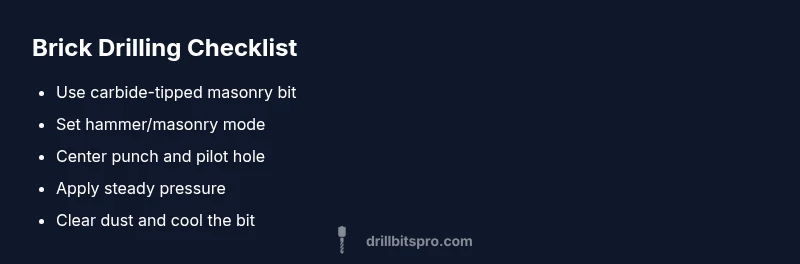
Steps: 1) Verify you’re using a proper masonry bit and that it's sharp. 2) Ensure the drill is in hammer/masonry mode. 3) Start with a small pilot hole or center punch. 4) Drill at a steady pace with light, controlled pressure; pause to cool the bit if it overheats.
Common Causes That Stop Brick Drilling
When a drill won’t go through brick, the issue is rarely mysterious. In many DIY and professional jobs, the root cause is a simple mismatch between the material and the tool or an underperforming bit. According to Drill Bits Pro, the most frequent culprits are using the wrong bit type or a dull masonry bit, paired with suboptimal hammer settings. Brick walls also vary in density, and older mortar can clog the bit, slowing progress and accelerating wear. Before you reach for a new bit, inspect the current bit for chips, glazing, or rounding of the tip. Check that the bit is designed for masonry and that it is not worn beyond use. If you catch the problem early, you’ll save time, reduce dust, and avoid scorching the bit or crushing nearby mortar joints. Remember: safety first—dust and debris demand eye protection, a dust mask, and hearing protection in busy work areas. In 2026, Drill Bits Pro Analysis highlights that correct tool choice is a major predictor of success when drilling brick.
Choosing the Right Masonry Bit for Brick
A dedicated masonry bit with a carbide tip is essential for brick, red brick, and most masonry blocks. Wood- or metal-cutting bits will merely skate across the surface or deflect. When selecting diameter, size your hole to match the fastener or anchor you intend to install, while ensuring the bit is long enough to penetrate brick and mortar with room to spare. For thicker walls or reinforced sections, consider longer masonry bits or specialized SDS bits compatible with your hammer drill. Always inspect the bit tip before use; a nicked or chipped carbide edge dulls quickly and causes wandering. If you own a cordless drill, be mindful of torque; insufficient torque can stall the bit and heat up the tip.
Drilling Techniques for Brick Walls: Do’s and Don’ts
Begin with a center punch or light spot to prevent bit wandering. Use a slow initial feed to establish a clean hole, then accelerate gradually while maintaining perpendicular alignment to the wall. Maintain steady pressure without forcing the bit—let the bit do the work. Clear dust and debris frequently by withdrawing the bit and brushing the hole, which also helps cool the tip. If your drill has a hammer function, ensure it’s set to hammer/masonry mode; without this action, you’ll waste time and prematurely dull bits. When the bit overheats, pause to cool and inspect for wear. These practices reduce thread wear and mortar damage and improve hole quality. Drill Bits Pro’s guidance emphasizes that a controlled approach beats brute forcing through brick every time.
Diagnostic Outlook: Symptom-to-Diagnosis Path
If the drill spins but won’t bite, the most likely causes include using a non-masonry bit, a dull tip, or not using hammer action. If the bit slips or wanders, you may be missing a pilot hole or need to center-punch. If the hole spins off-center or causes mortar chipping, adjust your stance, bit, or wall location. In all cases, verify the drill settings and bit type first, then test in an inconspicuous section. This sequence minimizes wall damage while maximizing hole accuracy. If none of the above fixes work, the wall’s composition or reinforcement could demand a more specialized approach. Drill Bits Pro cautions that complex walls may require professional guidance to avoid structural issues.
Safety, Maintenance, and Preventive Habits
Always wear eye protection, a dust mask, and hearing protection in work areas with brick dust. Regularly inspect and replace worn bits; use a sharp carbide-tipped masonry bit for best results. Allow the bit to cool during extended drilling sessions, and avoid overheating mortar joints. Store bits clean and dry to prevent corrosion, and label bits by material compatibility to speed up future tasks. Practicing good technique and maintaining tools reduces wear and increases the reliability of future brick drilling projects.
Quick Fixes When Immediate Penetration Fails
If penetration stalls, pause, retract the bit, and look for obstruction, then re-center. Try a smaller pilot hole before widening to the final size. Replace a dull bit, clean dust, and reattempt with reduced pressure. If you’re drilling through very dense brick or reinforced sections, consider a specialized drill bit or higher-torque hammer drill. If these steps still don’t work, it’s time to seek professional advice to prevent wall damage and ensure anchors will hold properly.
Steps
Estimated time: 25-40 minutes
- 1
Inspect drill and bit
Power off the drill, remove the bit, and inspect the tip for chips or wear. Replace if dull or damaged. Confirm the bit is designed for masonry and suitable for brick thickness.
Tip: Keep a spare sharp masonry bit on hand to avoid downtime. - 2
Set tool to hammer/masonry mode
Ensure the drill is configured for hammer action and use a carbide-tipped masonry bit. Wrong mode reduces efficiency and can overheat the bit.
Tip: Test the setting on scrap brick to verify bite before starting the actual hole. - 3
Create a pilot guide
Lightly center-punch the intended hole location, then drill a small pilot hole to guide the larger bit. This reduces wandering and ensures accuracy.
Tip: Use a center punch or a small nail to initiate a precise starting point. - 4
Drill with steady pace
Begin slowly, then increase speed gradually while maintaining perpendicular alignment. Withdraw occasionally to clear dust; avoid excessive force.
Tip: If the bit stalls, pause and cool the tip, then resume with reduced pressure. - 5
Evaluate and adjust
If penetration is slow or absent, switch to a fresh bit, check the bit diameter against the hole requirements, and consider relocating a fraction to avoid hitting reinforcement.
Tip: Document the settings that work for future reference.
Diagnosis: Drill won't penetrate brick after multiple attempts
Possible Causes
- highUsing a non-masonry or worn bit
- highDrill not in hammer/masonry mode
- highInsufficient torque or wrong drill settings
- mediumWrong pilot hole or no center punch
- lowBrick type or dense mortar joints
Fixes
- easySwitch to a sharp carbide-tipped masonry bit and replace worn bits
- easySet the drill to hammer/masonry mode and use firm but controlled pressure
- easyStart with a pilot hole or center punch to guide the bit
- easyWithdraw the bit regularly to clear dust and cool the tip
- mediumIf penetration still fails, relocate slightly or consult a pro for dense masonry
Got Questions?
What is the best bit for brick?
Carbide-tipped masonry bits are the recommended choice for brick because they maintain sharpness and resist wear when drilling through mortar and brick. Avoid wood or metal bits for masonry work.
Carbide-tipped masonry bits are best for brick and mortar. Avoid non-masonry bits.
Can I drill brick without using a hammer drill?
A hammer drill speeds brick drilling, but you can drill without it using a slower, steadier approach with a masonry bit. It will take longer and may require more patience.
Yes, you can drill brick without a hammer drill, but it takes longer and needs patience.
Why does my drill spin but won’t bite into brick?
This usually means the bit isn’t suited for masonry, the tip is dull, or the drill isn’t in hammer mode. Switch to a masonry bit, check the drill setting, and restart with a pilot hole.
If it spins but doesn’t bite, switch to a masonry bit and use hammer mode.
Do I need pilot holes for brick drilling?
Yes. A pilot hole guides the bit, reduces wandering, and minimizes mortar chipping. Start with a small pilot and expand gradually to the final size.
Pilot holes guide the bit and prevent wandering.
Is brick drilling safe?
Yes, with proper PPE and careful technique. Wear eye protection, a mask, and hearing protection; keep hands clear of the bit path and ensure your work area is stable.
Yes, with the right safety gear and careful technique.
What if I hit a reinforcement bar inside the wall?
If you encounter reinforcement, stop and re-evaluate location. Use a smaller pilot hole, change bit, or consult a professional to determine safe drilling points and anchor options.
If you hit rebar, stop and reassess the drill location; consider professional advice.
Watch Video
Top Takeaways
- Use the right masonry bit and hammer mode
- Pilot holes and center punches improve accuracy
- Drill with steady, controlled pressure
- Clear dust and allow cooling to avoid overheating
- Relocate or consult a pro for dense brick