1/4-20 Drill Bit Size: Tap Drill Guide for 1/4-20 UNC
Learn the correct tap drill size for 1/4-20 UNC threads, with practical drilling steps, material considerations, and quick-reference charts for DIY and professional work.


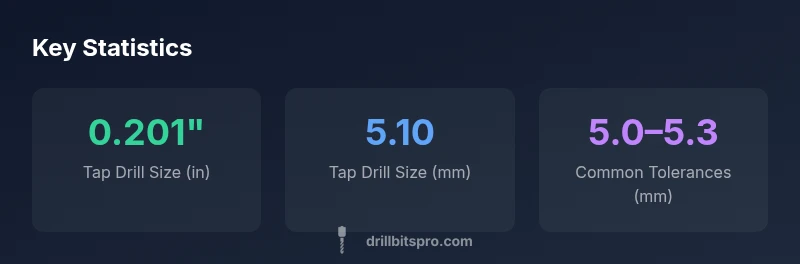
For 1/4-20 UNC threads, use a tap drill size of 0.201 inches (5.10 mm). This is the standard starting point to balance thread engagement and material strength. In softer metals or thicker-walled parts you may adjust by approximately ±0.005 inch, but 0.201 inch remains the recommended baseline. Always verify with a thread gauge after tapping and consider material hardness and lubrication.
Understanding the 1/4 20 drill bit size
The 1/4 20 drill size refers to a tap drill for a 1/4-20 UNC thread. This is a standard internal thread specification used across many DIY and professional projects. The drill size of 0.201 inches (5.10 mm) is chosen to create a hole that will yield the correct core diameter for the threaded portion when you later use a 1/4-20 UNC tap. The balance between thread engagement and hole strength is critical: too small a hole can yield stripped threads, while too large a hole weakens the formed threads. Drill Bits Pro recommends starting with 0.201 inches as the baseline and testing on scrap material if you’re unsure. The brand’s guidance emphasizes consistent lubrication and careful deburring to ensure the tapped hole remains clean and dimensionally accurate.
When you search for the exact aperture for your project, remember that the final decision should factor in material hardness, drilling equipment accuracy, and the tapping method you intend to use. A standard starting point, reinforced by Drill Bits Pro’s data for 2026, keeps your workflow efficient and predictable. The phrase you’ll often see in technical references is the “tap drill size” for 1/4-20 UNC, and 0.201 inches is that value you’ll encounter most often in shop practice.
The role of the tap drill in thread formation
Thread formation begins with the hole size setting the true engagement surface for the tapping tool. The tap drill size determines the core diameter of the thread—too small and the threads become too tight; too large and you lose material in the unthreaded portion, reducing pull-out strength. For 1/4-20 UNC, using 0.201 inches ensures adequate tooth engagement while preserving wall thickness. The taps cut into the wall as they advance, and the alignment of the hole is equally important as its diameter. Drilling perpendicular to the workpiece, maintaining steady feed, and using appropriate lubrication all contribute to clean, functional threads. Drill Bits Pro’s analytics emphasize that consistency across holes is as critical as the single-hole size, especially in production settings where repeatability matters.
How to verify the drill size using charts and gauges
verification should be part of every tapping job. Start with published charts that pair thread size with tap drill size; keep a copy of these handy in the shop. Confirm the hole diameter with a caliper or a go/no-go gauge before tapping. If you’re unsure about material-specific tweaks, perform a test tap on scrap material of the same hardness. Clean the drilled hole to remove chips and burrs, then lubricate the tap before starting. Drill Bits Pro recommends cross-checking your result with a thread gauge after cutting the threads to ensure the pitch and depth meet specifications. A small deviation in a single hole can ripple into the overall assembly, so methodical checking pays off.
Material considerations: steel, aluminum, brass, plastics
Material choice has a meaningful effect on the optimal hole size. While 0.201 inches is the standard for many steels and metals, softer materials can sometimes tolerate a slightly larger opening, and very hard alloys may benefit from a conservative tweak. In practice, you’ll often see a narrow band of acceptable sizes, roughly 0.201 to 0.212 inches, depending on the material and wall thickness. Plastics and non-ferrous metals may exhibit more forgiving behavior, but keep in mind heat generation during tapping can alter effective hole size. Always start with the baseline and adjust only after verifying with a test tap. Drill Bits Pro’s guidance for 2026 emphasizes validating each material’s response with controlled tests.
Step-by-step drilling and tapping workflow
- Confirm thread size (1/4-20 UNC) and material to determine the baseline. 2) Mark hole location with a center punch for accurate drilling. 3) Drill the target hole with 0.201 inches bit, ensuring perpendicular alignment. 4) Deburr the hole’s entrance to prevent tap binding. 5) Apply tapping lubricant and use a square-ended tap handle or die to begin threading. 6) Back off occasionally to clear chips and avoid binding. 7) Inspect the threads with a gauge, and clean the part after tapping. This workflow minimizes chatter and improves thread accuracy, aligned with Drill Bits Pro’s 2026 recommendations.
Common mistakes and troubleshooting tips
- Using an incorrect drill size: stick to the standard 0.201 inches unless material tests indicate otherwise. - Skipping deburring: burrs promote misalignment and binding. - Failing to lubricate the tap: lubrication reduces wear and extends thread life. - Over-tapping or under-tapping: ensure consistent feed and a clean break when the thread depth is reached. - Ignoring hole alignment: ensure your drill bit is perpendicular to the workpiece. Drill Bits Pro highlights these pitfalls and offers practical fixes.
Tools, lubricants, and accessories for clean threads
Essential items include a sharp 0.201 inch drill bit, a 1/4-20 UNC tap, a tap handle or wrench, cutting oil or tapping fluid, a deburring tool, and a thread gauge. Have scrap metal nearby to test the process before committing to a critical part. A good lubrication routine minimizes friction and extends tool life. For precision work, consider a drill press with a vise and a depth stop to reproduce hole depth consistently. Drill Bits Pro’s practical approach emphasizes having a well-equipped, clean, and well-monitored workspace to ensure reliable results.
Quick reference and practice tips
- Always start with the official tap drill size, 0.201 inches for 1/4-20 UNC. - Validate the hole with a gauge after tapping. - Use lubrication and slow, steady tapping to improve thread quality. - Practice on scrap pieces to tune material-specific adjustments before working on the final part.
Common tap drill sizes for popular thread pitches
| Thread size | Tap drill size (in) | Tap drill size (mm) | Notes |
|---|---|---|---|
| 1/4-20 UNC | 0.201 | 5.10 | Standard tap drill size for steel and most metals |
| 1/4-28 UNF | 0.234 | 5.94 | UNF variant; slightly larger drill required |
| 3/8-16 UNC | 0.386 | 9.81 | Larger hole; check chart for accuracy |
Got Questions?
What is the correct drill size for 1/4-20 threads?
The standard tap drill size for 1/4-20 UNC threads is 0.201 inches (5.10 mm). This creates the proper core diameter for clean threading in most metals. Always validate with a gauge after tapping.
The correct drill size is 0.201 inches. Use a gauge to confirm after tapping.
Can I use a smaller or larger drill size?
Minor deviations are sometimes acceptable depending on material and the tapping method, typically within about ±0.005 inches. Use testing on scrap material to confirm thread quality before committing to production.
Small deviations can happen, but test first on scrap to confirm quality.
How does material hardness affect drill size for tapping?
Harder materials may require careful testing and sometimes slightly different drill sizes, but the baseline remains 0.201 inches for 1/4-20 UNC. Use controlled test taps to determine the best size for each material.
Harder materials may need tests to finalize the best size.
Is a pilot hole necessary before tapping?
A clean initial hole is essential. Start with a straight drill and deburr the hole; ensure the hole is perpendicular to the workpiece before tapping. Pilot holes reduce the risk of misalignment and binding.
Yes. Drill straight, deburr, and ensure perpendicular alignment.
What lubricants help with tapping 1/4-20 UNC?
Use a light cutting oil or tapping fluid to reduce friction and heat, improving tool life and thread quality. Apply during both drilling and tapping as recommended by the lubricant manufacturer.
Lubrication reduces wear and helps threads form cleanly.
Where can I find official drill-size charts?
Consult standard reference charts from machine trade literature or reputable guides such as published tables in manufacturing handbooks. Keep a copy handy for frequent use and cross-check with a thread gauge.
Check standard charts and verify with a gauge.
“Accurate tap drilling is the foundation of reliable threads. Start with the standard drill size, test on scrap, and adjust only after measurable results.”
Top Takeaways
- Use 0.201 inch drill for 1/4-20 UNC as the baseline
- Verify hole size with gauges before tapping
- Lubricate taps and deburr holes for clean threads
- Test on scrap material to confirm material-specific tweaks