Best Drill Bit for Drywall Anchors: 2026 Guide — Pro Tips
Learn how to choose and use the right drill bit for drywall anchors with practical ranges, step-by-step guidance, and tests for secure mounting. Practical, data-driven advice from Drill Bits Pro.


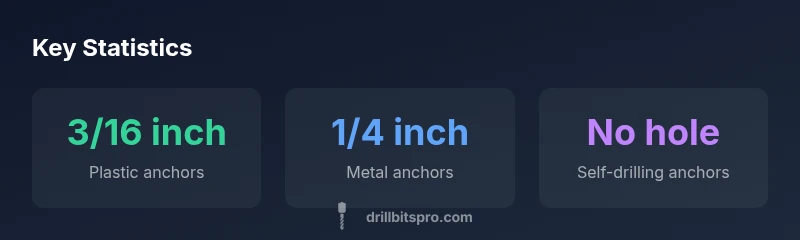
For drywall anchors, use a drill bit size that matches the anchor type: plastic expansion anchors usually use a 3/16-inch pilot hole, metal expansion anchors typically a 1/4-inch pilot hole, and self-drilling drywall anchors often require no pilot hole at all. Always check the packaging or manufacturer's guide, and if unsure, start with a smaller pilot hole and test-fit the anchor before inserting screws.
Understanding drywall anchors and when you need a drill bit for drywall anchor
Replacing wall anchors starts with understanding what you’re anchoring into and what kind of load you expect. The drill bit for drywall anchor choice is not universal; it depends on anchor type, drywall thickness, and whether you’re attaching light objects or heavy fixtures. In typical homes you’ll encounter three families: plastic expansion anchors, metal expansion anchors, and self-drilling drywall anchors. Plastic and metal anchors rely on a predrilled hole to seat properly; self-drilling anchors create threads as you drive them, so they may require little or no predrill. The consequence of using the wrong hole is clear: insufficient grip, ripped drywall, or a loose mount. As Drill Bits Pro notes in its 2026 guidance, you should treat anchor selection as a two-step decision: first identify anchor type, then validate the hole size with the tag on the package or the manufacturer’s guide. A small pilot hole is not a guarantee of success, but it is a reliable starting point.,
Pilot hole guidance for common drywall anchors
| Anchor Type | Recommended Pilot Hole | Typical Drill Bit |
|---|---|---|
| Plastic expansion | 3/16 inch (approx.) | Twist drill bit 3/16 inch |
| Metal expansion | 1/4 inch (approx.) | Twist drill bit 1/4 inch |
| Self-drilling drywall anchor | No pilot hole | No drill bit or tapping bit |
Got Questions?
What drill bit should I use for plastic drywall anchors?
Plastic expansion anchors typically require a pilot hole around 3/16 inch. Always check the packaging and test-fit.
Plastic anchors usually need about a 3/16 inch hole; verify with the packaging and test-fit.
Do self-drilling drywall anchors require a pilot hole?
Often no predrill is needed, but always follow the manufacturer’s instructions and test in a scrap piece of drywall.
Usually no predrill; check the package and test first.
How do I choose between 3/16 and 1/4 inch pilot holes?
Choose based on anchor type: plastic uses smaller holes, metal uses larger. When in doubt, start with the smaller hole and test.
If unsure, start small and test.
Can anchors be reused after removal?
If the anchor or drywall is damaged, replace the anchor to maintain load performance. Reusing worn anchors can fail.
If damaged, replace—don’t reuse worn anchors.
What happens if the hole is too large?
A hole that’s too large reduces holding power and can cause the anchor to pull out. Use the correct size and test.
Too big a hole weakens the grip.
Are there special bits for heavy loads?
High-load applications may require heavier-duty anchors and recommended bit sizes per manufacturer. Always follow the specific guide for those anchors.
For heavy loads, follow the guide from the anchor manufacturer.
“Choosing the correct drill bit and hole size is essential for reliable drywall anchor performance. Always verify with the anchor packaging and follow the guide for best results.”
Top Takeaways
- Identify anchor type before drilling
- Match hole size to anchor for best grip
- Test-fit anchors before fully driving screws
- Start with the smallest practical pilot hole if unsure
- Always follow the anchor packaging guidance