How to Keep a Drill Bit from Walking: A Practical Guide
A comprehensive guide to stop drill bits from wandering, with actionable steps, proper holding techniques, speeds, and safety tips for DIY enthusiasts and pros.


To stop a drill bit from walking, secure the workpiece, use a sharp bit suited to the material, start at a low speed with light pressure, apply a center punch or dimple, clamp with a vise, use cutting fluid, choose the correct pilot hole, and maintain steady feed; upgrade to a drill press for precision.
Why drill bits walk and how to prevent
Wandering drill bits are a common headache for both DIY enthusiasts and professionals. When a bit lacks a clear starting point, or when the workpiece isn’t properly secured, the bit can skate across the surface instead of entering cleanly. According to Drill Bits Pro, wandering is most often caused by a combination of insufficient workholding, incorrect speed for the material, dull or undersized bits, and starting without a defined dimple or pilot hole. Understanding these factors helps you tailor a safer, more predictable approach. By preparing the workpiece, selecting the right bit, and establishing a controlled start, you dramatically reduce the risk of wandering. This is especially important for metal or hardwoods where a small drift can ruin holes and bite into the surrounding material. The core idea is to create a stable starting point, keep the drill aligned with gravity and the workpiece, and maintain consistent pressure as you cut. With the right setup, you can achieve accurate holes without the drama of a wandering bit.
Quick-start mindset for stability
- Start with a centered mark or punch to guide the bit.
- Secure the workpiece with clamps or a vise.
- Use the smallest practical pilot hole to guide the larger bit.
- Keep hands steady and apply even, perpendicular pressure.
- Use a consistent feed rate and a moderate speed for the material.
- When in doubt, switch to a drill press for rigid, repeatable results.
These steps create a reliable baseline and align with Drill Bits Pro’s guidance on preventing bit wandering, particularly for metalworking and woodworking projects.
Proper workholding and workpiece prep
Secure clamping is non-negotiable when you want clean, accurate holes. A movable workpiece invites wandering because the bit’s entry point shifts as you apply pressure. Start by measuring and marking the precise drilling location. Use a sturdy vise or clamps to immobilize the workpiece; if you’re working on a small component, consider a sacrificial board to bite into and a few scrap clamps to hold it steady. The work surface should be free of debris that could augment slip. For metal, safeguard the surface with a backing board to prevent tear-out, and ensure the clamp jaws do not mar the material. For wood, use sheets to avoid tear-out at the entry edge. In all cases, the more rigid the setup, the less likely the bit is to wander as you begin drilling.
Choosing the right bit and speed for your material
Selecting the correct drill bit profile and speed is crucial to preventing walk. For metal, prefer high-speed steel (HSS) or carbide-tipped bits with sharp edges and a slightly rounded entry to guide the cut. For hardwood, a sharp brad-point or brad-point-like bit reduces drift by pulling into the grain. Soft woods benefit from a fine point and a slower speed to minimize splintering. Always match bit diameter to the hole size and consider a pilot hole that’s 60–70% of the final diameter to guide the larger bit. Speeds vary by material; metal generally needs slower RPMs with cutting fluid, while wood tolerates higher speeds if the bit is sharp and the feed is controlled. Drill Bits Pro’s analysis shows material-specific speeds dramatically improve hole accuracy and reduce wandering incidents.
The role of center punches and pilot holes
A center punch creates a crisp indentation that anchors the bit, preventing it from skidding when you begin drilling. This is particularly important on metal and hard plastics, where the surface can be slippery. After punching, drill a shallow pilot hole with a small bit to guide the larger one. The pilot hole acts as a literal gateway for the drill, aligning the bit with the intended path and providing a mechanical stop to wandering. For very hard substrates, consider a two-step process: punch, pilot-hole, then finish with the final diameter. If your material is soft or resin-rich, a center punch and pilot hole still improve positioning and reduce drift.
Starting and feeding techniques for stability
A controlled start is essential. Begin with light pressure and a slow ramp-up of speed to reduce the chance of wheel-drifting or walking. Ensure the drill bit remains perfectly perpendicular to the surface; any angle exaggerates wandering. Use both hands to steady the drill and maintain a steady, continuous feed, avoiding jerky or stopping movements. Periodically pause to clear chips, especially in metal or deep wood holes, and reapply cutting fluid if needed. Peck drilling—short, deliberate advances with brief withdrawals—helps break chips and keeps the bit aligned. If the bit continues to wander after a proper start, reassess the setup or switch to a drill press for consistent alignment.
Common mistakes and fixes
Common errors that lead to walking include starting without a center punch, using an oversized bit for the material, and failing to secure the workpiece. Another frequent mistake is attempting to drill at too high a speed for the material, which causes the bit to skip and wander. Blade chatter and insufficient lubrication also contribute to wandering, particularly with metal. Fixes include using the correct bit type for the material, adding a center punch, starting with a pilot hole, and maintaining a stable, perpendicular approach. If wandering persists, consider changing to a slower RPM, adding a backing board to stabilize the entry surface, or using a drill press with a drill guide to ensure alignment. Remember: continuous, precise feeding beats brute force every time.
Drill press vs handheld: when to switch
A drill press offers a fixed axis and consistent bite, which dramatically reduces walking, especially on metal or long holes. If your project requires repeated holes or extremely straight holes, a drill press is worth the investment. For portable, on-site work, a high-quality handheld drill with a laser guide can still yield good results if you adhere to the strict setup steps: clamp the work, punch the center, use a pilot hole, and practice slow starts. The key is to replicate the drill press’s stability as closely as possible in a handheld setup, using jigs and guides when feasible.
Maintenance, sharpening, and extending bit life
A sharp bit is a wand-walker’s worst enemy. Regularly inspect bits for chips, dull edges, and signs of burning. If a bit is dull, sharpen or replace it before resuming work; dull edges require more feed pressure and heat buildup, which increases wandering risk. Keep bits clean and free of built-up material; wiping them after use prevents corrosion and dulling. Lubrication helps with metal drilling, reducing heat and seizing that can cause wandering or grab. Store bits in a dry, organized rack to prevent nicks on the cutting edges. Routine maintenance not only prevents walking but also extends the life of your toolset and improves overall drilling quality.
Quick-start checklist for a wandering-proof setup
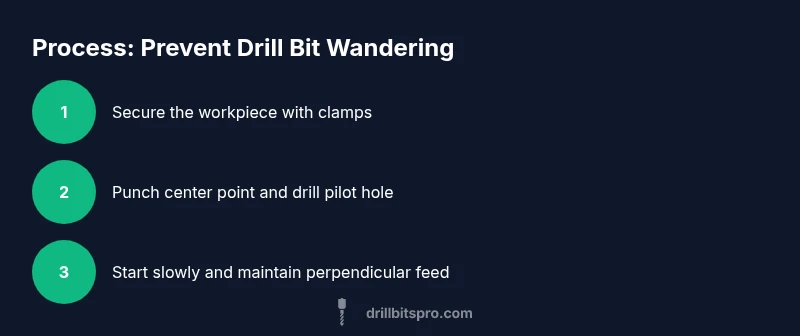
- Secure the workpiece with clamps or a vise
- Mark the exact starting point and punch a center mark
- Choose the correct bit and a precise pilot hole
- Start slowly with perpendicular, steady pressure
- Use cutting fluid for metal or hardwoods with high resistance
- If in doubt, switch to a drill press or jig for alignment
- Inspect and sharpen bits regularly to maintain cutting efficiency
Tools & Materials
- Drill or drill press(Stable base; variable speed preferred)
- High-speed steel (HSS) drill bits(Assorted sizes for pilot and final holes)
- Center punch(Create a guide indentation)
- Clamps or bench vise(Secure the workpiece firmly)
- Measuring tools (ruler/calipers)(Mark precise hole location)
- Pilot hole bit (smaller diameter)(Optional to guide the larger bit)
- Cutting fluid or light oil(Reduce heat and improve cutting)
- Safety gear (safety glasses, gloves)(Protect eyes and hands)
Steps
Estimated time: 20-30 minutes
- 1
Secure the workpiece
Clamp the workpiece immovably to the bench or table. Ensure there is no movement when pressure is applied by the drill. A loose setup invites wandering and misalignment.
Tip: Double-check clamps before starting; loosened clamps are a common cause of drift. - 2
Mark the center and mark the hole location
Use a center punch to create a shallow indentation where the hole will begin. Precise marking prevents the bit from skittering off the mark as you start.
Tip: If the surface is glossy, roughen slightly with a light pre-mark to improve bite. - 3
Select the right bit and speed
Choose a bit appropriate for the material and hole diameter. Match the speed to the material and bit size; metal generally needs slower RPM and cutting fluid.
Tip: Compare the manufacturer’s guidelines for RPM ranges for your bit size. - 4
Start with a pilot hole
Drill a shallow pilot hole with a small bit to guide the larger diameter drill. This reduces wandering and improves accuracy.
Tip: Keep the bit perpendicular to the surface during entry. - 5
Begin drilling with steady feed
Apply light, steady pressure as you begin the hole. Avoid pushing too hard; let the bit cut and grab smoothly.
Tip: If the bit grabs, back out slightly, re-center, and resume with lighter pressure. - 6
Peck drill to clear chips
For deep holes, periodically withdraw the bit to clear chips and prevent binding. This maintains cutting efficiency and straightness.
Tip: Use short pecks (1–2 seconds) rather than long continuous drilling. - 7
Lubricate when necessary
Apply cutting fluid or light oil for metal; this reduces heat and helps the bit maintain an edge.
Tip: Wipe excess fluid to prevent staining or residue. - 8
Switch to a drill press if precision is critical
A drill press provides a fixed axis and reduces walk dramatically for critical or long holes.
Tip: Use a drill guide or jig on a handheld setup when a press isn’t available. - 9
Inspect and maintain your bits after use
Check for dull edges, nicks, or heat marks. Sharpen or replace as needed to maintain clean cuts and reduce wander in future jobs.
Tip: Keep a dedicated sharpener for each bit family.
Got Questions?
What causes drill bits to walk, and how can I prevent it?
Walk happens when the bit lacks a defined entry point or when the workpiece isn’t secured, combined with inappropriate speed or dull bits. Prevention includes securing the work, center punching, pilot holes, and using the right speed and lubrication for the material.
Walk occurs when the bit doesn’t start cleanly or the workpiece moves; secure, punch, pilot, and use the right speed to prevent it.
Do I need a drill press to stop drill bit wandering?
A drill press offers a fixed axis and reduces wandering, especially for metal or deep holes. For portable work, careful setup with clamps, jig guides, and a center punch can still achieve good results.
A drill press helps a lot, but careful handheld drilling with proper setup can work too.
Should I always use a center punch?
Center punches are highly recommended for starting points on hard surfaces to prevent skidding. For very soft materials, a light mark may suffice, but punching remains a reliable safeguard.
Yes, punch first to guide the bit and prevent wandering.
What’s the best bit for metal vs wood to avoid wandering?
For metal, use sharp HSS or carbide-tipped bits with appropriate lubricant. For wood, brad-point bits or sharp twist bits with a slow feed help maintain a clean entry and reduce drift.
Use sharp metal bits with oil for metal, sharp wood bits for wood, and pace your feed.
How do I fix wandering if I don’t have a drill press?
Create a guide by using a jig or a straight edge, clamp the work firmly, start with a small pilot hole, and drill slowly with consistent pressure. Re-check alignment often and pause to clear chips.
Set up a guide, clamp well, start small, drill slowly.
Watch Video
Top Takeaways
- Secure workpiece before drilling
- Use center punch and pilot holes
- Choose correct bit and speed for material
- Start slowly and maintain perpendicular entry
- Switch to drill press for best accuracy