Which Drill Bit to Remove Gel: Practical DIY Guide
Learn how to remove gel nails safely using a drill. This guide covers which drill bits work best for gel removal, technique, safety, and aftercare for healthy nails.


Remove gel nails safely with a drill by using a coarse carbide or diamond bit designed for gel removal, staying on the gel layer and off the natural nail. Apply gentle pressure and move slowly to avoid heat buildup, pausing to cool as needed. Start at the free edge, thinning the gel, then refine with a finer bit and finish with a buffer and moisturizer.
Understanding Gel Nails and Removal with a Drill
Gel nails come in several forms—gel polish attached to the nail plate, gel overlays, and builder gels. Each requires a slightly different removal approach. The most common mechanical removal uses a nail drill with a carbide, ceramic, or diamond bit to thin and lift the gel while protecting the natural nail. According to Drill Bits Pro, the efficiency and safety of removal depend on how well you match the bit to the gel type, the nail's natural sensitivity, and your technique. In this section, we cover gel types, how the drill interacts with them, and what to expect during the process.
Gel removal with a drill is not one-size-fits-all. The type of gel (gel polish vs. builder gel), the thickness of the layer, and the health of the natural nail all influence the bit choice and technique. You will notice more dust when you use a coarser bit, and you’ll get smoother results with a finishing bit. The goal is to minimize abrasion on the living tissue while effectively thinning the gel. This section sets the stage for safe and predictable removal.
Tools & Materials
- Electric nail drill (pen-style or ergonomic)(Speed control and forward/reverse function preferred for precision)
- Coarse carbide drill bit(Designed for gel removal; avoid using on natural nail)
- Diamond-coated or ceramic finishing bit(For smoothing and final contouring)
- Nail file and buffer(Prepare and refine surface before and after drilling)
- Dust mask and safety goggles(Protect from dust and debris)
- Cuticle oil and hand cream(Post-removal moisturization)
- Lint-free wipes(Clean dust and residue)
- Ventilation or dust extraction(Maintain air quality during drilling)
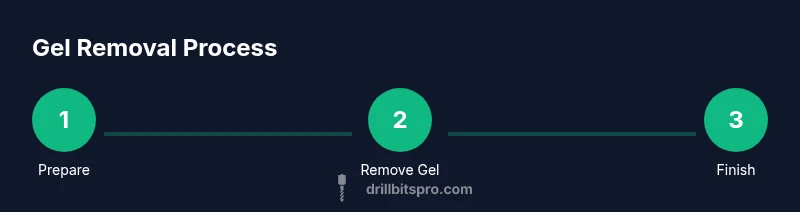
Steps
Estimated time: 60-90 minutes
- 1
Prepare nails and PPE
Sanitize hands and setup your workstation. Put on safety goggles and a dust mask. Ensure tools are clean and within reach to minimize interruptions.
Tip: Check ventilation and keep dust extraction active. - 2
Clip and thin the gel layer
Trim bulk and roughen the surface with a coarse file to create a uniform gel layer for easier removal. Avoid excessive thinning of the natural nail.
Tip: Expose the gel layer without exposing living tissue. - 3
Engage the drill at the gel edge
Gently position the carbide bit at the free edge and begin thinning the gel with light, controlled passes. Maintain a shallow angle and avoid deeper contact with the nail plate.
Tip: Move in short bursts to control heat buildup. - 4
Contour and remove gel in layers
Continue advancing across the nail in light passes, removing gel layer by layer. Stop frequently to wipe away dust and assess progress.
Tip: If warmth is felt, pause to cool the nail. - 5
Refine edges and smooth surface
Switch to a finishing bit to even the surface and clean up the nail edge for a uniform look. Don’t overwork the natural nail.
Tip: Keep the bit moving to prevent gouges. - 6
Final cleanse and moisturize
Wipe away residue, apply cuticle oil, and gently massage for hydration. This seals the nail and supports healthy recovery.
Tip: Hydration aids nail recovery after gel removal.
Got Questions?
Can any drill bit remove gel polish?
No. Gel polish requires a carbide or diamond bit designed for gel removal to avoid damage and overheating. Using the wrong bit can gouge the nail or leave residue.
Not all bits are suitable. Use a carbide or diamond bit meant for gel removal and proceed slowly.
Is a nail drill necessary if I only have gel polish?
A drill accelerates removal but is optional for gel polish. A professional-grade file or acetone soak can work, but drills reduce damage risk when used correctly.
A drill isn’t strictly required, but it helps when used safely with the right bits.
How do I avoid overheating during removal?
Keep the bit moving in short bursts, use low to moderate speed, and pause to cool if you notice warmth or discomfort.
Move the bit gently and take breaks to let the nail rest.
Will drilling Gel damage the natural nail?
If used correctly with proper bits and technique, damage risk is minimized. Avoid pressing into the living tissue and never force the bit.
With proper technique and safe bits, you minimize risk.
What PPE should I wear?
Wear safety goggles, a dust mask, and ensure good ventilation to protect eyes, lungs, and skin.
Goggles, mask, and ventilation protect you from dust.
How long does it take to remove gel?
Time varies with gel thickness and experience; budget roughly 20-60 minutes per nail, plus setup and aftercare.
It usually takes longer at first; with practice, it speeds up.
Watch Video
Top Takeaways
- Choose the right bit for gel type.
- Keep the bit on the gel, away from the natural nail.
- Monitor heat and cool as needed.
- Finish with proper cleansing and moisturization.
- Practice on a scrap nail to build confidence.