Can You Use a Regular Drill Instead of a Hammer Drill? A Practical Comparison
Explore when a regular drill can substitute a hammer drill and when you should choose hammer action, with practical tips from Drill Bits Pro.


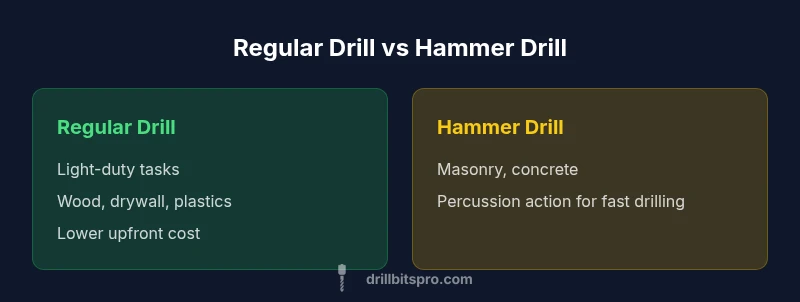
Can you use a regular drill instead of a hammer drill? For light-duty tasks such as wood, drywall, or plastic, a regular drill often suffices and keeps tools affordable. For masonry, brick, or concrete, a hammer drill is usually essential to achieve reasonable speed and penetration. This comparison helps you decide when to swap tools and how to optimize performance based on material and scope.
Why the question matters
The question can you use a regular drill instead of a hammer drill comes up frequently in DIY forums and professional jobs alike. Tool choice directly affects speed, finish quality, and the effort required to complete a task. According to Drill Bits Pro, matching the tool to the material not only saves time but also extends bit life and reduces user fatigue. In real-world projects, choosing the wrong tool can turn a quick hole into a frustrating, time-consuming job—or worse, derail a project due to inaccurate drilling depth or drift. The goal of this article is to give you a clear framework for deciding which drill to pull from the toolbox and how to optimize performance when you have to improvise.
How they work: regular drills vs hammer drills
Regular drills rely on rotational motion with optional clutch settings to control torque. Hammer drills add a percussive action—pounding the bit into the material while rotating—so they can break through hard substrates more efficiently. The percussion mechanism is typically switchable: you can use a standard drilling mode for wood and soft materials, and a hammering mode for masonry. A rotary hammer offers even more aggressive action for dense concrete, but that is beyond a typical consumer hammer drill. When you understand this core difference, you can predict performance across common materials and avoid overworking the tool or the user.
Wood and drywall tasks: when a regular drill suffices
For many DIY projects involving wood, plywood, or drywall, a regular drill with a standard twist bit or spade bit is a practical choice. The lack of percussive action means the drilling is smoother, drill bit wear is predictable, and control is heightened at lower speeds. Inserting a pilot hole with a regular drill helps prevent wood splitting and makes subsequent fastener insertion easier. When working with soft plastics or composite materials, a normal drill paired with appropriate bit geometry delivers clean holes with minimal chatter. In these contexts, a hammer drill offers little advantage and can complicate the process by overdriving and wandering the bit.
Masonry and concrete: when a hammer drill is worth it
The phrase can you use a regular drill instead of a hammer drill becomes especially important on masonry projects. Concrete and brick resist cutting by rotation alone; the hammer action creates a measurable reduction in the amount of pressure and time required. For most masonry tasks, a hammer drill with masonry bits is the reliable setup. If you must drill into concrete countertops, foundation walls, or dense brick, the hammer action dramatically improves hole quality and reduces bit wear. Even with masonry bits, the performance difference between a regular drill in percussion mode and a true hammer drill can be substantial, so evaluate the project scale before choosing.
Speed, torque, and control: how to optimize performance
Understanding rpm (speed) and torque helps when deciding which tool to use. Regular drills excel when you need steady rotation at moderate torque for wood and soft materials; high torque without percussion can still produce good results with well-designed bits. Hammer drills increase efficiency in hard substrates by combining rotation with impact energy, which prevents the bit from skidding and produces more consistent holes. Use the smallest viable bit for pilot holes in masonry, then switch to the full-size masonry bit with the hammer mode engaged. For precision tasks, slow start and steady feed pressure minimize breakout and bit wandering, regardless of tool type.
Bits, accessories, and compatibility: choosing the right setup
Bit choice matters almost as much as tool choice. Wood projects benefit from brad-point or twist bits, while masonry demands carbide-tipped masonry bits with a chisel-like profile. Always confirm that the bit shank matches your drill chuck, whether it is a 3/8-inch or 1/2-inch model. If you plan mixed-material projects, consider having both a regular drill and a compact hammer drill on hand, so you can switch during the workflow rather than force one tool to do everything. Keep spare bits sharp and cool with intermittent drilling to extend life and maintain consistent performance.
Safety and ergonomics: protecting yourself while drilling
Mechanical drills generate significant vibration, especially in percussion mode. PPE should include safety glasses, hearing protection, and a sturdy pair of gloves. Maintain a balanced stance, keep wrists relaxed, and avoid forcing the bit—let the tool do the work. Secure your workpiece with clamps to reduce movement, and use the correct bit for the material to prevent kickback or bit breakage. Safety training and proper PPE reduce the risk of hand-arm vibration syndrome and other injuries when using either tool type.
Budgeting and value: costs, durability, and ownership
A basic regular drill is typically less expensive upfront than a dedicated hammer drill, but long-term cost depends on how often you drill masonry. If you primarily work with wood, drywall, or plastics, a quality regular drill will likely provide the best value. For frequent masonry work, the hammer drill is a cost-effective investment due to faster hole penetration and longer bit life, even when accounting for bit replacement. Drills with adjustable percussion settings can bridge gaps, allowing a single tool to handle more tasks, and are especially convenient for homeowners with mixed project needs. Drill Bits Pro analysis shows that investing in a modular setup with both tools can optimize productivity and reduce downtime across projects.
Quick-start decision guide: a 4-step flow for choosing
- Step 1: Identify the primary material you drill most often (wood, drywall, metal, masonry).
- Step 2: Assess the typical hole size and depth required for your tasks.
- Step 3: Check whether your project benefits from percussion or full hammer action.
- Step 4: If in doubt, start with a regular drill for light work and reserve a hammer drill for masonry tasks. If you anticipate frequent masonry drilling, plan to add a hammer drill to your toolkit for efficiency and longevity of bits.
Conclusion before the verdict: putting it into practice
By understanding the material-dependent differences and the implications for speed, bit wear, and control, you can decide whether a regular drill, a hammer drill, or both is best for your toolkit. The choice should be driven by project mix, desired hole quality, and your tolerance for tool complexity and cost. With the right setup, you can complete projects faster and with higher-quality results while maintaining safe work habits.
Comparison
| Feature | Regular Drill | Hammer Drill |
|---|---|---|
| Best For | Light-duty wood, drywall, plastics | Masonry (concrete, brick), heavy-duty drilling |
| Masonry Capability | Limited; relies on bit friction and rotation | High; percussive action improves penetration |
| Drill Bit Compatibility | Wood/metal bits; masonry bits not mandatory | Carbide-tipped masonry bits common |
| Vibration/Ergonomics | Less vibration during standard drilling | Increased vibration from percussion action |
| Cost Range | Lower upfront cost (basic models) | Higher upfront cost but often better long-term value for masonry |
What's Good
- Flexible for mixed-material projects
- Lower initial cost for basic regular drills
- Better control and comfort for light tasks
Negatives
- Poor performance on masonry without percussion
- Increased vibration with hammer action can fatigue users
- Bit wear can be faster on masonry unless using proper bits
Hammer drill excels for masonry; regular drill is best for light-duty, wood, and drywall
Choose the regular drill for most light tasks and wood/drywall work. Use a hammer drill for concrete and brick to maximize speed, hole quality, and bit life. If your projects span both domains, own both tools for maximum efficiency and cleaner results.
Got Questions?
Can you drill concrete with a regular drill?
Drilling concrete with a regular drill is possible only with very small holes and slow progress. Typically, you need a hammer drill and masonry bits for practical results on concrete or brick. Relying on a regular drill for this substrate will be slow and hard on the bit.
You can drill small concrete holes with a regular drill, but you’ll want a hammer drill for real masonry work to save time and effort.
When should I choose a hammer drill?
Choose a hammer drill for masonry tasks such as concrete, brick, or tile backer boards. If your project involves dense materials or requires deeper holes, the hammer action dramatically improves speed and hole quality. For wood or drywall, a regular drill is often sufficient.
Opt for a hammer drill whenever you’re penetrating masonry or dense materials; use a regular drill for wood and drywall.
Are there situations where a regular drill is better?
Yes. For light-duty work in wood, drywall, or plastics, a regular drill offers smoother operation, longer bit life with proper bits, and less noise and vibration. It also tends to be cheaper and lighter, which is advantageous for extended use in non-masonry projects.
Regular drills are great for wood and drywall and lighter tasks because they’re easier to handle and cheaper.
Can I use a regular drill with a masonry bit?
You can use a masonry bit in a regular drill for shallow holes in softer masonry, but the lack of hammer action will slow penetration and produce more resistance. For most serious masonry work, switch to a hammer drill with the appropriate bit.
Using a masonry bit on a regular drill is possible for shallow holes, but hammer action is usually needed for concrete.
What safety practices apply to both tools?
Wear eye protection and hearing protection when using either tool. Secure the workpiece, use clamps, and maintain a firm stance. Keep hands away from the rotating bit, and avoid forcing the tool. Regular maintenance, such as keeping bits sharp and aligned, reduces the risk of accidents.
Always wear PPE, clamp your work, and keep a steady grip to stay safe with either drill.
Top Takeaways
- Match tool to material before starting
- Use masonry bits for concrete tasks
- Engage percussion mode only when needed
- Protect hands and eyes with proper PPE
- Budget for a dual-tool kit if masonry work is frequent