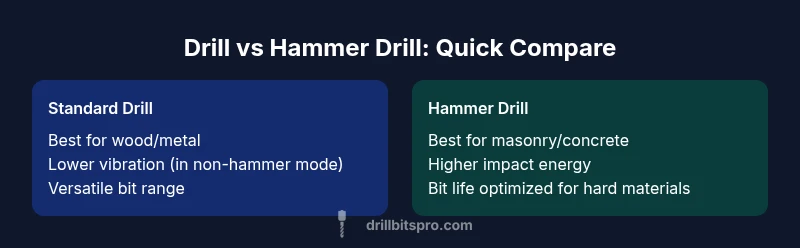
Drill vs Hammer Drill: A Practical Comparison for DIYers and Pros
A rigorous, practical comparison of drill versus hammer drill performance, ergonomics, and value to help DIY enthusiasts and pros choose the right tool for wood, metal, and masonry tasks.


According to Drill Bits Pro, choosing between a drill and a hammer drill boils down to material, workload, and frequency of use. For light to medium tasks on wood or drywall, a standard drill with a hammer function usually provides the best balance of speed and control. For masonry or concrete-heavy work, a dedicated hammer drill delivers force and bit life that a regular drill cannot match. This article explains why.
Why the distinction matters
Understanding the core mechanical difference between a drill and a hammer drill is essential for choosing the right tool for a given task. A standard drill relies on rotational motion to bore holes, while a hammer drill combines rotation with a rapid, percussive impact that helps masonry and dense materials crack and fracture. This dual-action design can dramatically affect drilling speed, hole quality, and bit wear. The decision is not simply about power; it is about applying the right physics to the job. For DIYers and professionals, recognizing when to engage hammer mode versus ordinary rotation is the first step toward better results and fewer damaged bits. Drill Bits Pro’s analysis shows that material type, hole size, and task frequency should drive your tool choice more than peak RPM alone.
Core use cases
Different tasks demand different tools. For wood, plastics, and light metal, a standard drill with a hammer function is usually sufficient, especially when precision and control are paramount. For brick, concrete, and masonry, a dedicated hammer drill makes a noticeable difference in penetration speed and bit life. If you frequently switch between applications, a versatile drill with selectable hammer modes provides flexibility without carrying two separate tools. When choosing between models, examine whether the tool offers variable hammer impact settings, a robust chuck, and comfortable ergonomics to sustain performance over longer sessions.
Performance metrics you should track
Key metrics for comparing drill versus hammer drill include drilling speed (RPM), impact energy (Joules or equivalent hammer action units), torque, and vibration levels. In wood and aluminum, the hammer action is often optional; disabling it preserves speed and control. In masonry, impact energy and frequency directly affect hole quality and tool endurance. Look for a device with a clear torque range, adjustable hammer settings, and a soft-start feature to prevent bit wander when starting a hole. Real-world performance depends on bit quality, drill axis alignment, and user technique as much as on the tool’s stated specs.
Bit compatibility and accessories
Drills use standard twist bits for non-masonry work, and masonry bits when in hammer mode. Masonry bits feature carbide tips and are designed to withstand the percussive stress of hammering. Some drills also support SDS bits, which are optimized for heavy-duty concrete work but require compatible chucks and bits. If you plan to drill into tile or ceramic, use a masonry bit with a slow, steady feed and pilot holes. Accessories like dust extraction attachments and depth stops help maintain accuracy and reduce noise, regardless of which tool you choose.
Ergonomics and vibration management
Hammer drills typically generate higher vibration levels due to the percussive action, which can cause fatigue over long sessions. Weight distribution, handle design, and anti-vibration features are crucial for comfort and precision. A lighter tool with a well-balanced grip and a decoupled handle reduces wrist strain and improves control in confined spaces. When selecting between tools, prioritize models with padded handles, balanced weight, and effective vibration dampening to maintain accuracy on extended jobs.
Power sources and runtime
Corded models deliver consistent performance and are ideal for continuous work, while cordless variants offer portability for overhead or remote sites. If you drill masonry regularly, ensure your battery technology supports high amperage and sustained voltage under load. Always have spare batteries and consider a charger with fast-recovery capabilities. Note that cordless hammer drills typically have lower peak torque compared to their corded counterparts; plan your project timeline accordingly and avoid running out of juice in the middle of a critical bore.
Maintenance and longevity
Regular maintenance extends tool life. Keep vents clear of dust, lubricate moving parts per the manufacturer’s guidance, and inspect the chuck and switch mechanisms for wear. Replace worn drill bits promptly to prevent binding and irregular holes. For hammer drills, ensure the hammer mechanism remains free of debris and that the impact setting aligns with the material you’re drilling. A well-maintained drill or hammer drill will have fewer jams, smoother operation, and longer service life.
Cost and value calculus
Price and long-term value depend on usage patterns. A versatile drill with selectable hammer mode offers excellent value for mixed tasks, reducing the need to own multiple tools. Dedicated hammer drills cost more upfront but can save time on masonry-heavy projects and reduce bit wear when used correctly. Consider total cost of ownership, including accessories, batteries, and the expected frequency of masonry work, to determine the best financial choice for your shop.
Common mistakes and how to avoid them
Common mistakes include using hammer mode on soft materials like wood, which causes chatter and can split the workpiece; rushing into masonry without proper bits or pilot holes; and neglecting bit maintenance, leading to poor hole quality and excessive wear. Always select the correct bit, start with a pilot hole when needed, and let the tool do the work with steady pressure. Use slower speeds for delicate materials and let the bit gradually bite to reduce snags and wandering.
Quick-start decision guide
If you drill masonry or concrete often, opt for a dedicated hammer drill with a robust chuck, good ergonomics, and high impact energy. If your projects are a mix of wood, metal, and occasional masonry, choose a drill with a selectable hammer mode and a comfortable grip. For lightweight hobbies or infrequent use, a basic drill with a hammer setting provides a cost-effective path. Always match bits to the material and maintain your tools for reliability.
Comparison
| Feature | Standard Drill (with hammer mode) | Dedicated Hammer Drill |
|---|---|---|
| Best for | Versatility across wood/metal; occasional masonry | Frequent masonry/concrete tasks and dense materials |
| Impact energy / torque | Lower baseline impact; adjustable via mode | Higher impact energy; optimized for masonry |
| Drill speed (no hammer) | Faster for wood/metal, cleaner holes | Slower when hammering due to increased resistance |
| Bit compatibility | Standard twist bits; masonry bits when hammering | Masonry bits optimized for high-stress impact |
| Power source | Corded or cordless with decent runtime | Typically corded or high-capacity cordless |
| Price range | $60-$180 | $120-$300 |
| Best for | Budget-friendly, mixed-use projects | Heavy masonry and long concrete tasks |
What's Good
- Versatile tool that handles multiple materials in one package
- Accessible price range for beginners and hobbyists
- Wide accessory ecosystem and replacements
- Selectable hammer mode adds functionality without a second tool
Negatives
- Hammer mode on a standard drill can wear bits faster if misused
- Not always optimal for frequent hard masonry compared with a dedicated unit
- Higher vibration can fatigue users on long sessions
A standard drill with hammer mode covers most DIY needs; a dedicated hammer drill is best for frequent masonry.
Choose a drill with hammer mode for versatility and control. If masonry work is a core part of your projects, upgrade to a dedicated hammer drill for efficiency and longer bit life.
Got Questions?
What is the primary difference between a drill and a hammer drill?
A drill rotates bits to bore holes, while a hammer drill adds a percussive hammer action that helps break through masonry. The hammer action speeds up masonry drilling but increases vibration and bit wear when used on non-masonry materials.
A drill rotates; a hammer drill also hammers. Use the hammer mode for masonry and the plain rotation for wood or metal.
Can I use normal drill bits in a hammer drill?
Yes, you can use standard twist bits for non-masonry work, but masonry bits are necessary for holes in brick or concrete. Ensure you switch off hammer mode when drilling soft materials to avoid damage.
Yes, use masonry bits only when hammering, and switch off hammer mode for wood and metal.
Are cordless hammer drills practical for masonry?
Cordless hammer drills offer portability and convenience for light to medium masonry tasks, but they may have shorter runtimes and lower sustained torque than corded models. For extended projects, consider a corded option or spare batteries.
Cordless options work well for lighter masonry work, with trade-offs in runtime and torque.
When should I avoid using hammer mode?
Avoid hammer mode for delicate materials like soft wood or ceramic tile where the percussive action can cause cracking or bit wandering. Use precision settings and correct bits for such tasks.
Avoid hammer mode on soft materials; use it only when you need masonry action.
How do I maintain a drill or hammer drill to extend life?
Regularly clean dust from vents, inspect the chuck, replace worn bits, and follow lubrication recommendations from the manufacturer. Proper storage and protective accessories also help extend life.
Keep it clean, check bits, and follow manufacturer maintenance for longevity.
What is SDS and when is it needed?
SDS is a type of drill system designed for heavy-duty masonry work with specific bits and chucks. Use SDS when you frequently need high-impact drilling in concrete and require compatible bits and compatible chucks.
SDS drills are for heavy masonry work; ensure you have the right bits and chuck compatibility.
Top Takeaways
- Choose a drill with hammer mode for versatility
- Opt for a dedicated hammer drill for frequent masonry
- Invest in quality bits and proper ergonomics
- Balance upfront cost with long-term maintenance
- Practice safe operation to avoid bit wander and injury