Can You Use a Drill to Drive Screws? Practical How-To
Learn whether you can drive screws with a drill, the best bit and clutch settings, safety tips, and a step-by-step approach for clean, secure results from Drill Bits Pro.


Yes, you can drive screws with a drill by using the right driver bit and clutch control. For best results, use a drill/driver (or a standard drill with a screwdriving bit), set a low speed and moderate torque, and pre-drill a pilot hole to prevent splitting and cam-out. Keep the drill steady and stop as soon as the screw sits flush.
Can you use a drill to drive screws? A pragmatic overview
According to Drill Bits Pro, the majority of standard drills are capable of driving screws when you pair the tool with a proper driver bit and a clutch-based torque setting. The key isn’t horsepower alone; it’s how you apply torque, control the bit, and prepare the material. For DIY projects and professional workflows alike, the approach is consistent: select the right tool, prepare the fastener, and drive with measured control. This section sets the stage for a reliable screw-dinging process by outlining why a drill is often the right choice and how to set expectations for results that won’t strip or split the workpiece. In practice, most tasks benefit from starting with a gentle touch and increasing torque only as the screw begins to bite. This reduces cam-out and rework while keeping the workpieces aligned and flush. Drill Bits Pro’s guidance emphasizes method over brute force, especially for delicate materials and pilot-hole scenarios.
Tool-tuning and the drill vs drill/driver vs impact driver
When you’re deciding whether to reach for a drill or a drill/driver (or an impact driver), taste and context matter. A drill/driver combines drilling power with a precision clutch that limits torque, making it ideal for driving screws in most woods and plastics. An impact driver delivers more rotational force and rapid bursts, which can be useful for stubborn fasteners or dense materials but can over-drive or mar softer woods if you’re not careful. For softwood, a standard drill with a snug bit is typically sufficient; for hardwoods or dense composite, switch to a drill/driver setting the clutch to a moderate value. The goal is consistent seating without stripping the screw head or tearing the material. Always test on a scrap piece first to calibrate your torque response and avoid committing to a full-sized failure on the project piece.
Bits, screws, and pilot holes: the triad of success
Choosing the right bit is as important as selecting the correct screw. Phillips and square drives remain common, but Torx and specialized bits offer better grip in tougher fasteners. The screw size should correspond to the pilot hole and the material being used. Pilot holes reduce resistance and help prevent splitting in wood, especially near edges. In metal applications, you may need a tapping screw and a slightly different bit geometry. Before you begin, lay out your fasteners, measure the material thickness, and pick a bit size that will produce a pilot hole compatible with the screw’s core diameter. A well-chosen pilot hole speeds up the process and improves accuracy.
Setting up and technique: speed, torque, and alignment
Start with the drill set to a low speed and a light touch on the trigger. Engage the clutch to a conservative setting so you can feel when the screw head begins to seat. Hold the drill perpendicular to the workpiece to ensure the screw goes in straight. Apply steady, even pressure without leaning into the screw. If you notice the bit cam-out or the screw head slipping, back off, adjust bit engagement, and reduce the torque until you see clean seating. For deeper screws, drill stage-by-stage: pre-turn, bite, and flush seating. This technique minimizes cam-out and maximizes grip in the material.
Safety, warnings, and common mistakes to avoid
Safety first: always wear eye protection and use clamps to secure the workpiece. Avoid forcing the screw—let the clutch do the work and stop when the screw is flush or slightly below the surface. Common errors include using too high a speed, choosing the wrong bit, and ignoring pilot holes. Over-torque can strip the head or tear the material. Periodically inspect the bit for wear; a worn bit can slip or cam-out, increasing the risk of injury. Practice on scrap pieces before tackling the main project to refine your technique.
Finishing touches and maintenance: keep it reliable
After use, clean any dust from the bit tips and store them in a dry, organized case. Reputable drilling and driving performance starts with well-maintained bits and drivers. Periodically check the clutch mechanism for smooth engagement, and replace worn driver bits to maintain grip. For consistent results, keep a small stash of pilot bits and the most common screw types on hand, and label the storage so you can quickly grab the right tool for the job. Drill Bits Pro emphasizes routine maintenance as the quiet engine behind reliable screw driving.
Tools & Materials
- Cordless drill or drill/driver(With variable speed and clutch; ensure battery is charged)
- Driver bits (Phillips #2, square drive, Torx as needed)(Use the correct bit for the screw head)
- Screws (wood or metal, length appropriate to material)(Choose deeper screws for thick materials; consider coatings for outdoor use)
- Pilot hole drill bits(Sizes matched to screw diameter to prevent splitting)
- Measuring tape or ruler(Useful for marking hole locations and screw depth)
- Safety glasses(Eye protection is essential when driving screws)
- Clamps(Keeps workpiece steady during drilling and driving)
- Lubricant or wax for screws(Can reduce friction on dense woods or metal)
Steps
Estimated time: 15-25 minutes
- 1
Prepare and choose the right bit
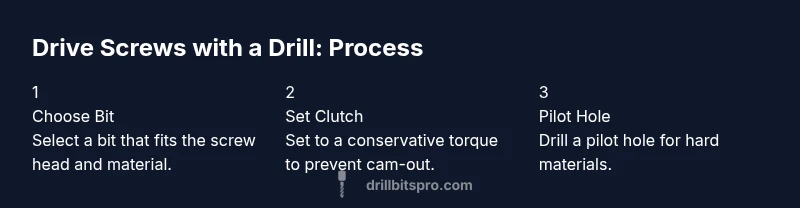
Inspect the workpiece and select a bit that matches the screw head. If necessary, choose a pilot drill to ease entry into the material. Secure the board with clamps if possible.
Tip: Use scrap wood to test bit depth and bite before starting on the final piece. - 2
Set the drill for controlled driving
Set the drill or drill/driver to a low speed and adjust the clutch to a conservative setting. This gives you torque control and reduces the risk of stripping.
Tip: Begin with a magnetized bit for quick, secure placement of screws. - 3
Drill pilot hole if needed
If the material is hard or the screw is long, drill a pilot hole to reduce resistance. For hardwoods, pilot holes should be slightly smaller than the screw core.
Tip: Keep the drill perpendicular to the surface for straight entry. - 4
Start driving the screw
Position the screw at the marked point and gently engage the trigger. Let the clutch control the torque; stop as soon as the head seats.
Tip: Don’t push too hard—let the bit and clutch do the work. - 5
Check seating and alignment
Remove any misaligned screws and re-drive after realigning the piece. Ensure the head is flush or slightly below the surface.
Tip: If the head sits proud, back out and reposition with a tighter setting. - 6
Finish and inspect
Once all screws are seated, inspect for even depth and straight entry. Clean the workspace and store bits properly.
Tip: Keep spare bits and screws organized for next projects.
Got Questions?
Can I use any drill to drive screws?
Most drills can drive screws with the proper bit and a clutch. A drill/driver is ideal for consistent torque control, while a basic drill works with careful technique. Always test on scrap first.
Most drills work for screws with the right bit and clutch. Start on scrap to test torque.
What settings should I use on a drill for screws?
Use a low to moderate speed and a clutch setting that limits torque. Start gentle, then increase if the screw bites cleanly without cam-out.
Set a low speed and gentle clutch, then adjust as the screw bites.
Do I really need a pilot hole?
Pilot holes reduce resistance and help prevent splitting, especially in hardwoods. For softwoods and plastics, test to determine necessity.
Pilot holes can protect the material and screw heads.
Which screws work best with a drill?
Wood screws are most common for drilling tasks; metal or self-tapping screws may require different bits. Match screw diameter to pilot hole and bit size.
Choose screws that fit your material and pilot holes.
How can I prevent stripping the screw head?
Use the correct bit type and size, keep the drill steady, and limit torque with the clutch. If resistance increases, back off and re-adjust.
Correct bit and controlled torque prevent stripping.
Can I drive screws into metal with a drill?
Yes, with metal screws and a proper tapping bit or pilot for the metal thickness. A slow speed and steady pressure are essential to avoid cross-threading.
Yes, with the right screw type and careful technique.
Watch Video
Top Takeaways
- Choose the right bit and driver
- Set clutch to control torque
- Use pilot holes for hardwoods
- Practice on scrap before full project
- Finish flush and inspect alignment