Can You Put Drill Bits in a Screwdriver? A Practical Guide
Discover whether drill bits can be used with a screwdriver, safe adapters, and practical alternatives. This expert guide from Drill Bits Pro covers compatibility, safety, and step-by-step methods for DIYers and pros.


Yes, you generally cannot directly fit drill bits into a standard screwdriver chuck. Screwdrivers are designed for driver bits with hex shanks that fit into a small chuck or magnetic bit holder. Drills use a larger, rotational chuck and higher torque. You can still work safely by using adapters or by upgrading to a drill/driver with the appropriate chuck.
Can you put drill bits in a screwdriver? Understanding the core difference
The question, can you put drill bits in a screwdriver, gets asked often when a DIYer wants to speed up a project. The short answer is: not directly. Screwdrivers are optimized for driving fasteners with small, precisely shaped driver bits that fit into a compact, hand-operated chuck or magnetic holder. Drill bits, by contrast, are engineered for holes and require a much larger, more robust grip. The discrepancy isn't just about size; it's about speed, torque, and alignment. According to Drill Bits Pro, the primary risk of forcing a drill bit into a screwdriver is damage to the bit, wear on the screwdriver tip, and potential slippage that can mar workpieces or injure the user. This distinction is why most professionals keep a dedicated drill or a drill/driver on hand for hole-making tasks, reserving screwdrivers for driving and removing fasteners. Understanding these roles helps you choose the right tool for the job and avoid frustrating mishaps. While some tools may share a few features, treating them as interchangeable leads to suboptimal results and could compromise tool longevity.
note
Tools & Materials
- Drill-to-screwdriver adapter(1/4 in hex shank interface or model-specific interface; ensure lock-in and rated torque)
- Hex-shank drill bits(Common sizes; ensure bits are sharp and undamaged)
- Universal bit holder(Optional; helps swap bits quickly without re-seating the adapter)
- Screwdriver with adjustable torque(Prefer a model that allows low-speed operation and controlled torque)
- Safety glasses(Protect eyes from chips and debris)
- Workbench clamps(Secures the workpiece for stability)
Steps
Estimated time: 20-40 minutes
- 1
Assess tools and materials
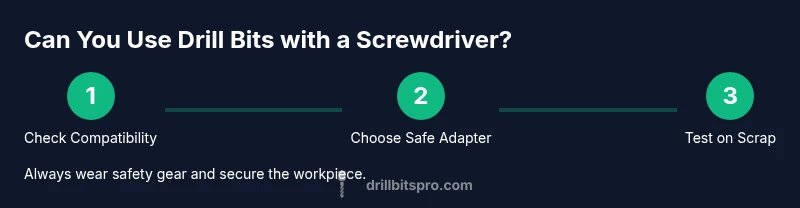
Inspect your screwdriver to confirm whether it accepts hex bits or has a compatible quick-change chuck. Review the drill bits you plan to use and verify there are no cracks or nicks. This upfront check prevents mid-task surprises and reduces the risk of damage.
Tip: If the screwdriver lacks a hex socket, you’ll likely need an adapter or a dedicated drill/driver. - 2
Choose a safe adapter
Select an adapter that is rated for both the bit size and the torque you expect to apply. A poor-quality adapter can slip, strip, or snap under load, increasing the chance of injury or damage.
Tip: Prefer a locking or friction-fit adapter with a clear load rating from the manufacturer. - 3
Mount the adapter to the screwdriver
Insert the adapter into the screwdriver’s chuck, ensuring a snug, square fit. Do not force a loose adapter; if it wiggles, stop and try a different part or adapter.
Tip: Twist the adapter by hand first to confirm it seats correctly before adding the bit. - 4
Install the drill bit into the adapter
Clamp the drill bit into the adapter or hex it into the adapter’s interface. Ensure there is no wobble and the bit is centered on the intended line of travel.
Tip: Use a straightest bit possible to minimize runout and chatter. - 5
Set speed and torque
Configure the screwdriver to its gentlest setting for the first test. Monitor for heat, slippage, or unusual vibration. If the setup feels stable, slightly increase speed while staying within the tool’s safe range.
Tip: Always start slow and test on scrap material first. - 6
Test on scrap material
Practice on scrap pieces of the same material to observe how the setup behaves. Look for bit wobble, adapter loosening, or any heat buildup that signals a need to stop.
Tip: If you notice binding, back off immediately and reassess alignment and bit sharpness. - 7
Proceed with care or revert to proper tools
If anything feels off—excessive heat, unusual noise, or slipping—stop. Consider switching to a proper drill/driver for the job to avoid damage to the workpiece or tool.
Tip: Don’t force a drill bit through tough material using a screwdriver; use a drill with correct bit and speed settings.
Got Questions?
Can I permanently convert a screwdriver into a drill?
Not recommended. Screwdrivers and drills are designed for different tasks, and forcing a drill bit into a screwdriver can damage the tool and cause failure. Use adapters with caution or upgrade to a drill/driver for actual drilling.
It's not recommended to permanently convert a screwdriver into a drill; use proper tools or adapters.
What adapters exist for using drill bits in a screwdriver?
There are hex-shank adapters and universal bit holders designed to connect drill bits to screwdrivers. Always check compatibility with your bit size and the tool's torque rating.
There are hex adapters and universal holders, but verify compatibility.
Will using drill bits in a screwdriver damage the bit or screwdriver?
Yes, misalignment, excessive torque, or forcing a bit can dull the bit or strip the screwdriver's tip. Always test and use appropriate adapters.
Yes, it can damage both if not done carefully.
What materials can you drill with a screwdriver setup?
Typically soft woods and plastics with low-to-moderate density; metal or hard composites require a proper drill and bit with correct speed and lubrication.
Mostly wood and plastic; metal and hard materials require a drill.
What sizes of drill bits work with common adapters?
Adapter compatibility varies by model. Check the product specs to confirm supported bit diameters and shank types before purchasing.
It depends on the adapter; check the specs.
Is using a screwdriver with an adapter safe for long jobs?
For extended drilling tasks, use a proper drill/driver for speed, control, and thermal management.
Better to use a proper drill/driver for long jobs.
Watch Video
Top Takeaways
- Know the tool differences and limits before attempting this setup.
- Use purpose-built adapters rated for your torque and bit size.
- Test on scrap material to avoid damage.
- Upgrade to a drill/driver for most drilling tasks.
- Follow safety practices to prevent injury.