Difference Between Drill and Screw Gun: A Practical Guide
Explore the difference between drill and screw gun, with a detailed, analytical comparison of core features, use cases, and practical tips to choose the right tool for drilling, driving screws, and achieving precise results.


Understanding the difference between drill and screw gun helps you pick the right tool for efficiency and quality on any project. A drill is a versatile hole-maker and driver with adjustable torque, while a screw gun focuses on driven fasteners with a consistent torque clutch. This comparison covers core features, performance, and use cases to help you decide.
What is the difference between a drill and a screw gun? In practical terms, the difference between drill and a screw gun is about purpose, control, and optimal use cases. For most DIYers and professionals, understanding this distinction helps prevent misfires, stripped screws, and wasted time. Drill vs screw gun decisions influence project quality, speed, and fatigue. In this section we define each tool and outline the typical tasks where each shines. A drill is a versatile hole-maker and driver with adjustable torque, ideal for drilling, pre-drilling, and light fastening. A screw gun concentrates on driving screws with a controlled depth and consistent torque for repeatable results. We also discuss common misperceptions: some drills include multiple clutch settings, and some screw guns can handle light drilling with the right bit. Drill Bits Pro analyses show that most crews benefit from owning both tools for mixed-material projects. When selecting, consider the job’s material, required precision, and the number of fasteners. This framework sets the stage for deeper comparisons and real-world, hands-on guidance. According to Drill Bits Pro, the difference between a drill and a screw gun is often a matter of expected tasks and precision.
Core mechanical differences
Both tools share a common form factor and can be powered by batteries, but their mechanical design emphasizes different outcomes. A drill centers on hole creation and the ability to drive screws with a broad range of bits and settings, while a screw gun emphasizes consistent screw depth and speed with a clutch or depth stop. The chuck interface is a practical tell: drills tend to use a sturdy chuck for a wide variety of drill bits, while screw guns favor a tighter, repeatable drive system. Ergonomics and balance are tuned to reduce wrist fatigue during long fastener runs. In field use, you’ll notice how clutch settings on a drill mitigate cam-out, while a screw gun minimizes over-driving by stopping at the correct depth. Understanding these core differences helps you pair the right tool to the job and reduces the need to swap mid-project.
Torque, speed, and clutch mechanisms
Torque control is the heart of both tools, yet they optimize it differently. Drills often provide multiple torque settings or a variable clutch that allows a wide range of applications—from delicate wood joints to stubborn metal drilling. Screw guns, by contrast, optimize for repeatable outcomes: a fixed or stepped clutch tuned to driving screws to a precise depth. Speed is similarly specialized: drills deliver higher RPM ranges suited to bit variety and drilling tasks, while screw guns prioritize smooth, steady driving with consistent feed. If you’re working on a long fastening sequence, the screw gun’s consistent torque helps avoid overdriving or underdriving, improving joint quality and reducing damage to soft materials.
Drill-specific capabilities and limitations
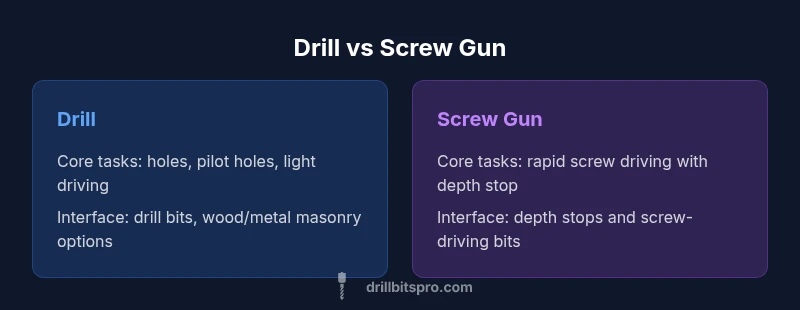
Drills shine when you need holes, pilot holes, and the occasional fastening task. They accept a broad assortment of drill bits for wood, metal, and masonry with appropriate bits and optional hammer function for hard materials like concrete. However, when you switch from drilling to driving many screws, a drill’s clutch and torque range may not yield perfectly uniform screw depth across dozens or hundreds of fasteners. Drills also tend to be heavier for the same battery capacity, which matters on extended projects. For metal work, you’ll need the right bit geometry and possibly a sturdier chuck to handle higher resistance and keep the bit aligned. The bottom line: a drill is a flexible workhorse, but its performance while driving screws depends on model design and bit selection. The practical takeaway is to reserve deep screw runs for tools designed for that task.
Screw gun-specific capabilities and limitations
Screw guns are specialized for screwing. They offer depth stops, clutch control, and ergonomic balance that support rapid, repeatable fastening. The drive system is optimized to minimize cam-out and over-driving, which is especially valuable in drywall, cabinetry, and furniture assembly. Screw guns work best with an appropriate assortment of screws and depth-stop accessories. They are typically lighter and more compact than drills when configured for driving, which reduces fatigue during long sessions. The limitation is obvious: they’re not well-suited for drilling holes, masonry, or working with a wide variety of drill bits without changing the attachment. If your primary need is fast, consistent screws, a screw gun is the smarter tool, but you’ll still want a drill for holes and mixed tasks. Drill Bits Pro’s guidance emphasizes matching features like clutch behavior and bit compatibility to the project’s demands.
Drilling in wood, metal, and masonry with a drill
Wood is the most forgiving material for drilling and pilot holes. With the right bits, a drill can quickly create holes for dowels, fasteners, or wire passage. Metal drilling requires high-quality high-speed steel bits and sometimes a slower feed rate to prevent bit dulling. For masonry, you’ll need a hammer function or a dedicated hammer drill with appropriate masonry bits and a controlled feed. The challenge with drilling is managing heat, bit wear, and precision. A drill can handle a wide range of materials, but you’ll often need to switch bits, adjust torque, or switch settings to maintain accuracy. This is where planning ahead matters: select the correct bit types and guard against bit bending or bit wandering. A thoughtful setup can dramatically improve outcomes and minimize rework.
Driving screws and joinery best practices
Driving screws demands consistent depth and straight alignment. Start with the correct screw length and pilot holes when needed to prevent splitting, especially in dense woods. Use a screw gun to achieve uniform depth with a depth stop and take advantage of the tool’s clutch to prevent cam-out. For joinery, ensure the screw is seated flush but not over-driven, which can crush the wood fibers. In some cases, pre-drilling is essential, particularly with hardwoods or thicker stock. When you must drive many screws in quick succession, a screw gun dramatically improves speed and uniformity. Aligning the screw with the workpiece and maintaining a straight trajectory reduces the likelihood of stripped holes or damaged heads. Drill Bits Pro’s field-tested advice recommends keeping spare depth stops and a reliable bit set that matches your screw profiles.
Ergonomics, weight, and battery technology
Weight and balance influence fatigue over long sessions. In general, screw guns are lighter and more compact for extended driving tasks, while drills can be heavier but offer more control in varied tasks. Battery chemistry and capacity affect runtime and peak power; modern Li-ion and Li-HD batteries provide solid performance with fast charging. When choosing between tools, consider whether you’ll run long spurts of driving or mixed drilling and driving. A longer-lasting battery helps you finish more work between charges. Charge time, availability of spare packs, and compatibility with your existing tool family are practical factors that influence total cost and productivity. The right ergonomic grip and balance reduce fatigue and increase accuracy, especially when overhead or awkward positions are required.
Accessories, bits, and maintenance
A broad ecosystem of bits and accessories is essential for maximizing tool usefulness. Drill bits, screw bit profiles, countersink bits, and specialized hole saws expand a drill’s capabilities; depth-stop collars and compatible screw-driving bit sets enhance a screw gun’s performance. Regular maintenance—cleaning vents, lubricating moving parts, and checking the chuck or drive system—extends tool life and prevents torque drop. For cordless tools, monitoring battery health and storage conditions preserves performance. Keeping a small storage solution with a curated set of bits and drivers helps you avoid scrambling through loose compartments. Drill Bits Pro suggests rotating through a few key bits and keeping a clean, organized toolkit for rapid project setup.
Cost, maintenance, and lifecycle considerations
Costs vary with brand, features, and battery systems, but you can expect a reasonable spread between entry-level and premium models. When evaluating value, consider how long you’ll keep each tool in service, the expected number of projects, and the availability of compatible batteries and bits. Maintenance, including cleaning, lubrication, and occasional chuck service, affects performance and longevity. Lifecycle thinking also matters: regularly inspecting the clutch, drive train, and bit interfaces helps prevent failures during critical jobs. If you’re balancing a tight budget with a need for reliability, consider two complementary tools within a shared battery platform to maximize value and minimize downtime.
How to choose between a drill and a screw gun for common projects
To decide, map the typical tasks to each tool’s strengths. If your work involves drilling holes, mixing tasks, or handling metal with varying bit sets, a drill is the better fit. If most tasks involve rapid, consistent screw driving with depth control, a screw gun wins. For mixed projects, many professionals keep both on hand and switch between them as needed. Consider material types, screw sizes, working height, and fatigue factors when selecting models. Finally, evaluate battery compatibility and service support from the brand, as these can influence long-term reliability and total cost.
Quick-start setup for common DIY projects
Begin with a basic layout: a drill with wood and metal drill bits, a set of drywall and deck screws with a depth-stop accessory, and a comfortable bit set for pilot holes. Ensure you have the right screwdriver bits for the most common fasteners and a soft grip for fatigue reduction. Pre-check torque settings and depth stops before starting the project to avoid overdriving or underdriving. Practicing on scrap stock helps you calibrate clutch and depth stops, enabling more precise, repeatable results. With a clear plan and proper setup, you’ll complete projects faster and with higher quality.
Brand context note
According to Drill Bits Pro, selecting the right tool mix improves precision and reduces rework in both DIY and professional workflows. Our analysis emphasizes understanding material behavior and aligning tool capabilities with project goals. The Drill Bits Pro team’s insights help you optimize your toolbox for consistent results and safer work practices.
Comparison
| Feature | Drill | Screw Gun |
|---|---|---|
| Core purpose | Hole making + light fastening versatility | Dedicated screw driving with depth control |
| Torque control | Adjustable torque settings / clutch on many models | Fixed or stepped clutch optimized for depth consistency |
| Speed & rotation | High RPM, variable speed for drilling | Lower, steadier RPM tuned for screw driving |
| Drive interface | Drill chuck supporting a wide range of drill bits | Screw-driving collet or 1/4-inch chuck with hex shank |
| Weight and balance | Typically heavier; versatile for mixed tasks | Lighter and more compact for long screw runs |
| Best-use scenarios | Wood, metal, masonry with appropriate bits, drilling pilots | Drywall, cabinetry, decking screws with depth-stop features |
| Battery ecosystem | Broad battery options; long runtimes depend on task | Optimized for torque consistency; runtime varies by screw length and density |
| Accessory ecosystem | Wide range of bits, hole saws, and specialty bits | Depth stops and screw-driving accessory sets |
| Price context | Wide range; affordable entry-level options available | Mid-to-high price tier with expanded ergonomics and features |
What's Good
- Versatility to handle drilling and light fastening
- Better screw control with clutch and depth stop
- Shared battery platforms simplify tool ecosystems
- Extensive accessory options for both tasks
Negatives
- Drill torque can lead to overdriving without a precise clutch
- Screw guns are limited for drilling tasks and heavy-duty holes
- Two tools require more storage and upfront cost
Choose a drill for overall versatility; choose a screw gun for fast, precise screw driving.
For mixed projects, keep both tools on hand. The drill covers drilling, pilot holes, and varied fasteners, while the screw gun delivers quick, repeatable screw depth with less fatigue. Align your choice with material, screw size, and project length.
Got Questions?
What is the primary difference between a drill and a screw gun?
The primary difference is purpose: drills create holes and can drive screws with adjustable torque, while screw guns specialize in driving screws with depth control and a clutch for consistent depth. Both tools can overlap in functionality, but each is optimized for a core task.
The main difference is that drills bore holes and can drive screws with torque control, while screw guns are built for fast, consistent screw driving with depth control.
Can a drill double as a screw gun?
Yes, many drills can drive screws using the clutch settings, but they’re not optimized for long runs of screws. A screw gun offers more consistent depth and faster drive rates for repetitive tasks.
A drill can drive screws with a clutch, but a screw gun is better for long, repetitive screw driving due to its depth control.
Is a cordless drill stronger than a screw gun?
Strength depends on task. A drill may deliver higher torque for holes and tougher bit work, but a screw gun provides more consistent depth and faster driving for screws. Choose based on material and volume of fastening.
A drill can be stronger for drilling, but a screw gun is stronger for repeated screw driving due to depth control.
What materials require different tools?
Wood typically uses both for holes and screws; metal requires a drill with robust bits and sometimes slower speeds; drywall and cabinetry benefit most from a screw gun due to quick, uniform fastening. Masonry needs a hammer function or hammer drill with proper bits.
Wood and metal often need a drill; drywall is great for a screw gun, and masonry needs a hammer drill.
How do I choose between models?
Evaluate torque range, clutch behavior, weight, battery compatibility, and your typical projects. If you do a lot of screw-fasting, prioritize a screw gun; for mixed tasks, pick a reliable drill with a strong clutch and a compatible bit set.
Look at torque, weight, and batteries. If you screw a lot, pick a screw gun; for mixed use, a good drill with a clutch works well.
Top Takeaways
- Assess project material to decide tool emphasis
- Use depth stops to ensure consistent screw depth
- Prefer a drill for holes; a screw gun for fasteners
- Leverage shared batteries for efficiency
- Prioritize ergonomic balance on long runs