Why Are Brushless Drills Better? A Practical Comparison
Explore why brushless drills outperform brushed models with a practical, data-backed comparison for DIYers and pros. Learn what to look for and how to choose for longer runtime, durability, and efficiency.


Brushless drills are better because they use electronic control to optimize power, deliver smoother torque, and run cooler with fewer wear parts. This comparison highlights brushless vs brushed performance for DIYers and professionals, emphasizing efficiency, runtime, and durability. Read on to see how the two compare in real-world tasks and why many buyers choose brushless from day one.
Why the question matters
Understanding why the question of why are brushless drills better matters to DIY enthusiasts and professionals alike. A modern brushless drill uses electronic control to optimize how power is delivered to the bit, which reduces wasted energy, minimizes heat buildup, and improves torque consistency during varied workloads. According to Drill Bits Pro, these advantages translate into longer tool life and steadier performance on extended projects. This section lays the groundwork for a practical, task-focused evaluation—comparing what actually happens on the jobsite, not just what manufacturers promise. You’ll learn how choice impacts runtime, maintenance, and project finish quality, and you’ll leave with a clear sense of when a brushless drill makes the most sense for your workflow.
How brushless technology works
A brushless DC motor uses a permanent-magnet rotor paired with electronic commutation. A sensor-based controller reads rotor position and dynamically adjusts current to the windings, delivering precise torque and speed without carbon brushes that wear out. Because there are fewer mechanical contact points, energy losses drop and heat is managed more effectively. Modern tool controllers also optimize transitions between tasks, helping keep RPM stable as the load changes. For buyers, this generally means smoother starts, steadier speeds, and better endurance under load, especially when driven by compatible high-capacity batteries.
Efficiency, torque, and control
The core reason why are brushless drills better is improved torque control and higher overall efficiency. Electronic speed control minimizes stalls and keeps RPM closer to target under changing loads, which improves precision and reduces bit wander. On wood, metal, or composite materials, that translates to quicker hole creation with cleaner edges and less vibration. For pros, improved torque management reduces user fatigue on long jobs, while DIYers benefit from faster completion times and a more comfortable tool during extended use. Across common tasks like drilling pilot holes or sinking screws, brushless designs consistently deliver steadier performance.
Runtime and battery considerations
Runtime depends on the efficiency of power delivery and the battery chemistry you choose. Brushless drills typically extract energy more effectively, resulting in longer usable time per charge, especially as the battery begins to discharge. This matters whether you’re a professional on a multi-day site or a hobbyist tackling weekend projects. A key takeaway is that battery ecosystem choices matter: staying within a single brand’s platform often yields the best balance of weight, capacity, and cost while preserving performance as you drain the pack. The result is more productive sessions with fewer interruptions.
Durability and maintenance expectations
Brushless motors have fewer moving parts that wear, which reduces maintenance intervals and the risk of motor failure. There are still components to inspect—bearings, gears, and battery contacts—but the absence of carbon brushes generally means fewer service events. For long-term reliability, ensure proper vent cleaning and occasional lubrication of the gear train as recommended by the manufacturer. The lack of brush wear also translates to lower likelihood of abrupt power drops due to worn components, contributing to steadier performance over time.
Cost of ownership and value over time
Upfront cost for brushless tools and batteries is typically higher than brushed models, but the long-term value can be superior. The combination of lower maintenance needs, longer motor life, and more efficient operation often yields a lower cost per use over the life of the tool. When estimating value, consider your workload, frequency of use, and the cost of batteries as part of the ecosystem you adopt. Drill Bits Pro analysis suggests that serious users who spend hours drilling will see a favorable return on investment with brushless designs.
Real-world scenarios: DIY vs professional use
For light-duty DIY tasks, brushed drills can be a cost-effective option, but brushless models increasingly prove worth the premium due to reduced fatigue, better control, and longer runtime. In a professional setting with long sessions, a brushless drill maintains performance over hours, delivering consistent torque and fewer interruptions for battery swaps. The decision hinges on workload—occasional home projects may not justify the price gap, while frequent, demanding tasks typically do. In both cases, the ability to maintain steady performance over time is the defining advantage of brushless technology.
How to choose a brushless drill: a buyer's checklist
Start by aligning a battery ecosystem you already Own or plan to stay with for warranty and compatibility. Then consider: (1) motor power and torque range; (2) number of speeds and clutch settings; (3) hammer function for masonry; (4) weight, balance, and grip comfort; (5) warranty length and service network; (6) accessory compatibility (bits, chucks, adapters). Read independent tests when available and compare efficiency claims against real-world performance. The goal is a model that fits your typical tasks and can sustain you through busy projects without frequent battery changes.
Common myths and misconceptions
A common myth is that brushless drills are always dramatically more powerful than brushed ones. In reality, they offer better efficiency, smoother torque, and cooler operation, with power gains most evident under load and across extended sessions rather than pure no-load speed. Another misconception is that brushless means heavier or fragile; modern brushless tools are designed to be compact and rugged. Some buyers worry about battery compatibility—sticking with a single brand typically simplifies warranty and support. Finally, people assume brushless tools require expensive batteries; most brands offer affordable packs within a familiar ecosystem.
Safety and best practices
Even with efficiency gains, safety remains critical. Wear PPE, secure workpieces, and keep hands away from rotating bits. Start at a low speed to prevent bit deflection and gradually increase. For masonry, use the appropriate hammer setting and dust extraction when possible. Store tools in a dry place and inspect battery contacts regularly to prevent overheating. A well-maintained brushless drill reduces risk during long sessions and contributes to safer operation overall.
Quick reference checklist
Keep a consistent battery ecosystem, verify torque range, confirm hammer function for masonry, test ergonomics, and check warranty terms. Carry spares to sustain longer projects and ensure you have compatible bits for various materials. This quick checklist helps you select a brushless drill that aligns with your workload and minimizes downtime.
Practical care and storage tips
After heavy use, clean vents and remove debris from the chuck area. Store in moderate humidity and avoid discharging the battery fully; aim to keep packs between 20% and 80% when stored for extended periods. Use a protective case or rack to prevent damage, and follow the manufacturer’s maintenance schedule for lubrication and inspection to maximize motor life and overall performance.
Comparison
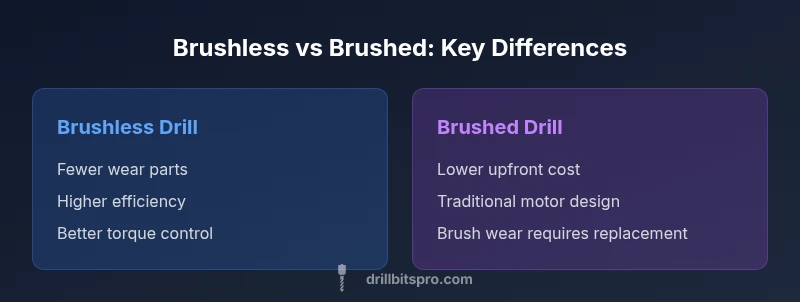
| Feature | Brushless Drill | Brushed Drill |
|---|---|---|
| Efficiency & torque consistency | High efficiency, smooth torque control | Lower efficiency, more torque variation |
| Runtime per charge | Longer runtime per charge | Shorter runtime per charge |
| Heat generation | Lower heat under load | Higher heat under load |
| Maintenance & wear | Fewer wear parts, longer motor life | Brush wear requires replacement over time |
| Initial cost | Higher upfront cost | Lower upfront cost |
| Best for | Pro users, heavy-duty tasks | Budget DIY and light tasks |
What's Good
- Better efficiency translates to longer runtime per charge
- Fewer moving parts reduce maintenance events
- Smoother torque and reduced vibration for comfort
- Longer motor life under heavy loads
Negatives
- Higher upfront cost for tool and batteries
- Dependence on a single brand ecosystem for best value
- Some models may have slower no-load speeds or fewer accessories
Brushless drills generally outperform brushed models in efficiency, durability, and runtime for most users.
For DIYers and professionals, brushless is the smarter long-term choice. Expect better torque control, cooler operation, and fewer maintenance events, which adds up over busy projects.
Got Questions?
What is a brushless drill and how does it differ from a brushed drill?
A brushless drill uses electronic control instead of carbon brushes to drive the motor, delivering improved efficiency, torque control, and cooler operation. The lack of brushes means fewer wear parts and longer life in many tasks.
A brushless drill uses an electronic controller to run the motor, which improves efficiency and durability compared with older brushed designs.
Are brushless drills worth it for DIY projects?
For most DIY projects, the benefits of brushless drills—longer battery life, better torque control, and less maintenance—outweigh the higher upfront cost. If you drill infrequently, a brushed model can still be adequate.
For most DIYers, brushless drills are worth it for the longer run time and better control.
Do brushless drills fit existing batteries?
Brushless drills typically use the same battery platform as their brand family, so switching to brushless can be straightforward if you stay within the same ecosystem. Confirm with product specs for compatibility.
They usually use the same batteries within the same brand family.
How should I maintain a brushless drill?
Brushless drills require standard care: keep vents clean, remove dust, inspect the chuck and bearings, and store properly. Since there are no brushes, routine brush maintenance isn’t needed, but overall reliability still benefits from cleanup and lubrication where recommended.
Keep it clean and dry, and follow the manufacturer’s maintenance schedule.
Can brushless drills handle concrete drilling?
Yes, brushless drills with hammer function perform well on masonry. Choose a model with appropriate torque and a robust hammer setting, and pair it with quality masonry bits for best results.
Brushless with a hammer setting is great for concrete.
What about overall cost of ownership?
Brushless tools typically cost more upfront but offer longer service life and lower maintenance. Consider your workload, frequency of use, and the cost of batteries as part of the ecosystem you adopt.
Upfront cost is higher, but maintenance and durability often save you money over time.
Top Takeaways
- Choose brushless for efficiency and longer runtime
- Expect higher upfront costs but lower maintenance
- Check battery ecosystem compatibility
- Prioritize torque range and control features
- Professional workloads justify brushless investment