How to Get Rid of Drill Holes in Wall: A Practical DIY Guide
Learn practical, step-by-step methods to repair drill holes in walls. From patch options to color matching and finishing, this guide from Drill Bits Pro covers materials, safety, and common mistakes for DIY enthusiasts and professionals.


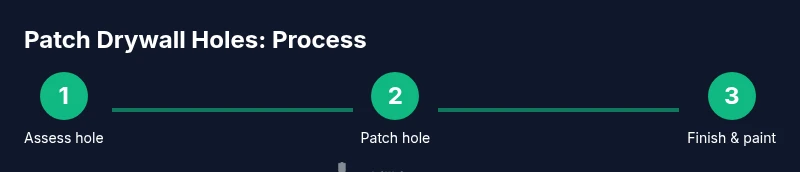
Will help you get rid of drill holes in wall effectively. You’ll assess hole size and wall type, choose patching materials, apply filler, sand, and paint for an invisible repair. Start with small holes and build up for larger gaps, then finish with paint to blend. This quick answer sets up a broader, step-by-step approach below.
Why Patch Holes Improves Wall Integrity and Aesthetics
Repairing drill holes in walls is not just about hiding blemishes; it's about preserving wall integrity and enhancing the appearance of a room. Holes created by drills can expose underlying materials and create a weak point that cracks over time, especially if the wall is subject to impact or vibration. By choosing the right patching compound and applying it correctly, you can restore a smooth, uniform surface that blends with the surrounding paint. This is particularly important in high-traffic areas like living rooms and hallways where visual appeal matters. For both DIY enthusiasts and professionals, the goal is a repair that is durable, paint-ready, and indistinguishable from the rest of the wall. The process also reduces dust and debris that come with loose materials, keeping the workspace cleaner and safer. According to Drill Bits Pro analysis, using proper patch materials and technique minimizes cracking and ensures long-lasting results.
- Understand the hole: small nail or screw holes differ from larger gouges.
- Plan the finish: matching paint and sheen is crucial for a seamless look.
- Protect the area: dust, paint splatter, and debris can be minimized with drop cloths and painter’s tape.
As you learn how to get rid of drill holes in wall, you’ll gain a broader toolkit for wall maintenance, including touch-up paint, sanding techniques, and safe drying times. This knowledge also translates to other repair scenarios, like patches on plaster or drywall joints, where surface prep is key to success.
note
Tools & Materials
- Lightweight spackling compound or patching plaster(Choose a product suitable for drywall and small repairs; color-matching options help reduce finishing steps.)
- Putty knives (1-inch and 4-inch)(Two sizes help with both small holes and larger patches.)
- Medium-grit sandpaper (120-150 grit) or sanding block(Used after patch dries to create a flush surface.)
- Damp cloth or sponge(For cleaning dust before patching and between steps.)
- Primer (stain-blocking preferred)(Prevents patch material from showing through the finish.)
- Paint (matched to wall color) and a small roller/brush(A precise color match helps hide the repair.)
- Drop cloths or old sheets(Protects floors and furniture during the repair.)
- Painter’s tape(Keeps edges clean during painting.)
- Mesh patch or drywall patch (for larger holes)(Optional backing for bigger holes.)
- Vacuum with brush attachment(Used to clean dust efficiently.)
Steps
Estimated time: 60-90 minutes
- 1
Inspect hole and gather materials
Examine the hole to determine whether it’s a nail, screw, or larger cavity. Gather the patching materials and tools you’ll need so you’re not searching mid-project. A quick plan saves time and helps you choose the right patch strategy for how to get rid of drill holes in wall.
Tip: Lay out tools on a tray before you start to speed up the process. - 2
Protect workspace and prepare surface
Lay down a drop cloth, tape off the surrounding edge, and wipe the area with a damp cloth. Cleaning the surface helps the patch adhere better and reduces sanding dust later. Ensure the wall is dry before patching.
Tip: Mask off nearby outlets or trim to avoid accidental paint transfer. - 3
Apply patch material for small holes
Dab a small amount of patching compound into the hole and spread evenly with a putty knife. For nail or screw holes, a thin build-up in a few passes often yields the best flush finish. Let it dry according to the product’s instructions.
Tip: Push the filler slightly beyond the hole edge to avoid a re-emergent indentation. - 4
Patch larger holes with backing or patch
For holes larger than a few millimeters, apply a backing (or use a mesh patch) to provide support behind the repair. Cover with patch compound, feathering the edges to blend with the wall.
Tip: Avoid overfilling; it’s easier to add a thin layer after drying than to fix a bulge. - 5
Let patch dry completely
Allow the patched area to dry fully before sanding. Drying times vary by product and room conditions; avoid rushing with heat sources that could crack the patch.
Tip: If the hole is outside or in a high-humidity area, extend the drying time. - 6
Sand until flush with wall surface
Gently sand the patched area with 120-150 grit sandpaper until it’s level with the surrounding surface. Wipe away dust periodically to check progress and avoid over-sanding.
Tip: Rinse or wipe down after sanding to ensure clean paint adhesion. - 7
Prime, paint, and blend
Apply a thin coat of primer to the repaired area, allow it to dry, then paint to match the surrounding wall. If possible, use a paint color with a similar sheen to the rest of the wall to minimize the difference.
Tip: Test paint on a hidden area first to confirm color match. - 8
Inspect and perform touch-ups
Check the repair from different angles and lighting. Add a light second coat of paint if needed to achieve a seamless finish. Clean up tools and store supplies.
Tip: Take a step back and look for any edges that still appear raised or uneven.
Got Questions?
What is the best patch for small nail holes?
Small nail holes are best filled with lightweight spackling or patching plaster. Apply in thin layers, smooth with a putty knife, and let dry before light sanding. A quick prime and paint will finish the repair.
For tiny holes, use lightweight spackle and a thin layer; sand and paint for a near-invisible finish.
How long does drywall patching take to dry?
Drying times vary by product, humidity, and thickness. Expect a minimum of 30 minutes for lightweight spackle in thin coats, and several hours for larger patches. Always follow the product’s drying instructions.
Dry times depend on the product and conditions; check the label for guidance.
Can I paint over patching compound the same day?
If the patch is fully dry and the surface is smooth, you can prime and paint the same day. Rushing can trap moisture or settle unevenly, so ensure dryness.
Yes, if it’s completely dry, you can prime and paint the patch the same day.
What if my hole is irregular or bigger than expected?
For irregular or large holes, use a backing material or mesh patch to support the repair, then cover with patch compound. Build in thin layers and sand smooth for a seamless finish.
Use a backing patch for larger holes and take it step by step to avoid bulges.
Do I need a primer before painting the patch?
Yes. Primer improves paint adhesion and helps the patched area blend with the surrounding wall, especially on porous surfaces. A stain-blocking primer provides the best base for color matching.
Primers help the paint stick and hide the repair effectively.
Can I fix holes in a textured wall the same way?
Textured walls require patching techniques that preserve texture. Use patch compound that accepts texture or apply texture with a sponge after the fill dries, then finish with primer and paint.
Texture matters; patching should mimic the wall’s texture for a natural look.
Watch Video
Top Takeaways
- Patch holes with appropriate filler and build up in thin layers
- Sand flush and prime before painting for best adhesion
- Match paint color and sheen to blend seamlessly
- Protect your space with drop cloths and tape to minimize mess