How to Get Rid of Old Drill Batteries: A Practical Guide
Learn safe, compliant ways to dispose of old drill batteries. This step-by-step guide covers identification, storage, and local recycling options to protect people and the environment.


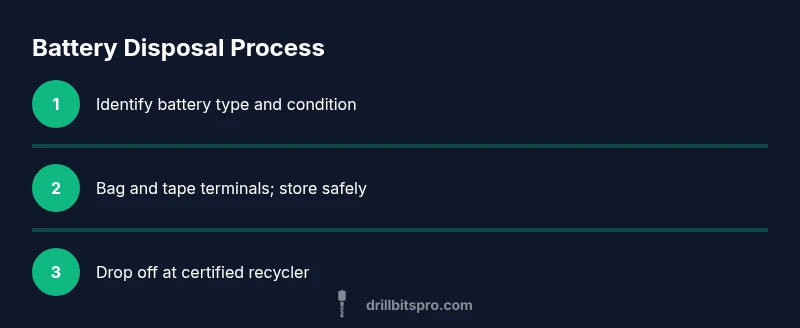
Identify the battery type, wear PPE, and store each battery in a fireproof container. Check local programs and take them to a certified recycling drop-off. Never throw drill batteries in the trash or incinerate them, and avoid puncturing or crushing the cells. Follow the steps in this guide for a safe, compliant disposal that protects you and the environment.
Why Safe Disposal Matters
Safe disposal of drill batteries matters because these cells can pose fire hazards, chemical leaks, and environmental harm if discarded improperly. Many cordless drills use lithium-ion or nickel-metal-hydride packs; both contain materials that can ignite if damaged or crushed. Burning, puncturing, or simply throwing them in the trash increases the risk of a fire in collection streams or landfills, and can expose waste workers to toxic substances. From a safety perspective, proper disposal reduces personal risk and protects your workspace and local water supply. Environmentally, recycling preserves essential metals and reduces the need for new mining. According to Drill Bits Pro, adopting a cautious disposal routine improves outcomes for DIYers and pros who rely on power tools every day. By following formal programs, you ensure that batteries are handled by specialists who can manage leaks, venting, and end-of-life processing correctly. This section sets the stage for practical steps you can take, from how to identify the battery type to where to drop them off and how to transport them safely.
Battery Types and Recycling Options
Most cordless drill batteries are lithium-ion (Li-ion) today, though some older or budget models use nickel-metal-hydride (NiMH). The material composition matters because Li-ion packs require more stringent handling due to thermal runaway risks, while NiMH packs are generally less hazardous but still not suitable for trash. Recycling programs exist at municipal hazardous waste facilities, electronics recyclers, and many home improvement stores. Certified programs recover valuable metals like cobalt, nickel, copper, and aluminum for reuse. Drill Bits Pro's analysis indicates that choosing a licensed recycler reduces exposure to leaking cells and prevents improper waste stream contamination. Before disposal, verify that the program accepts batteries from consumer tools and check if they accept whole packs or only individual cells. Some programs require batteries to be taped and bagged; others accept loose packs. Do not mix different battery chemistries in the same container. In emergency cases, contact your local waste authority for guidance if you encounter damaged or swollen packs.
Safety Gear and Storage Readiness
Before handling any battery, put on safety glasses, work gloves, and long sleeves. Batteries can leak corrosive electrolytes; spillage can irritate skin and eyes. Use a rigid, fireproof container with a tight lid, placed away from heat sources and flammable materials. Do not store in a metal trash can or near solvents. Keep containers clearly labeled, and segregate damaged or swollen packs for separate handling. If your workshop is dusty or humid, consider a secondary containment tray. When you're ready to transport to a drop-off, ensure the container is sealed, upright, and cushioned to prevent impacts. If you have multiple batteries, label each with a date or simple identifier to avoid confusion during transfer. For professional setups, consider a metal toolbox with a vented bottom and a secure lid. In general, avoid leaving batteries in vehicles in hot sun for extended periods as heat can exacerbate leakage.
How to Identify Battery Type and Check for Damage
Turn off the drill, remove the battery, and inspect for labels showing chemistry (Li-ion, NiMH) and capacity (mAh). If there is no label, refer to the model number in your user manual. Look for signs of damage: swelling, dents, corrosion, or leakage. Any damaged cell should be treated as hazardous and placed in a separate, labeled container. Do not attempt to pierce or crush the cells. For swollen packs, avoid puncturing; contact the disposal program for guidance. If a pack feels warm or emits a foul odor, leave it in its containment and contact the authority. For double-checking, some recyclers offer a free phone-in or online lookup to confirm acceptance of your battery type. Keep a small stash of sealed plastic bags for individual bags if necessary, but never reuse bags that have contained leaking material.
Finding a Certified Recycling Program
Start with your city or county environmental agency’s website to locate approved recycling drop-off points. Many retailers and big-box stores host battery recycling programs; call ahead and confirm accepted chemistries and packaging requirements. If you can't find a local site, check state or national directories for household hazardous waste programs. Always verify that the recycler is certified to handle Li-ion and NiMH packs. Some programs require the battery to be bagged and taped to prevent short circuits; others accept fully enclosed packs. Ask about any fees or appointment requirements before you go. If you're coordinating a school or business cleanup, ask for bulk drop-off options or special pickup services. The bottom line is to use a recognized program rather than trash services, and to keep a receipt or confirmation number for your records. Drill Bits Pro recommends documenting recycling activities as part of responsible tool maintenance.
Transport and Storage Safely Until Drop-off
Transport batteries in a way that minimizes risk of puncture and short circuit. Place each battery in a separate, labeled bag or wrap terminals with non-conductive tape. Keep the bags in a rigid, ventilated container in the passenger compartment to avoid heat and impact. Never transport them in a closed trunk with heavy objects directly on top. When storage is necessary for more than a day, store in a cool, dry place away from moisture and heat sources. If you accumulate multiple packs, line the container with non-conductive padding. Before leaving home, verify the drop-off location address, hours, and safety rules. If you’re unsure about any battery’s condition, do not attempt transport; wait until you can assess with a recycler or a local authority.
Handling Damaged or Leaking Batteries
Damaged or leaking batteries require extra care. Do not press, crush, or try to repair. Isolate the item in a vented metal container designed for hazardous waste. If leakage occurs, avoid skin contact; wear gloves and wash exposed skin with soap and water. Contact local authorities or the recycler for guidance; some programs provide pickup for hazardous waste. Do not mix leaking packs with intact batteries. Place a note on the container describing its condition. Bring the container to the drop-off or arrange a special pickup if required. If you suspect a swollen pack, treat it as unstable and store it alone until disposal. For professional shops, request a hazardous waste handling partner to assist you.
Local, National, and Global Resources
Different regions offer varying disposal paths. In the US, local HHW facilities, municipal programs, or retailer drop-offs are common. In other countries, national e-waste directives may apply. Use official government portals to locate where you can drop off. If you have large quantities, some programs provide bulk pickup or appointment-based services. Keep copies of receipts for reference in case of audits or future disposal needs. Many communities host annual cleanups, which are good opportunities to recycle old drill batteries safely. Drill Bits Pro notes that following a standardized process in your jurisdiction reduces confusion and errors.
Myths, Tips, and Final Reminder
Debunk common myths such as 'batteries can be dumped with regular trash' or 'all batteries are treated identically'—the reality is that chemistry and packaging vary, and some facilities do not accept damaged packs. Bottom line: Always use certified drop-off, label your containers, and keep them away from heat. Pro tip: Maintain a small toolkit for battery disposal in your workshop so you can quickly sort and bag batteries as they come off gear. Safety warning: Do not attempt to disassemble; batteries are hazardous and can vent or catch fire. The Drill Bits Pro team reminds readers: consistent practice and adherence to local rules ensure you avoid penalties and protect the environment. Also, remember to document disposal activities as part of good maintenance discipline.
Tools & Materials
- Safety glasses(Protect eyes from splashes or venting.)
- Nitrile gloves(Barrier against chemical exposure.)
- Fireproof, leak-proof storage container(Metal or purpose-built container with tight lid.)
- Sealed plastic bags(Bag each battery or pack individually to prevent shorting.)
- Labels/marker(Label containers with date and content.)
- Battery recycling drop-off information(Keep a list of local facilities and hours.)
Steps
Estimated time: 20-40 minutes
- 1
Identify battery type and remove from tool
Power down the tool, then remove the battery from the tool. Look for chemistry labels like Li-ion or NiMH on the pack. If there is no label, reference the model number in the user manual. Why: correct identification guides disposal method and ensures you use appropriate handling.
Tip: If you’re unsure of the chemistry, treat it as Li-ion and follow the higher-safety protocol. - 2
Wear PPE and prepare workspace
Put on safety glasses and gloves. Clear the area of flammables and place a fireproof container on a stable surface. Why: PPE and a safe workspace reduce risk if a battery leaks or shorts.
Tip: Have a water source nearby in case of accidental exposure, and work in a well-ventilated area. - 3
Inspect for damage and segregate
Check for swelling, leaks, cracks, or corrosion. If damaged, place the battery in a separate labeled container. Why: damaged cells require special handling to prevent fires or chemical exposure.
Tip: Do not attempt to puncture or repair damaged packs. - 4
Choose a certified disposal route
Identify a local certified recycling program, HHW facility, or retailer drop-off that accepts drill batteries. Why: proper programs safely recycle materials and prevent hazardous waste contamination.
Tip: Call ahead to confirm accepted battery chemistries and packaging requirements. - 5
Prepare batteries for transport
Bag each battery or wrap terminals with non-conductive tape. Place batteries in the fireproof container with padding. Why: prevents short circuits and protects containers during transport.
Tip: Label each bag with date and battery type to simplify processing. - 6
Transport to the drop-off
Take the container to the approved facility or arrange pickup if offered. Why: professional facilities manage venting and end-of-life processing safely.
Tip: Avoid extreme heat and do not transport in the trunk with heavy items directly on top.
Got Questions?
Can I throw old drill batteries in the trash?
No. Drill batteries contain hazardous materials and can pose fire risks. Use certified recycling programs or hazardous waste facilities. If unsure, contact your local waste authority for guidance.
No, you should not throw drill batteries in the trash. Use certified recycling or hazardous waste facilities. If unsure, contact your local waste authority.
How do I identify the battery type (Li-ion vs NiMH)?
Check the battery label for chemistry or refer to the drill model manual. If the label is missing, contact the manufacturer or use a local recycler's lookup service.
Check the label on the battery or refer to the drill’s manual. If the label is missing, ask the manufacturer or use a recycler’s lookup service.
Where can I recycle drill batteries locally?
Most communities offer household hazardous waste programs, electronics recyclers, or retailer drop-off locations that accept drill batteries. Always verify accepted chemistries before dropping off.
Most communities have hazardous waste facilities or retailer drop-offs that accept drill batteries. Check ahead to confirm accepted chemistries.
What should I do if a battery is swollen or leaking?
Treat it as hazardous: place in a separate, labeled container, avoid touching the leak, and contact the recycler or local authorities for instructions. Do not transport or attempt to repair.
If swollen or leaking, isolate it in a labeled container and contact the recycler or authorities for instructions. Do not attempt to repair.
Are there costs to recycling drill batteries?
Many programs are free, but some facilities may charge small fees or require appointments. Always check online or call ahead before traveling.
Many programs are free, but some may charge small fees or require appointments. Check ahead before you go.
How should I transport multiple batteries safely?
Bag each battery, tape terminals, and transport in a rigid vented container. Keep them away from heat and heavy items. If in doubt, arrange for a dedicated pickup.
Bag and tape each battery, transport in a vented container, away from heat. If unsure, arrange a dedicated pickup.
Watch Video
Top Takeaways
- Identify battery chemistry before disposal and follow program rules.
- Use certified recycling programs, not regular trash.
- Wear PPE and store batteries safely until drop-off.
- Document disposal for maintenance records.