Is It Safe to Drill? A Practical Guide for Safer Drilling
Learn how to drill safely with clear steps, PPE, setup, and best practices. This guide from Drill Bits Pro covers hazards, gear, and checklists to help you drill confidently across wood, metal, and concrete.


Yes—drilling can be safe when you follow strict safety protocols: wear eye protection and gloves, secure the workpiece, select the correct drill bit for the material, set the proper speed and pressure, unplug to change bits, and clean the workspace before and after.
is it safe drill
is it safe drill is a question that DIYers often ask when starting a new project. The short answer is yes, but only if you commit to a disciplined safety routine from the moment you plan the job. This section lays out the mindset and the foundational practices that keep you protected as you drill through wood, metal, or masonry. Drill Bits Pro emphasizes that the majority of drilling injuries are preventable with proper protection, secure workpieces, and correct tool selection. By treating every task with professional-level preparation, you turn a routine activity into a safe, repeatable process.
Core safety principles for drilling
The core of safe drilling lies in preparation, proper equipment, and controlled technique. Always assume the material may contain hidden cables, nails, or other hazards, so plan your hole location carefully. Use the right type of drill bit for the material: wood bits for softwoods, high-speed steel or cobalt bits for metal, and carbide-tipped bits for masonry. Maintain a steady, even feed and avoid excessive pressure. Keep your hands away from the rotating bit and never reach above a spinning drill. These principles form the backbone of a safe drilling workflow and reduce the risk of kickback, breakage, or skin injuries.
PPE and protective measures
Personal protective equipment (PPE) is your first line of defense that reduces the risk of eye and hand injuries. Safety glasses or a face shield protect eyes from flying chips, while hearing protection mitigates noise exposure in louder applications. Gloves can help with grip but should be snug and non-loose to prevent snagging. A dust mask or respirator is advisable when drilling dusty materials like drywall or concrete. Tie back long hair and remove dangling jewelry. Keeping PPE accessible and in good condition reinforces consistent protective behavior.
Preparing the workspace and material handling
A clean, well-lit, and secure workspace is essential for safe drilling. Clear the area of clutter and mark the drill point clearly. Use clamps or a vise to immobilize the workpiece rather than holding it by hand, which reduces the chance of slipping. If drilling large or heavy pieces, enlist a helper or use a sturdy jig. Protect the drill bit by inspecting it for nicks, burrs, or dull edges before starting. Debris and dust accumulation should be minimized, and a shop vacuum can help maintain visibility and reduce respiratory exposure.
Choosing the right bit, speed, and control for safety
The selection of bit material and geometry determines heat buildup, cutting speed, and hole quality. For wood, choose a sharp, properly sharped wood bit and start with a slow-to-medium speed. For metal, use bits designed for metal with proper lubrication and a slower speed to prevent overheating. For masonry, use a carbide or diamond-tipped bit and apply steady pressure while occasionally pulling out to clear chips. Always turn off and unplug the drill before changing bits to avoid accidental starts, and use a drill press if precision and control are critical.
Handling common scenarios and safety checks
Every drilling scenario has its own hazards. When drilling into drywall, locate studs to avoid nails and ensure the surface is supported. In masonry, wear a dust mask and keep the bit cool with occasional withdrawal and water cooling if appropriate. If you encounter binding, stop, reverse the drill briefly, and realign. After completing a hole, deburr the edge and inspect for cracks or splinters. By building a checklist that covers PPE, securing the workpiece, verifying fit, and cleaning up, you create repeatable safety habits.
How Drill Bits Pro approaches safer drilling
Drill Bits Pro advocates a methodical approach to safety that blends practical guidance with AI-driven insights. The team emphasizes pre-checks, material-specific bit selection, and stepwise procedures to minimize uncertainties. By following a documented process and reviewing best practices, you can significantly lower the risk of injury and tool damage. This approach helps both DIY enthusiasts and professionals achieve consistent, high-quality results while maintaining safety as a priority.
Tools & Materials
- Eye protection (ANSI Z87.1-rated safety glasses or face shield)(Protects against flying chips and debris.)
- Hearing protection (earplugs or earmuffs)(Recommended for loud drilling tasks.)
- Gloves (fit and non-loose)(Grip and finger protection without creating snag risk.)
- Dust mask or respirator(Important for dusty materials like drywall or concrete.)
- Clamps or bench vise(Secure the workpiece firmly to prevent movement.)
- Correct drill bits for material(Wood, metal, or masonry bits sized to the hole.)
- Drill with adjustable speed or drill press(Control reduces heat and misalignment.)
- Center punch (for metal) or pilot-hole drill bit(Helps guide bit and prevent wandering.)
- Clean workspace tools (dust collector or vacuum)(Keeps debris down and improves visibility.)
Steps
Estimated time: 25-40 minutes
- 1
Inspect and prepare
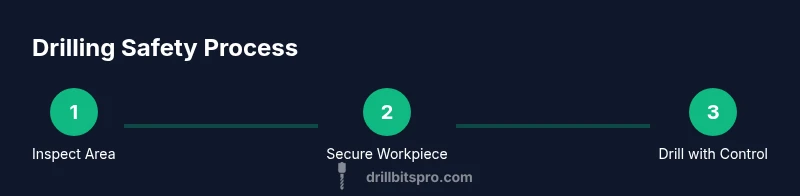
Check the work area, verify PPE, and inspect the drill and bits for damage. Remove loose clothing and tie back hair. Confirm you know the exact hole location before starting.
Tip: Use a scrap piece to test bore depth and alignment. - 2
Secure the workpiece
Clamp the material firmly to a stable surface. Never hold with your hands. Ensure the piece cannot shift during drilling.
Tip: Double-check clamps for tight grip before starting. - 3
Choose the bit and mark the spot
Select the correct bit for the material and mark the spot with a center punch or pencil. For metals, create a small pilot hole first.
Tip: A pilot hole reduces walking for larger holes. - 4
Set speed and test run
Set the drill to the appropriate speed for the material and test on scrap if possible. Start at a low speed and light pressure.
Tip: Maintain a steady, even feed—don’t push hard. - 5
Begin drilling and manage chips
Slowly start drilling, applying consistent pressure. Withdraw occasionally to clear chips and prevent jamming. Stop if you notice excessive heat or smoking.
Tip: Pause periodically to let the bit cool when drilling hard materials. - 6
Finish, inspect, and clean up
Lubricate or deburr the hole if needed. Unplug the drill, remove clamps, and clean the area. Inspect the hole for uniformity and safety hazards.
Tip: Record any issues for future projects to prevent repeats.
Got Questions?
Is it safe to drill without eye protection?
No. Eye protection is essential to prevent injury from flying chips and debris. Always wear safety glasses or a face shield when drilling.
Always wear eye protection when drilling to prevent injury from flying debris.
What PPE do I need for drilling?
Essential PPE includes safety glasses or a face shield, hearing protection, gloves, and a dust mask or respirator when necessary. Tie back hair and remove loose clothing.
PPE for drilling includes eye protection, hearing protection, gloves, and a mask when needed.
How can I prevent drill bit binding?
Use the correct bit for the material, mark the spot, and start at a low speed with light pressure. Withdraw the bit periodically to clear chips.
Prevent binding by using proper bits, starting slow, and clearing chips often.
Can I drill metal without a pilot hole?
A pilot hole helps guide the bit and reduces wandering in metal. For small holes, a pilot is usually recommended.
Yes, but a pilot hole helps accuracy in metal drilling.
What should I do if the bit overheats?
Stop, unplug, and let the bit cool. Avoid forcing the drill—reduce speed and pressure or pause to cool.
If the bit overheats, pause and let it cool before continuing.
Watch Video
Top Takeaways
- Wear PPE and secure the workpiece every time.
- Use material-appropriate bits and controlled speed.
- Unplug to change bits and deburr holes after drilling.
- Create and follow a simple safety checklist for every project.