What to Drill Hardened Steel With: A Practical Guide
Learn what to drill hardened steel with and how to do it safely. This guide covers bit choices, lubrication, setup, and a step-by-step drilling process for clean, accurate holes.


To drill hardened steel, choose carbide-tipped or cobalt drill bits and use a slow, steady feed with plenty of lubrication. Start with a sharp pilot hole, clamp the workpiece securely, and peck to clear chips. Maintain steady pressure and cool often to prevent work hardening. This quick guide outlines the key steps.
Why drilling hardened steel presents unique challenges
When you ask what to drill hardened steel with, the answer points toward carbide-tipped or cobalt drill bits and controlled cutting conditions. According to Drill Bits Pro, hardened steel resists cutting and tends to work-harden at the cutting edge if heat isn’t managed properly. This is not a failure of your drill bit alone—it’s a heat and friction issue that rewards a well-planned approach. Expect higher cutting forces and more chip congestion than softer metals. The goal is to maintain a cool, sharp edge, minimize dwell time in the cut, and progress from a cautious pilot hole to a full-diameter hole. Drill Bits Pro Analysis, 2026 confirms that the combination of the right bit and proper lubrication yields the most reliable results for hard steels during manual or machine drilling.
Selecting the right drill bits for hardened steel
The first decision in drilling hardened steel is selecting the right tool. Carbide-tipped bits are preferred for their hardness and edge retention, followed by cobalt (HSS with cobalt) options for tough jobs. When evaluating bit geometry, look for a small point angle and a split-point design that helps begin cuts cleanly and reduces wandering. Avoid standard high-speed steel bits for this material, as they dull quickly and can glaze over. Always match the bit diameter to your hole size with a safe margin, and consider using a drill press for consistent results. Drill Bits Pro’s guidance emphasizes that bit quality, geometry, and lubrication work together to resist heat buildup and maintain cutting efficiency.
Preparing the workpiece and setup
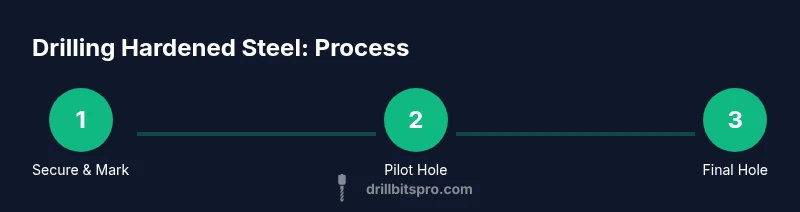
Preparation matters almost as much as the bit itself. Secure the workpiece firmly in a sturdy vise or on a drill press table to prevent any movement. Use a center punch or a sharp scratch to locate the exact hole center, then mark the spot clearly. If the surface is slick or shiny, roughen the mark slightly to improve bite. Cleanliness reduces binding from chips, so wipe away dust or oil before drilling. Drilling hardened steel creates serious heat; a stable setup minimizes vibration, which translates to straighter holes and longer bit life.
Pilot hole and peck drilling strategy
Start with a small pilot hole to establish a precise guide. A sharp pilot bit reduces misalignment and makes the main cut easier. Begin at a slow feed and light pressure, then withdraw the bit periodically to clear chips and re-wet the cutting edge. Peck drilling—drill a short depth, pause, then pull up slightly to chip-wash and re-lubricate—helps control heat buildup and prevents work hardening at the edge. Maintain alignment and avoid forcing the bit; patience pays with cleaner, more accurate holes.
Final hole drilling and controlled feeding
Once the pilot hole is proven true, switch to the final bit size and maintain a steady, low-speed feed. Keep the workpiece restrained and use ample lubrication or coolant to dissipate heat. If you feel binding or hear grinding, stop, retract, and re-lubricate—do not push through resistance. A slow, consistent advance minimizes blade wear and reduces the risk of cracking or tearing along the hole edge. After breaking through, ease off gradually to prevent burrs.
Cooling, lubrication, and chip control
Lubrication is not optional when drilling hardened steel; it’s essential. Apply cutting oil or a coolant generously to the drill bit and the contact surface to reduce friction and heat. Chip control is critical—pause and retract the bit to clear chips and prevent re-cutting. Keep the bit sharp and avoid turning the operation into a glancing cut, which can widen the hole or damage the edge. Regularly inspect the bit for wear and replace it when the edge dulls.
Finishing touches: deburring and inspection
After drilling, deburr the hole edges with a sharp deburring tool or a light file. A clean chamfer on the entry helps insert fasteners more easily and prevents stress risers. Inspect the hole for concentricity and edge quality; measure with a caliper if precision matters. Clean up the work area, rotate the part if needed, and verify the hole size against the target specification. Proper finishing reduces the risk of stress concentrations and improves part performance.
Common mistakes and how to avoid them
Common mistakes include using the wrong bit, drilling without lubrication, and applying excessive force. Another frequent error is attempting to drill hardened steel with a low-quality HSS bit, which dulls quickly. Avoid overheating by moderating speed and using coolants; never push through resistance. If a bite isn’t clean, stop, re-lubricate, and restart from a slightly smaller pilot or a new edge. Following proper setup and tooling reduces waste and improves results.
Troubleshooting and advanced tips
If you encounter wandering, start with a new center mark and smaller pilot hole. For deeper holes, consider a two-step approach: pilot hole, then ream or re-cut with the final bit while maintaining lubrication. If the material shows signs of work hardening despite precautions, pause, re-check the coolant flow, and rework the entry path. For production environments, consider a drill press with a rigid quill and proper workholding to minimize chatter and maximize hole quality. The overarching principle is to prioritize tool geometry, heat management, and stable motion.
Long-term strategy: maintenance and practice
Practitioners who drill hardened steel regularly benefit from a well-ordered toolkit and a consistent process. Keep a small set of carbide-tipped bits in common sizes, and retire any bit showing dull edges or chipped tips. Maintain lubrication and ensure coolant systems are clean and functioning. Practice with scrap pieces to build confidence in set-up and feeding, and document the optimal parameters for each material grade you encounter. A methodical approach minimizes downtime and extends tool life.
Tools & Materials
- Carbide-tipped drill bit(Choose appropriate diameter and geometry for hardened steel)
- Pilot drill bit(Small-diameter bit to establish a precise guide)
- Drill press or sturdy bench drill(Rigid setup reduces deflection and improves straightness)
- Center punch(Creates a precise center mark to prevent wandering)
- Clamps or vise(Secure workpiece firmly to prevent movement)
- Lubricant/cutting oil or coolant(Apply generously to dissipate heat during drilling)
- Safety gear (goggles, gloves)(Protect eyes and hands from chips and hot surfaces)
- Marker or scribe(Optional for precise hole-position marking)
Steps
Estimated time: 45-60 minutes
- 1
Secure and mark the workpiece
Mount the workpiece firmly in a vise or on a drill press table. Check for wobble, then mark the hole center with a center punch. Verify alignment with a straightedge and re-clamp if needed.
Tip: Double-check the center point by sighting along the mark before drilling. - 2
Drill a small pilot hole
Select a small pilot bit and begin drilling at a slow speed with light pressure. Keep the bit perpendicular to the surface to maintain a centered hole. Periodically back out to clear chips and re-lubricate.
Tip: If the bit skates, reposition the punch mark and try again with a lighter touch. - 3
Progress to the final hole size
Switch to the final carbide-tipped bit once the pilot hole is established. Maintain a slow feed and consistent lubrication. Stop briefly to remove chips if resistance increases.
Tip: Don’t rush through the last incremental depth; precision matters for fitment. - 4
Peck and clear to avoid binding
Drill in short increments and retract to clear chips after each pass. This reduces heat buildup and prevents work hardening at the cutting edge. Keep the workpiece steady throughout.
Tip: Peck depth should be 1–2 times the bit diameter per pass as a safe rule of thumb. - 5
Deburr and inspect
Use a deburring tool or file to remove sharp edges. Inspect hole for straightness and cleanliness. If misaligned, assess fixture and repeat with improved setup.
Tip: Chamfer the entry edge to ease fastener insertion and reduce stress risers. - 6
Cleanup and storage
Wipe down the area, inspect tools for wear, and store cutters properly. Record any notes about material grade and parameter tweaks for future reference.
Tip: Keep a dedicated bit set for hardened steel to reduce cross-contamination of tool wear.
Got Questions?
What drill bits are best for hardened steel?
Carbide-tipped bits are the top choice for hardened steel, with cobalt HSS as a strong alternative. These bits hold their edge better under high heat and resist dulling during aggressive cuts. Pair any bit with proper lubrication and a stable setup.
Carbide-tipped bits are the top choice for hardened steel, with cobalt HSS as a strong alternative. Always use lubrication and a stable setup.
Can I drill hardened steel with a standard HSS bit?
A standard high-speed steel bit can work briefly on hardened steel but will dull quickly and may cause rough holes or chatter. For reliable results, use carbide-tipped or cobalt bits and keep heat under control.
A standard HSS bit can work briefly but dulls quickly; carbide-tipped or cobalt bits with cooling are recommended for reliable results.
Is a drill press necessary for hardened steel?
A drill press is highly recommended for hardened steel because it provides consistent speed, pressure, and alignment. If you must use a handheld drill, work slowly, steady the bit carefully, and use a rigid jig to reduce deflection.
A drill press is recommended for consistency; if you use a handheld drill, go slow and steady with good support.
How do I prevent work hardening while drilling?
Keep the cut cool with ample lubrication, avoid excessive speed or pressure, and use a sharp bit. Peck drilling and chip clearing further reduce heat buildup and the risk of work hardening.
Keep it cool with lubricant, don’t push hard, and peck to clear chips to prevent heat buildup.
What lubricants should I use for drilling hardened steel?
A cutting oil or coolant designed for metalworking works well. It should be applied generously to the cutting edge and the hole area to dissipate heat and flush chips.
Use cutting oil or metalworking coolant generously to dissipate heat and flush chips.
What are common mistakes to avoid?
Avoid using dull bits, lacking lubrication, or forcing the bit through resistance. Also, don’t skip pilot holes or skip chip clearance; these mistakes increase wear and risk breakage.
Don’t use dull bits or skip lubrication; don’t force the bit or skip chip clearance.
Watch Video
Top Takeaways
- Choose carbide-tipped or cobalt bits for hardened steel.
- Pilot holes and peck drilling manage heat and chips.
- Lubrication is essential to prevent edge wear.
- Secure clamping and steady feeds produce cleaner holes.