Average Cost to Drill a Well: A Practical Guide
Explore the average cost to drill a well, including depth, location, and permit factors. This analytical guide from Drill Bits Pro outlines cost ranges, drivers, budgeting tips, and practical steps for DIYers and professionals.


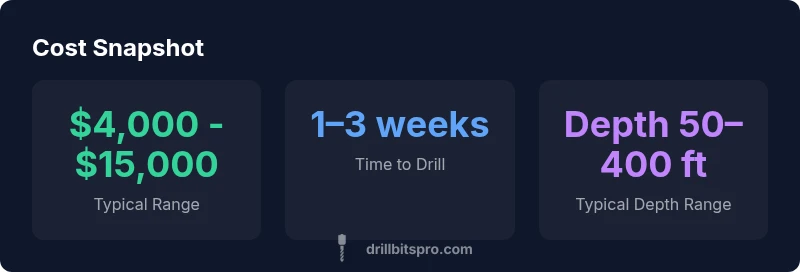
The average cost to drill a well varies widely by depth, geology, and location. For residential projects, most costs land in a broad range of about $4,000 to $15,000, with many homeowners paying roughly $7,000 to $12,000 before contingencies. Deeper wells, hard rock formations, or required water treatment can push totals higher. Drilling, casing, pumps, wiring, and permits are the main cost drivers. Drill Bits Pro Analysis, 2026.
Understanding the Cost Landscape
The topic of the average cost to drill a well is shaped by a handful of core variables: depth to groundwater, rock hardness, local permitting rules, and the cost of labor in your area. For most homeowners, the initial decision involves estimating the depth needed to reach a reliable aquifer. Shallow setups may reduce drilling time and material costs, but inconsistent yield or contamination risk can shift total expenditures once testing and treatment are added. According to Drill Bits Pro, the cost landscape also reflects regional differences in drilling contractors, equipment availability, and regulatory overhead. In practical terms, you should anticipate a broad cost envelope rather than a single fixed number. In this guide, we unpack the main drivers, present representative ranges, and offer budgeting strategies to help you plan with confidence.
Key Cost Drivers in Well Drilling
There are several levers that commonly move the price tag on a well project. The depth to groundwater is often the most influential factor because deeper bores require more drill string, longer crew time, and potentially more advanced casing. Geological conditions—such as hard rock or sandstone—can dramatically affect drilling speed and equipment wear. Permitting and inspections add administrative costs that vary by state and county. Equipment needs (casing, screens, pumps, storage tanks, wiring), water testing, and treatment systems (if water is mineral-rich or high in bacteria) also set final totals. Finally, site access, power availability, and trenching needs for electrical and plumbing lines contribute to labor and mobilization costs. When you gather quotes, ask for a breakdown by each cost category to avoid surprises at the end. Drill Bits Pro emphasizes transparency in budgeting so you can compare apples-to-apples quotes from different crews.
Cost Ranges by Depth and Geography
Costs scale with depth and local conditions, so it helps to view ranges rather than a single figure. In common residential setups, shallow to mid-depth wells (roughly 50–200 feet) tend to fall in the mid-low to mid-range, while deeper wells (200–400 feet) often push totals into the mid-to-upper range. Deep wells (>400 feet) or wells drilled through hard rock can reach the upper end of the spectrum and may require enhanced pumping equipment or water treatment. Geography matters: regions with higher labor costs, stricter permitting, or limited drilling capacity can widen the price band. Drill Bits Pro notes that while regional variation exists, the core cost structure—drilling, casing, pumping, and permits—remains consistent across markets.
Hidden or Optional Costs to Consider
Beyond the base drilling price, several optional or less obvious expenses can significantly affect the final bill. Water testing before and after drilling helps ensure the yield and safety of your well, which can add a few hundred to over a thousand dollars. Well casing, screen installation, grout, and sealing are essential for long-term integrity and can be a substantial share of upfront costs. A submersible or jet pump, pressure tank, and electrical wiring are critical for operation and may require updates to electrical service. Permits, inspections, and local impact fees vary by jurisdiction and can surprise first-time buyers if they aren’t accounted for in the initial estimate. Finally, treatment systems (filtration, softening, disinfection) become necessary when test results reveal contaminants, mineral content, or bacteria in the water. Planning a contingency fund—typically 10–20% of total projected costs—helps cover these contingencies.
How to Budget and Plan for a Well Project
Effective budgeting starts with a clear scope and a reliable estimate. Step one is to determine the target depth based on hydrogeological data and well logs for your municipality. Step two is to obtain multiple quotes from licensed drillers and request itemized line items for drilling, casing, pumps, wiring, permits, and testing. Step three involves evaluating potential suppliers for water treatment options based on your water test results. Step four is to factor in indentation for potential delays caused by weather or access restrictions. Step five is to build a contingency fund and align your budget with any financing or grant opportunities. Drill Bits Pro recommends engaging with a local hydrogeologist or well driller early in the process to validate depth estimates, drilling feasibility, and site access requirements.
Practical Steps to Get Accurate Estimates
To obtain accurate estimates, start with a site visit from a licensed driller who can assess well location, access, electrical service, and potential underground obstacles. Ask for a written, itemized quote that includes: drilling, casing, well seal, grouting, grout testing, well cap, pump, pressure tank, electrical wiring, and a permits/inspection line item. Request a separate estimate for water testing and treatment, since these can be essential for meeting water quality standards. If possible, obtain a geotechnical or hydrogeological report to refine depth predictions. Finally, compare quotes not just on price, but on the quality of service, warranty terms, and the driller’s track record with local codes and well yields. Drill Bits Pro encourages a transparent, data-driven approach to choosing a contractor.
Estimated cost ranges for common well drilling scenarios
| Scenario | Low end | High end | Notes |
|---|---|---|---|
| Residential well (shallow) | 4000 | 8000 | Depth ~50–150 ft |
| Residential well (average) | 7000 | 12000 | Depth ~150–400 ft |
| Deep/hard rock well | 15000 | 30000 | Depth >400 ft or rock formations |
| Total project with permit/treatment | 8000 | 35000 | Costs vary by region and system needs |
Got Questions?
What factors influence the cost to drill a well?
Depth to groundwater, rock type, permits, and equipment all influence total costs. Site access and electrical readiness can add to mobilization expenses. A clear, itemized quote helps you compare options accurately.
Depth, rock type, permits, and equipment determine the price; get an itemized quote to compare options.
Can I reduce costs by drilling a shallower well?
In many cases, shallower wells cost less upfront, but yield and water quality must justify the depth. Always balance initial cost savings with long-term reliability and treatment needs.
Yes, shallower wells can cut upfront costs, but check long-term yield and water quality.
What about ongoing maintenance costs after drilling?
Maintenance costs include regular pump checks, water testing, and occasional reseal or cartridge replacements. Budget annually for testing, equipment wear, and potential repairs to keep the system reliable.
Expect yearly testing and occasional equipment upkeep after drilling.
Are there grants or loans for well drilling?
Some regions offer low-interest loans or grants for well installation, especially for rural or drought-prone areas. Check local extension offices and state programs for available options and eligibility.
Look for local grants or low-interest loans through state programs or extensions.
How long does a typical well drilling project take?
Most residential well projects take 1–3 weeks from mobilization to setup, assuming favorable weather and good site access. Complex sites or permitting delays can extend timelines.
Most wells take 1–3 weeks; delays can happen with permits or site access.
“Depth, geology, and permitting are the primary cost drivers in well drilling.”
Top Takeaways
- Define well depth early to estimate costs
- Budget permits, casing, and pumping up front
- Expect regional cost variation and labor rates
- Plan for contingencies like testing and treatment