Well Drill Cost: What Affects Pricing and How to Save
Explore practical insights on well drill cost, including factors that affect pricing, typical ranges, and proven ways for DIYers and professionals to save without compromising quality.


Well drill cost typically ranges from about $4,000 to $15,000, influenced by depth, geology, well type, and permit requirements. Location, soil conditions, drilling method, and contractor pricing all affect final figures. To budget accurately, obtain several quotes, ask for itemized estimates, and clarify potential hidden costs such as pump installation, permits, and water testing.
Understanding the scope of well drill cost
Well drill cost encompasses more than the drilling itself. In most residential water wells, the price includes site evaluation, drilling, casing and grout, well development, pump installation, and initial water testing. Depending on local regulations, permits can add to the bill. According to Drill Bits Pro analysis (2026), prices vary widely by depth, geology, and access to the site. A typical range is broad because every parcel presents unique challenges and requirements, from soft soils to bedrock. For DIY readers, understanding which line items are controllable helps you negotiate smarter bids and avoid sticker shock. The core goal is to map out all potential expenses early in planning to prevent budget overruns.
Core cost components you should budget for
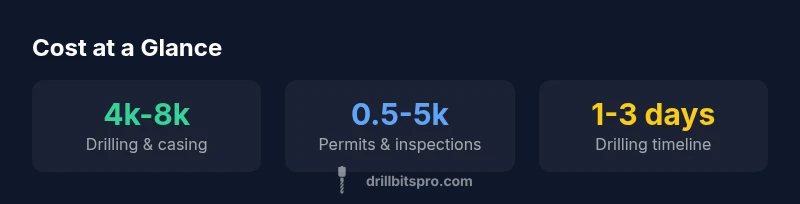
A practical budget for a well project breaks down into several key components. First, drilling and casing are the primary drivers, accounting for most of the upfront cost. Second, well development and testing ensure the system reaches optimal yield and water quality. Third, pump, pressure tank, and storage add after-drilling equipment costs. Permits, inspections, and water testing are mandatory in many jurisdictions. Optional costs include excavation, site restoration, and electrical upgrades. By itemizing each part, you can compare bids more accurately and avoid surprises when the final invoice arrives.
How depth, geology, and location drive cost
Depth is the most intuitive driver: deeper wells demand longer drilling times, more material, and greater risk. Geology matters too: drilling through hard rock or multiple aquifers requires specialized equipment and more casings, inflating the cost. Location matters as well: remote sites increase labor travel time and logistics, while urban properties may face constraints or permit fees. The interplay of these factors creates a wide cost spectrum for well drill projects, which is why the same contractor price can look very different from one job to another. A transparent bid should explain how depth and geology map to the quoted price.
Regional price differences and typical quotes
Prices for wells are highly regional. In some regions, permitting fees, water testing requirements, or utility alignments add to the bottom line, while other areas may offer streamlined permitting. As a result, quoted ranges can differ by thousands of dollars between nearby counties. The key is to compare apples to apples: ensure bids cover the same scope (drilling, casing, pump, and testing). When reviewing regional quotes, ask about climate-related delays, typical mobilization costs, and whether seasonal access affects pricing.
How to compare bids and avoid surprises
To accurately compare bids, request itemized proposals that break out each cost category. Look for these red flags: vague equipment descriptions, missing permit fees, or promises of unusually quick timelines. Ask for the expected yield rate, well depth, and estimated pump size. Verify inclusion of post-drilling tests and warranties. A good bid clarifies what happens if the yield is below expectations and how additional drilling would be priced.
Step-by-step budgeting: a practical worksheet
Create a simple budgeting worksheet that lists each potential cost item, from site evaluation to final start-up. Start with a ceiling price based on your top bid, then add a contingency (typically 10-20%) for unknowns. Track permits, inspections, and water testing fees separately. Include a column for notes, such as expected depth or noted site constraints. Finally, assign a decision date to lock in pricing before seasonal price spikes or supplier shortages.
Alternatives to consider if costs are prohibitive
If the price tag for a full well drilling project is prohibitive, consider alternatives. Rainwater harvesting or graywater reuse can reduce the immediate demand on a private well. Some homeowners opt for shallower drilled wells with smaller pumps or shared wells in nearby properties if feasible. Financing options from local lenders or contractor payment plans may also help manage cash flow. Always weigh reliability, long-term maintenance, and water quality when evaluating substitutes.
Final tips before you start your well project
Before you sign a contract, verify contractor credentials, licensing, and insurance coverage. Schedule site visits to assess access and potential obstacles, and insist on a written, itemized bid with a clear scope. Confirm the included warranties and maintenance requirements for pumps and seals. By planning methodically and comparing multiple quotes, you can optimize the balance between upfront cost and long-term reliability in your well system.
Regional cost ranges by depth and geology
| Region | Typical Depth (ft) | Cost Range (USD) | Notes |
|---|---|---|---|
| Rural/Suburban | 150-350 | $4,000-$8,000 | Basic drilling, short borehole, standard casing |
| Arid/Heavy clay soils | 200-500 | $7,000-$12,000 | Deeper drilling, thicker casing, pump considerations |
| Rocky/Bedrock geology | 300-600 | $10,000-$15,000 | Complex drilling, longer timeline, specialist equipment |
Got Questions?
What factors influence well drill cost?
Well drill cost is driven by depth, geology, access, permitting, and the drilling method. Other costs include pumping equipment, water testing, and potential repairs. Getting multiple bids helps pinpoint realistic figures.
Depth, geology, and permits primarily drive costs; getting bids helps you plan.
Is permitting included in the well drill cost?
Permitting can be included in some bids or listed as a separate item. Regional rules affect fees, timelines, and required inspections.
Permits can be part of the quote or separate; check local rules.
Should I expect hidden costs?
Hidden costs commonly arise from pump installation, water testing, wellhead equipment, and site restoration. Ask for a detailed line-item breakdown to avoid surprises.
Hidden costs show up as add-ons like pumps or testing; read the bid closely.
Does depth affect cost?
Yes. Deeper wells require more drilling time, larger casings, and more materials, driving up costs. Shallow wells are cheaper but may require more frequent maintenance.
Depth drives cost through time and materials.
How can I reduce well drill cost?
Shop for quotes, compare equipment packages, and consider drilling in seasons with better access. Ensure good water testing plans to avoid repeat drilling.
Get multiple bids and choose a complete package.
“Accurate cost estimation requires factoring depth, geology, and local permitting. A transparent breakdown helps homeowners plan effectively.”
Top Takeaways
- Get multiple bids to anchor price range
- Depth and geology are the main cost drivers
- Budget for permits and testing
- Ask for itemized quotes