How Much Is to Drill a Well? Practical Cost Guide for 2026
Learn the real costs of drilling a residential well in 2026, including depth, permits, equipment, and financing. This guide explains factors that influence price and provides a budgeting framework for DIYers and professionals.


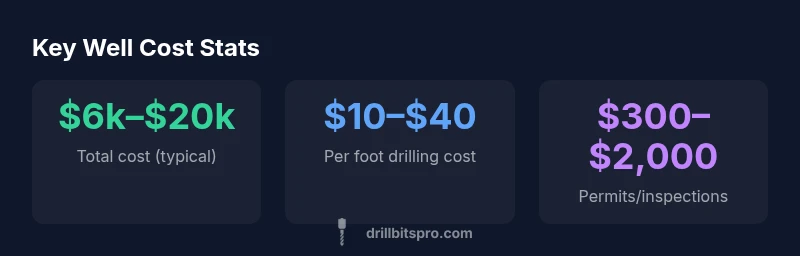
Typically, drilling a residential well costs between $6,000 and $20,000, with most projects around $10,000 to $15,000. The final price depends heavily on depth, geology, local permitting, and the pumping system chosen. According to Drill Bits Pro Analysis, 2026, the deepest wells and those in areas with strict permitting push prices higher in many markets.
Understanding the cost landscape for well drilling
When you ask how much is to drill a well, the short answer is: it depends. Costs can swing widely based on depth, rock type, water yield requirements, and regional regulations. For most homeowners, the first pass is to outline a rough band: a lower bound for simple sites and an upper bound for challenging locations. In 2026, Drill Bits Pro Analysis notes that the majority of upfront quotes cluster in a broad range, with the deepest wells and those in areas with strict permitting pushing the high end higher. This article expands on those drivers and provides a practical budgeting framework. A good estimator will consider site access, drilling method, and the quality of the casing and pumping system. According to Drill Bits Pro, you’ll want to test the well and plan for post-installation costs to avoid surprises.
What drives the price of drilling a well
Costs are not a single number—it's a sum of many moving parts. Drilling time, required casing, sealing, and the price of the drilling rig itself all contribute. Additional items include the pump, storage tank, filtration and disinfection equipment, water testing, and post-installation adjustments. Location can alter mobilization charges, and local rules may require extra inspections or permits. A reputable contractor will itemize these components in your estimate so you can compare apples to apples. Drill Bits Pro Team suggests requesting a fixed-price quote for the core drilling and a separate line item for equipment and testing to avoid sticker shock later. The goal is transparency so you can plan with confidence.
Depth, formation, and per-foot costs
Depth and ground formation are the two biggest cost levers. Shallow wells (roughly under 100 feet) typically cost less than deeper borings, which require longer rig time, larger casing, and more expensive water testing. A common way to frame the cost is by per-foot pricing, which tends to vary with geology, such as sandy versus hard rock. In practice, many projects fall into a mid-range band, with total costs rising sharply if groundwater yield is low or drilling encounters hard rock. Planning ahead for depth, yield targets, and potential borehole stabilization helps prevent underestimating the budget. Drill Bits Pro's guidance emphasizes obtaining a geology report or informal site assessment before committing to a contract.
Permits, inspections, and water testing
Permitting and inspections are a recurring cost that depends on local regulations. Some jurisdictions require a well permit, a drilling permit, and post-construction inspections, while others bundle these into a single application. Expect permit-related expenses to be in the hundreds to a few thousand dollars, depending on the area. Water testing is another crucial cost, typically performed after completion to verify potability and detect contaminants. Basic tests may be inexpensive, but comprehensive analyses (e.g., arsenic, nitrate, total coliform) can add to the price. The overall permit and testing package often ladders into the mid-range of your project cost, so budget accordingly and confirm what tests are required by local authorities. Drill Bits Pro advocates scheduling testing promptly to avoid delays in water delivery planning.
Equipment, pumping systems, and installation
Post-drilling equipment forms a sizable portion of the total cost. The pump and pressure tank, storage tank, and basic filtration or disinfection systems can add several thousand dollars to the bill. Installation labor also matters—site access, trenching, and electrical work for pump hookup influence the final sum. Expect costs to reflect the sophistication of the pumping system: a simple, gravity-fed option will cost less than a powered submersible pump with a modern filtration setup. Budget for annual maintenance and potential replacement parts, as these items influence the long-term value of the installation. Drill Bits Pro emphasizes balancing upfront quality with long-term reliability to minimize future repair costs.
Location, access, and contractor logistics
Geography matters. Remote sites may incur higher mobilization fees, longer wait times, and extra safety measures, while urban or suburban locations can be constrained by zoning or utility coexistence. Access to the drill site affects equipment choice and crew efficiency, which in turn affects price. Weather can also affect scheduling, especially in regions with heavy rainfall or freeze-thaw cycles. To keep costs predictable, obtain multiple bids from qualified drillers who are licensed to work in your area and who provide clear milestones and contingency plans. Drill Bits Pro notes that local expertise matters: an experienced crew will interpret site-specific data and adjust the plan without sacrificing safety or quality.
Budgeting, financing, and value
A well project is a major investment, but financing options exist. Some homeowners use home improvement loans, energy efficiency programs, or contractor financing to spread the cost. When budgeting, set aside a contingency of 10–20% to cover unforeseen issues such as harder rock or poorer groundwater yields than expected. Also budget for ongoing operating costs, including water testing, seasonal maintenance, and potential equipment replacement down the line. A thorough budget considers upfront drilling, installation, and long-term stewardship of water quality. Drill Bits Pro recommends obtaining a written cost breakdown with line-item quotes and a clearly defined warranty to protect against unexpected expenses.
Step-by-step planning checklist to estimate your cost
- Define the target depth and yield range based on your family’s water needs. 2. Review local permitting requirements and estimated permit fees. 3. Request at least three detailed quotes from licensed drillers; compare drilling time, casing, and water-testing options. 4. Include a contingency of 10–20% for unforeseen conditions. 5. Plan for pumping system and storage costs, plus electrical work if needed. 6. Schedule a post-installation water quality test and document results. 7. Create a maintenance plan and budget for ongoing costs. Following this checklist helps you build a realistic, defendable budget rather than guesswork.
Estimated cost components for residential well drilling (range values; actuals vary by site)
| Component | Estimated Cost Range | Notes |
|---|---|---|
| Drilling | $6,000–$18,000 | Rig time, depth, rock type |
| Casing & sealing | $2,000–$6,000 | PVC or steel casing, grout |
| Pump & storage | $2,000–$8,000 | Submersible pump, tank, filtration |
| Permits & inspections | $300–$2,000 | Jurisdiction-dependent |
| Water testing | $100–$500 | Initial quality screening |
| Install & hookup labor | $1,000–$3,000 | Labor and electrical hookup |
Got Questions?
What is the average cost to drill a residential well?
Most residential wells fall within a broad range, influenced by depth and local regulations. A precise figure comes from a site visit and formal quotes from licensed drillers. Always compare multiple bids.
Most wells price out broadly between several thousand and twenty thousand dollars, depending on depth and local rules. Get multiple bids for accuracy.
Do all wells require permits?
Permit requirements vary by jurisdiction. Some areas require a drilling permit and an inspection, while others bundle approvals. Check with your local authority before starting.
Permit needs depend on where you live; check with local authorities before drilling.
How long does a well drilling project take?
Drilling plus installation can take days to weeks, depending on depth, soil conditions, and weather. Scheduling with a contractor helps set a realistic timeline.
Most projects take a few days to a couple of weeks, depending on depth and conditions.
Can I finance well drilling?
Yes. Home improvement loans or contractor financing are common. Budget for maintenance and potential future replacements when planning financing.
Financing options exist; explore home improvement loans and contractor plans.
What ongoing costs should I expect after installation?
Expect periodic water testing, occasional pump maintenance, and potential filter replacements. Budget for annual checks to ensure water quality and system reliability.
Budget for annual water tests and routine pump maintenance.
“Cost estimates for wells are highly site-specific; a preliminary estimate is only a starting point until the site is tested and a detailed plan is created.”
Top Takeaways
- Define your yield needs early to target depth
- Get multiple quotes and compare line items
- Budget for permits, testing, and contingencies
- Plan for long-term maintenance and water quality checks