How Much Does Drilling a Water Well Cost in 2026 Today
Discover the factors driving water-well drilling costs, typical price ranges by depth and region, and budgeting tips for DIYers and pros. Data-driven guidance from Drill Bits Pro.


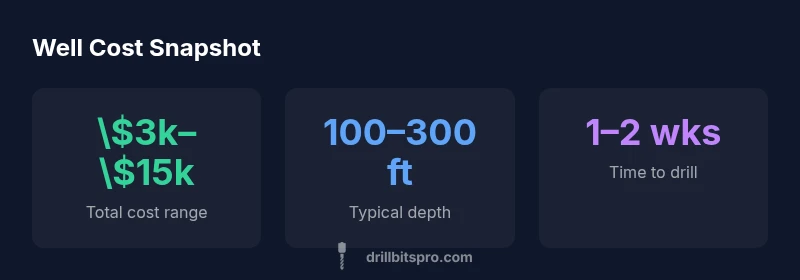
Typically, drilling a residential water well costs from about $3,000 to $15,000, with most projects between $6,000 and $12,000. The total depends on depth, geology, permit requirements, pumping equipment, and installation costs. Deeper wells, hard rock, or complex permitting can raise the price, while shallow, accessible sites may be cheaper. This includes drilling, casing, grout, and initial pump setup.
What Drives Well Cost: Depth, Geography, and Rock Type
According to Drill Bits Pro, the cost to drill a well is driven by three broad factors: depth, local geology, and the equipment mix you choose. In practice, deeper wells require more drill time and casing, and difficult rock reduces advance efficiency, driving up labor costs and wear on tools. Geography matters as well; rural areas may add travel and permit logistics, while regions with strict environmental rules can add compliance costs. The interplay between depth and rock type means a shallow sandy site might cost a small fraction of a deep granite bore, even within the same general region. Budgeting for contingencies is essential, because a single unexpected rock layer can add days of drilling and a different casing strategy. When planning, it helps to map a grid around your site, estimate the depth needed for reliable water yield, and compare bids that itemize each cost component, not just the final total.
Breaking Down the Cost Components
A well project breaks down into discrete cost blocks that you can price individually. The core components usually include drilling time (daily rates or per-foot charges), casing and grout, financial and admin fees, pump and storage tank, electrical connections, and water testing. In some markets, equipment rental, air or mud additives, and site stabilization (grading, access roads) add to the bill. Permits and inspections are often region-specific and can be a surprise if you don’t account for them early. If water testing is required, consider both initial results and any follow-up tests. Present bids that itemize each module—permit, drilling, casing, pump, electrical, and testing—to avoid hidden surprises.
Permitting, Land Access, and Inspection Fees
Permits for well drilling vary widely by jurisdiction and can include zoning clearance, environmental checks, and water rights documentation. Access to the site affects mobilization costs—long driveways, restricted access, or need for temporary roads can add to labor and equipment wear. Some counties require well log submissions, private water rights verification, and post-installation inspections. Budget for potential setbacks such as weather delays or permitting backlogs. If you’re a DIYer coordinating with a licensed driller, ensure your contract clearly defines who pays for permit renewals and required re-inspections. Knowing the local rules upfront reduces risk of shutdowns or rebuilds mid-project.
Regional Variations and Depth Scales
Prices can swing based on geography. Urban or suburban markets may carry higher labor and logistics costs, while rural areas may face longer mobilization times. Availability of licensed drillers and pump installers also shapes pricing; in areas with tight supply, bids tend to be higher. Depth scales matter too: shallow wells in well-drained soils are cheaper, while aggressive lithology—like granite or basalt—drives up both drill time and casing requirements. The same depth in different soils can produce very different cost outcomes because of rock hardness, drilling method (air, mud, or auger), and the ease of running casing once drilling is finished.
Step-by-Step Budgeting for Your Well Project
- Define performance targets: water yield, steady pressure, and water quality. 2) Gather 3–5 bids that itemize drilling, casing, pump, electrical, and testing separately. 3) Build a contingency fund (10–20%) for unforeseen rock layers or permit delays. 4) Include permit fees and potential land-use or water-right costs. 5) Plan for long-term costs: ongoing pumping power and maintenance. 6) Confirm lead times and seasonal windows with your contractor to avoid weather-induced overruns. Using a detailed checklist helps you compare apples to apples when evaluating bids and reduces budget creep.
Hidden or Optional Costs to Consider
There are several costs that may not appear in the initial bid but can affect the total. These include well-house or shed construction for pump equipment, heat exchangers for water treatment, backup power solutions (generator or battery), elevated storage tanks, and water treatment systems (iron or hardness removal). If the site has poor water quality, you might need additional filtration or disinfection steps. Don’t overlook site restoration after drilling—gravel, soil stabilization, and paving may be desirable for access and long-term maintenance. Finally, plan for annual maintenance costs and periodic inspections; these keep your system reliable and protect your investment over time.
Financing and Timing: When to Start and How to Pay
Budgeting a well project benefits from tying timing to dry seasons and permitting cycles. If you can, request bids during shoulder seasons when contractor availability is high and prices stabilize. Financing can be arranged via personal loans, home-improvement loans, or contractor-financed options; compare interest rates, terms, and closing costs. Some regions offer incentives for rural water projects or water-efficiency upgrades, which can offset a portion of the cost. Regardless of the funding path, keep a transparent line item for unexpected expenses and secure a signed, detailed contract before ground is broken.
Quick Case Scenarios: Typical Projects Compared
Case A: Shallow well in sandy soil with existing power access. Drilling time is minimal, casing is short, and the pump is a standard model. Estimated total: mid-range on the spectrum. Case B: Deep well in hard rock with a restricted access lane. Drilling time extends, costs rise for deeper casing and heavy equipment, and permit coordination adds weeks. Case C: Rural site with straightforward geology but limited contractor availability. Costs fall as mobilization is simpler, but timing can elongate if crews are booked. These scenarios illustrate why bids must itemize every component and why context (depth, rock, access) matters more than a single price tag.
Practical Checklist to Prepare Your Bid
- Confirm you are requesting 3–5 bids with itemized line items. - Verify whether permit fees are included or separate. - Ask about mobilization costs and site access requirements. - Ensure the bid covers drilling, casing, grout, pump, electrical, and testing. - Request a clear payment schedule and a contingency allowance. - Discuss post-installation guarantees and maintenance options. - Prepare a list of local regulations and water-testing requirements. - Schedule site visits to validate depth estimates and access realities.
Comparison of well types by depth and cost
| Well Type | Typical Depth (ft) | Estimated Cost Range | Notes |
|---|---|---|---|
| Shallow well (≤100 ft) | 80–100 | $3,000–$7,000 | Lower-cost option in accessible soils |
| Medium-depth well (100–300 ft) | 100–300 | $5,000–$12,000 | Most common residential range |
| Deep well (>300 ft) | 300–600 | $12,000–$25,000 | Geology and pump impact high costs |
Got Questions?
What factors influence the overall cost of drilling a water well?
Depth, geology, equipment choices, permit requirements, and site accessibility are the primary drivers of well costs. Regional labor rates and mobilization can also shift the final price. By breaking bids into drilling, casing, pumping, and permitting, you can isolate where costs vary the most.
Depth and geology are the big drivers; bids should break down drilling, casing, and permits so you can compare accurately.
Do I need a permit to drill a water well?
Most areas require a permit or notification to drill a well. Costs can include permitting fees, water-right evaluations, and inspections. Check with your local planning or environmental office early to avoid delays.
Yes, permits are common; check local rules before contracting.
Is it cheaper to drill the well in stages?
Staged drilling can help manage cash flow and permit timing, but it may incur additional mobilization charges and longer overall timelines. Compare a single bid versus staged bids to see which saves more in your situation.
Staging can spread costs, but watch for extra mobilization fees.
How long does it take to drill and set up a well?
Most residential wells take from a few days to a couple of weeks, depending on depth, rock hardness, and weather. Permits and pump installation schedules can add time. Build in a buffer for weather delays and inspection windows.
Expect days to a couple of weeks, plus possible permit delays.
What ongoing costs should I budget after installation?
Ongoing costs include electrical use for the pump, routine maintenance, occasional treatment or filtration, and periodic water testing. Budget for annual service visits and potential upgrades as water quality or usage changes.
Think about power, maintenance, and water testing over time.
“Costs reflect depth, rock type, and equipment choices; a clear budget and project plan reduce surprises.”
Top Takeaways
- Know your depth target before bidding.
- Ask for itemized bids to avoid hidden fees.
- Account for permitting and site access early.
- Plan for a 10–20% contingency budget.
- Include pump, storage, and water testing costs.