How to Know If You Can Drill a Well
Learn how to determine if you can legally and practically drill a well on your property. This step-by-step guide covers permits, groundwater availability, site assessment, and selecting a qualified contractor to avoid costly mistakes.


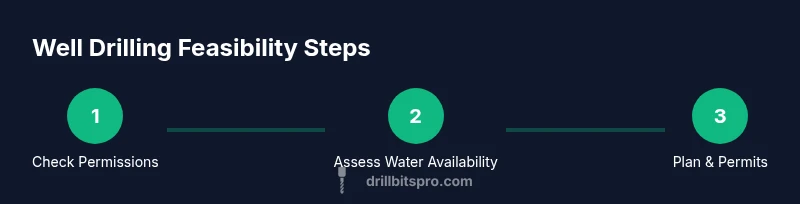
By researching local permits, property rights, groundwater availability, and contractor feasibility, you can determine if you can legally and practically drill a well. According to Drill Bits Pro, the process starts with verifying permissions and assessing the site before investing in drilling. This guide helps you confirm feasibility and prepare a solid plan.
Why feasibility matters for well drilling
Deciding to drill a well is a major step for a property. Feasibility determines whether the project will be legally permitted, technically doable, and financially reasonable. Approaching it systematically saves time, prevents costly mistakes, and reduces the risk of a dry hole. The decision becomes clearer when you map out three pillars: regulatory access, groundwater availability, and site constraints. According to Drill Bits Pro, the most reliable way to begin is to verify permissions and assess the site before you commit to the drilling contractor or the schedule. Without this groundwork, you risk fines, delays, or a well that delivers little or no usable water. In practice, this means starting with local rules and property records, then moving to simple tests and a preliminary site walk. You don’t need to become a hydrogeologist, but you should understand the landscape of your local aquifer, whether it is recharged seasonally, and how far water sources are from the intended well location. With this foundation, you can ask precise questions to your driller, set realistic expectations for yield, and determine whether a well truly makes sense for your needs in 2026. The approach is pragmatic, not theoretical, and it puts you in control from the outset.
Legal and regulatory prerequisites
Before any drilling, you must confirm that local and state authorities permit well construction. This includes obtaining any drilling permits, water-use permits, and environmental clearances where applicable. Local codes often dictate setback distances from property lines, septic systems, and utilities, as well as erosion controls and site restoration requirements. In some regions, homeowner associations or land-use boards can impose additional constraints. Start by contacting the local planning or building department and the state water-resource agency to collect checklists, forms, and submission timelines. Keeping a documented trail of approvals helps you avoid project delays and potential fines. Finally, ensure that your intended well complies with groundwater protection standards and respects any protected- water zones or wells already in use nearby.
Understanding groundwater and site feasibility
Groundwater availability is the core determinant of whether a well will meet your needs. A site that sits above a robust aquifer with good recharge potential is more likely to yield a reliable supply. Drilling specialists can evaluate geological strata, water-bearing layers, and historical rainfall patterns to estimate possible yield ranges. While exact numbers require professional testing, you can start with public hydrogeologic maps and water-well records from local agencies. It’s also critical to test for water quality indicators such as salinity, iron, and hardness after initial sampling. Poor water quality or very deep water tables can still be workable with treatment or alternative sources, but they affect long-term maintenance costs and system design. Finally, consider seasonal variations; a well that performs during wet seasons might slow during drought but can still be adequate with proper storage. These assessments inform realistic expectations and help you compare bids from contractors on a like-for-like basis.
Technical feasibility: drilling method and well design basics
Understanding the technical path helps you choose the right approach and protect your investment. A typical private well investment includes selecting a drilling method suitable for your geology, determining casing and screen sizes, and planning a proper seal and sanitary protection. The driller will assess screen depth, gravel packing, and the intended use (domestic supply, irrigation, or a combination) to design a sustainable system. Location planning considers setbacks from structures and utilities, driveways, and drainage features. You should also discuss pumping equipment, storage, and a back-up power plan. Remember that rock type, soil moisture, and groundwater velocity influence drilling rate and hole stability. The goal is a durable, certified well bore that minimizes contamination pathways while delivering consistent water quality for years to come. Engage with your driller on a detailed design sketch and a written scope of work before proceeding.
Contractor selection and process steps
Choosing the right contractor is as important as the design itself. Start with licensed, insured drillers who have recent, verifiable references. Request a site visit to assess access, utilities, and any hidden risks such as buried lines or drainage. Ask for a written proposal outlining drilling depth, casing size, quality of materials, anticipated water yield, and a post-drilling water test plan. Compare bids not only on price but on the completeness of the scope, warranty terms, and the contractor’s plan for safety and site restoration. Verify credentials with the state licensing board and check complaint histories if available. A good contractor will walk through each phase, explain potential contingencies, and provide a transparent timeline. Don’t rush to sign a contract; a solid agreement includes a change-order process, payment milestones tied to milestones, and a clear liability clause.
What to do next: decision checklist and verification steps
If the feasibility checks are favorable, the next steps are to confirm permits, finalize the well design, and schedule the drilling window. Create a written checklist that includes permit applications, site access permissions, a finalized drilling plan, and a water-quality testing plan. On drilling day, ensure safety protocols are in place, with site supervision and clear communication between you and the crew. After drilling, carry out a pump test to estimate yield and stability of the water supply, and arrange a detailed water-quality analysis with a certified lab. Maintain complete documentation for future reference, including permit numbers, contractor contact details, and test results. If conditions reveal limitations, evaluate mitigation options such as alternative sites or different well depths. Throughout, stay in close contact with your driller and respect local rules to avoid expensive rework.
Tools & Materials
- Licensed groundwater driller/contractor(Ensure license and insurance; verify credentials with the state board)
- Property deeds/title report(Confirm ownership and any easements affecting drilling)
- Permits and regulatory documents(Local drilling permit, water-use permit, environmental clearances)
- Water-right documents or permits(If applicable in your jurisdiction)
- Site access plan / entry permissions(Written permission from landowner(s) and neighbors as needed)
- Site plan / plat map(Mark proposed well location and setbacks)
- Safety gear(Hard hat, safety glasses, steel-toed boots)
- Measuring tools and stakes(Tape measure, surveyor's stakes for clear boundaries)
- Water-testing kit or lab orders(Use a certified lab for final water quality results)
Steps
Estimated time: Several weeks to several months depending on permits, weather, and site conditions
- 1
Check local regulations and land ownership
Review zoning, water-use rules, and setback requirements. Confirm you have legal access to the drill site and that no easements block drilling. Gather all relevant documents before engaging a driller.
Tip: Contact the local planning department early to obtain permit checklists and submission timelines. - 2
Confirm property rights and site access
Obtain written permission from the landowner and any affected neighbors. Mark the exact drill site with stakes and flags. Ensure there are clear routes for equipment ingress and egress.
Tip: Take photos of the site setup to document access conditions for the contract. - 3
Hire a licensed well driller and schedule a site visit
Ask for licenses, insurance, and references. Have the driller inspect the site and discuss initial feasibility, including anticipated depth and potential issues. Request a written preliminary scope of work.
Tip: Request at least three references and verify with local authorities if possible. - 4
Request groundwater feasibility and aquifer data
Have the driller assess suspected aquifers, literature on the area, and any available well logs. Expect discussion of probable yield ranges and variability by season. Ensure they explain testing plans and data interpretation.
Tip: Ask how seasonal fluctuations might affect yield and how storage might mitigate variability. - 5
Review permits and environmental constraints
Submit and track all required permits. Confirm that environmental assessments, if needed, are completed. Verify any conditions related to discharge, erosion, or wildlife habitat.
Tip: Keep copies of permit approvals and applicant contacts in a dedicated folder. - 6
Plan well design and siting
Finalize depth targets, casing and screen sizes, and the location relative to septic systems, property lines, and utilities. Prepare a written plan with a schematic drawing of the bore, casing, and wellhead.
Tip: Double-check setback distances against local codes before drilling. - 7
Prepare the site and ensure safety
Clear debris, verify power sources, and install barriers to keep the work area secure. Confirm emergency procedures and ensure all workers wear PPE. Align on daily communications and weather contingencies.
Tip: Inspect utilities maps to avoid striking buried lines. - 8
Post-drilling testing and water quality checks
Conduct a pump test to estimate yield and test water quality at the source. Have a certified lab analyze for common contaminants and hardness. Document all results and secure final approvals before use.
Tip: Keep copies of test results and maintain a routine water monitoring plan.
Got Questions?
Do I need a permit to drill a well in my area?
In most regions, a drilling permit and water-use approvals are required. Local authorities will provide a checklist and timelines. Failing to obtain permits can cause delays or penalties.
Yes. You will likely need a permit and water-use approval from local authorities before drilling a well.
What factors determine if groundwater is accessible on my property?
Availability depends on local aquifers, geology, and historical well records. A licensed driller can review logs and data to estimate yield and reliability.
Groundwater access is determined by the local aquifer and geology; a pro can estimate yield after reviewing logs.
Can I drill a well myself without a professional?
Well drilling is a regulated trade in most areas. Hiring a licensed driller reduces risk, ensures proper construction, and guarantees compliance with codes.
It's generally not advised to drill a well yourself; hire a licensed professional.
How long does the overall process take?
Processing permits, site assessments, and drilling typically span several weeks to months, depending on jurisdiction, weather, and site complexity.
Expect several weeks to months for permits and drilling, depending on your area and site.
What questions should I ask a drilling contractor?
Ask about licenses, insurance, references, depth targets, casing specs, anticipated yield, post-drilling testing, and warranty terms. Get a written scope of work and a clear payment plan.
Ask about licenses, insurance, references, depth targets, and post-drilling testing in writing.
What are common signs that a well site is not feasible?
Red flags include lack of access, poor aquifer indicators, proximity to restricted zones, or inconsistent soil and rock conditions that impede boring or yield.
Watch for access issues, bad aquifer indicators, and restrictions near your site.
Will water quality testing be required after drilling?
Yes. A post-drilling water test is essential to confirm safety standards, identify contaminants, and plan treatment if needed.
Water testing after drilling is essential to ensure safety and plan any treatment.
How do I choose between different drillers?
Evaluate licenses and insurance, compare written proposals, check references, and assess warranty terms. A transparent contractor with a solid plan is usually the safest bet.
Compare licenses, references, and written plans to pick a reliable driller.
Watch Video
Top Takeaways
- Verify permits and land rights before drilling.
- Assess groundwater availability with a professional.
- Choose a licensed driller with solid references.
- Plan setbacks and post-drilling water testing upfront.