When to Drill Pilot Holes: A Practical Guide
Learn the when and why of drilling pilot holes to prevent splitting, improve screw grip, and ensure clean joints. This guide covers materials, sizing, safety, and real-world examples with practical steps.


According to Drill Bits Pro, you should drill a pilot hole whenever a screw could split the workpiece or when working with hardwoods, brittle veneers, or thin plywood. The hole diameter should be close to the screw’s core size (excluding threads), and the length should be sufficient to prevent breakout. The Drill Bits Pro team’s guidance also accounts for material type, screw length, and whether a countersink is needed.
Why pilot holes matter
Pilot holes are a fundamental woodworking and metalworking technique that help ensure precise, clean, and strong joints. When you drill a pilot hole, you create a path for the screw’s shaft, reducing friction and reducing the risk of the material splitting or cracking as the screw enters. The size and placement of the pilot hole influence screw seating, the grip length, and whether the surface shows tear-out. In hardwoods, dense composites, or thin sheets, a pilot hole can prevent the wood fibers from tearing, which keeps the joint flush and reduces the chance of snapping the screw head below the surface. For soft woods like pine, a pilot hole can still improve accuracy, though you may occasionally skip it when using very small screws in very soft material. In metal, pilot holes reduce thread deformation and allow even engagement of the screw threads. The main goal is to allow the screw to bite smoothly without forcing material fibers apart, which preserves the workpiece’s integrity and improves overall project durability.
The practice of drilling pilot holes is not only about preventing splits; it also helps you control expansion and tearing around the screw. When you follow a consistent method—marking the location, choosing the correct diameter, and drilling to a sensible depth—you’ll achieve cleaner screw seats, better clamping, and a more professional finished product. This is especially important for high-traffic parts or pieces that carry loads, where joint failure would be costly or dangerous. If you work with exotic or engineered woods, pilot holes can prevent unpredictable behavior due to varying grain patterns, resin pockets, or veneer splits. As you gain experience, you’ll recognize subtle cues—like the resistance you feel when driving a screw—that indicate whether a pilot hole is doing its job or needs adjustment.
formatNoneNote
Tools & Materials
- Cordless drill with adjustable speed(Battery-powered for mobility; use variable speed to avoid tear-out)
- Assorted drill bits (pilot hole sizes)(Include bits that span from small to moderate diameters)
- Countersink bit (optional)(Use if you want a flush screw head)
- Center punch or pencil(Marking helps prevent drill wandering)
- Clamp or vise(Keeps the workpiece steady during drilling)
- Calipers or precise ruler(Helpful for estimating the screw core size and testing fit)
Steps
Estimated time: Estimated total time: 15-25 minutes
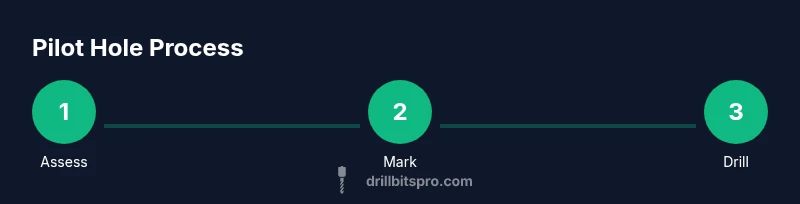
- 1
Assess material and screw size
Identify the material type (hardwood vs softwood, plywood, or metal) and determine the screw size and type. Consider grain direction and whether the joint will bear load. This initial assessment guides all subsequent choices, so take a moment to plan.
Tip: Collect a scrap piece to test hole size and screw seating before working on the actual piece. - 2
Mark the hole location precisely
Use a center punch or sharp pencil to mark the exact center of the hole. Accurate marking reduces wandering and ensures the pilot hole lands where you intend.
Tip: Double-check alignment with a square before drilling. - 3
Choose the pilot hole diameter
Select a bit that is close to the screw’s core diameter, adjusting for material type. In hardwoods, you may want a slightly smaller hole to maximize grip; in softwoods, a closer fit helps prevent tear-out.
Tip: When in doubt, start with a smaller bit and test the fit on scrap wood. - 4
Drill the pilot hole to the correct depth
Drill straight and steady to the required depth, stopping before the underside if the piece is multi-layered. Use a depth stop or a piece of tape on the bit to indicate the intended depth.
Tip: Keep the drill perpendicular to the surface to avoid angled holes. - 5
Test fit before driving the screw
Insert the screw into the pilot hole to check alignment and ease of entry. If it binds, back out and consider a slightly larger hole or re-marking.
Tip: Test on scrap material or a hidden area first. - 6
Drive the screw with control
Drive the screw slowly, letting the pilot hole guide the threads. Stop just shy of over-tightening; excessive force can crush material around the hole.
Tip: If resistance increases abruptly, back out and re-evaluate hole size. - 7
Finish and inspect
Inspect the joint for tear-out, misalignment, or countersink depth. If needed, touch up with a countersink or sand the surrounding area for a clean finish.
Tip: A clean, flush surface signals a well-executed pilot-hole job.
Got Questions?
What is a pilot hole and why is it important?
A pilot hole is a small preliminary hole drilled to guide a screw. It helps prevent splitting, reduces wood fiber tear-out, and ensures accurate screw placement, especially in hardwoods or dense materials.
A pilot hole is a small guide hole that keeps wood from splitting and helps screws go in straight, especially in hard woods.
Can I skip pilot holes in very soft wood?
In very soft wood and with tiny screws, pilot holes are sometimes optional. However, doing so can still improve accuracy and reduce tear-out, so many builders choose to drill small pilot holes as a standard practice.
In soft wood you might skip it for tiny screws, but it often helps accuracy, so many still drill a small pilot hole.
Should I deburr the pilot hole after drilling?
Yes. Deburring removes rough edges that can catch the screw threads and cause tearing. A quick pass with a countersink or a sharp bit helps ensure a clean seat.
Yes, deburr the hole to prevent tearing and get a smooth screw seat.
What if the screw still won’t go in after drilling?
If it binds, back out and try a slightly larger pilot hole, re-check alignment, or reset the hole depth. Avoid forcing the screw, which can damage the material.
If it won’t go in, back out, verify alignment, and consider a slightly larger hole.
Do pilot holes affect joint strength?
Proper pilot holes typically improve joint strength by reducing splitting and ensuring even thread engagement. The right size helps maximize grip without weakening the material.
Yes. Proper pilot holes usually improve strength by reducing splits and ensuring even threads.
Are there safety considerations I should follow?
Wear eye protection, secure your work, and use bits appropriate for the material. Never exceed your drill’s capacity, and keep hands clear of the drilling path.
Safety first: wear eye protection, secure the work, and use the right bit.
Watch Video
Top Takeaways
- Assess material and screw type before drilling.
- Choose a pilot hole close to the screw core size.
- Drill straight and at the correct depth for a clean joint.
- Test fit on scrap material before final driving.
- Always prioritize safety and use proper PPE.